
From sobering to exhilarating, we explored more corners of Prague today. We started small by walking around the block.

I wanted to look closely at a little house viewed from our window.
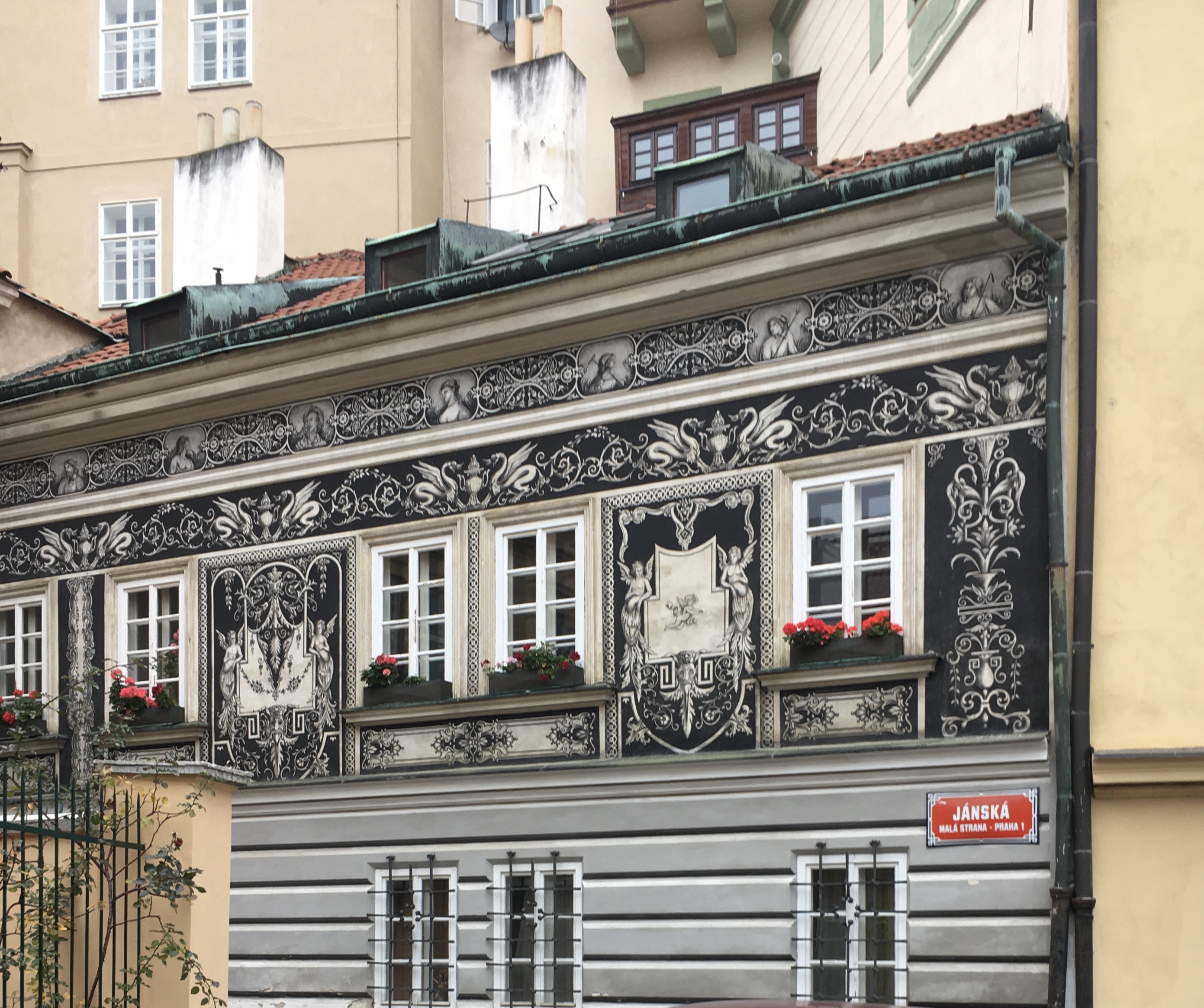
We also found a little public garden and several small restaurants. I noticed house signs, which I’d learned were used before the houses were numbered.

Near the river, we found the Kafka Museum, an in-depth focus on his life and his writing. I confess I’ve not read Kafka and I don’t think I ever will, but I get it now what kafkaesque means. Kafka spent his working life in an insurance company and hated how it interfered with his true vocation, writing. The exhibit was dark and basically depressing, but a sculpture in the courtyard lightened the tone.
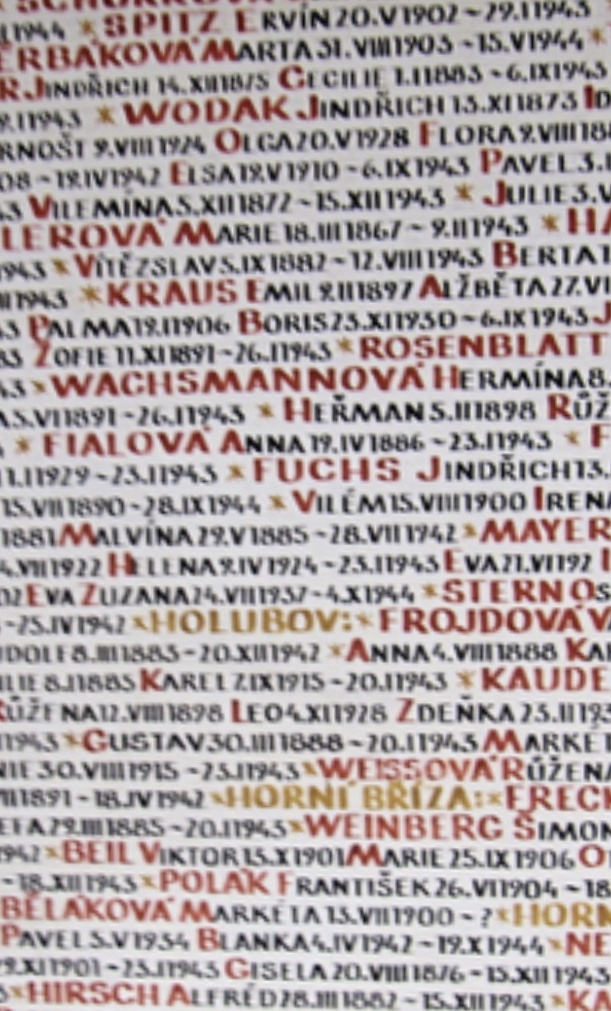
We walked across the river to the The Jewish Quarter, a small area dating from the 13th century. Our entry point was the Pinkas Synagogue, a plain building with a gabled roof. Inside, all wall space is covered by the names and birth/death dates of the 77,297 Bohemian and Moravian Jews who were murdered in the Holocaust. Even though in Czech, I could read the names. I thought it was a lovely way to memorialize. Upstairs, an exhibit of children’s drawings from concentration camps broke my heart.
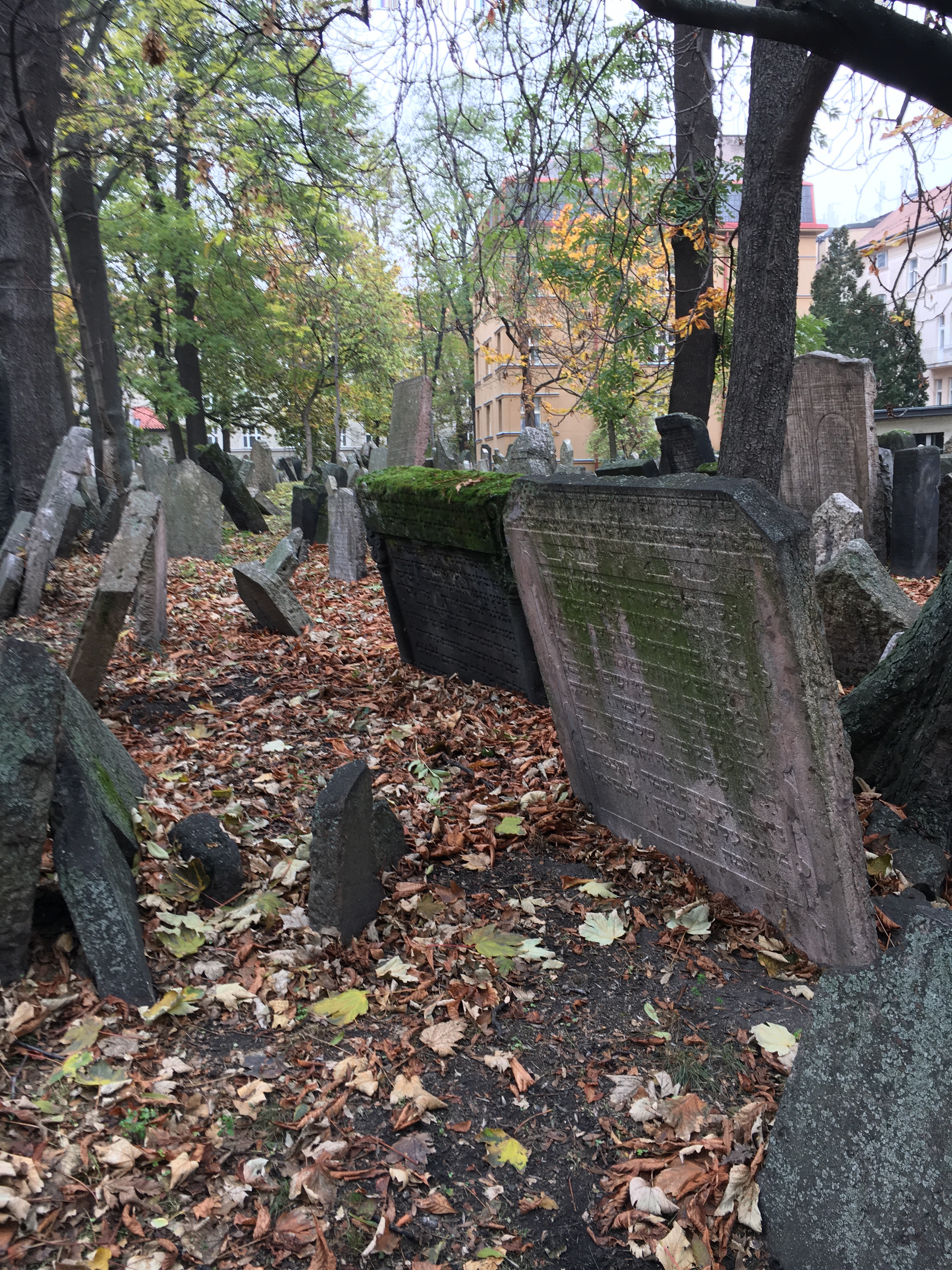
The visitors hushed as we walked next door through the old Jewish Cemetery, crowded with layers of those buried in this cramped space over hundreds of years. I was comforted to see violet plants among the crooked stones.
The Jewish Quarter does not look like a ghetto to me. In the 19th century most of it was torn down, leaving just the small old synagogues. Wide streets of art nouveau buildings, now housing apartments and high end stores, were built. A guide said that Hitler had planned to turn the area into a “museum of an extinct race.”
As banal as it sounds, I thought the Jewish Quarter was perfect: while unmeasurably sad, it was dignified and deeply human, and left me feeling strangely peaceful.
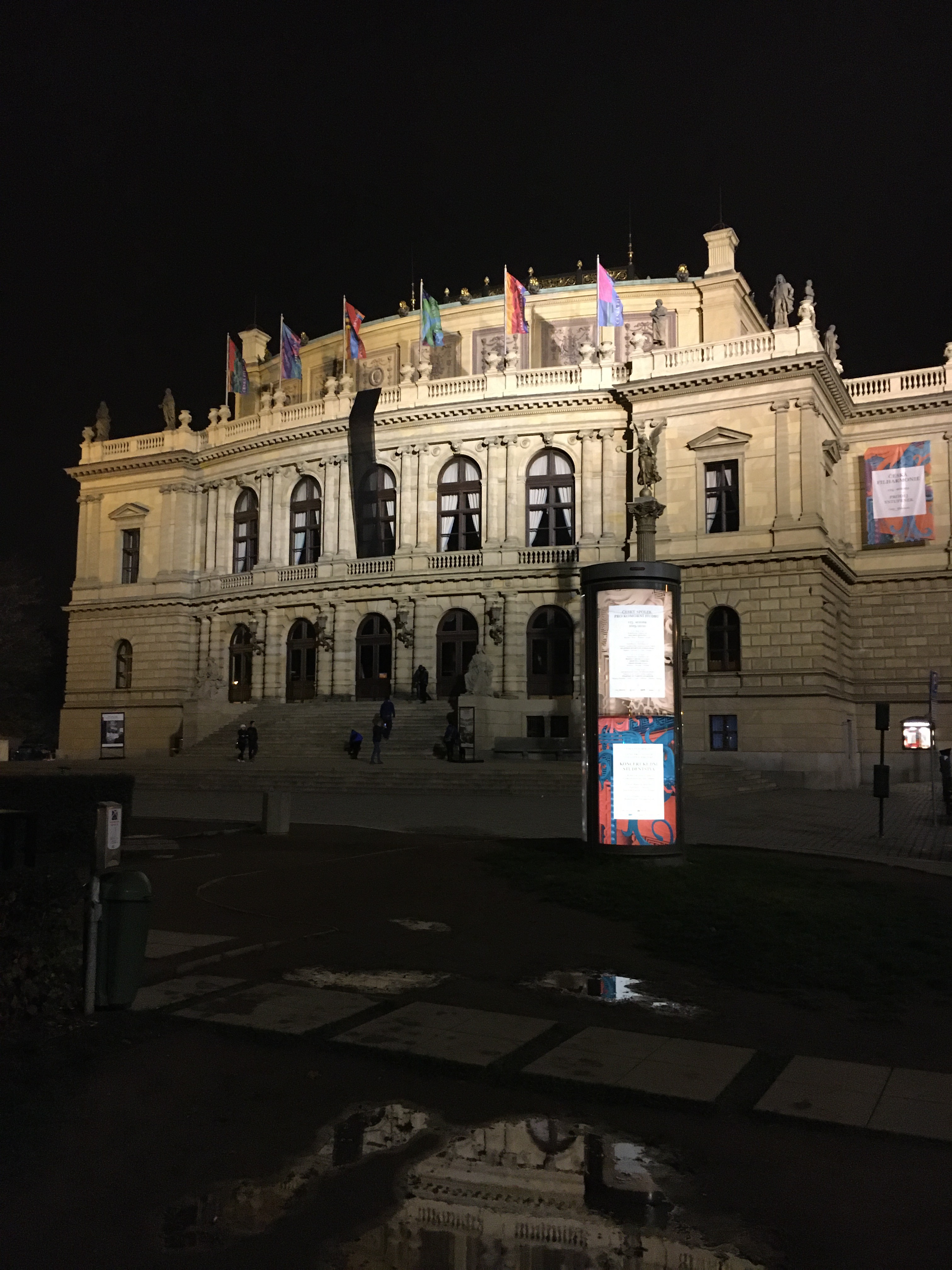
We ended our day at the Rudolfinum, the home of the Czech Philharmonic Orchestra. Dvorak inaugurated the symphony hall in 1896. After a genteel coffee in a high ceilinged gallery, we watched a piano quartet play fiery chamber music in an elegant small concert hall. I was thankful to lose myself in the music.
We walked home across the Charles Bridge. As I looked at the beautiful illuminated churches and statues, I remarked to Mike that I hadn’t realized that Bohemia was such an old and great country. The Czech people have suffered so much and contributed so much too. I thought about the human scale of this great bridge that people have been crossing for almost eight hundred years, and I felt proud to have a little Bohemian blood in me.

 Katy’s Blog Trip to Europe 2019
See you soon! Your trip was pure hàppiness!
LikeLike
Your comments about Prague are reminding me of our visit there. It felt strange to me to know that I was standing in a former Jewish ghetto, but to have so little of it left. I do remember that little old synagogue and the cemetery. That amazing clock you described previously was a more fun memory. We also went up to the castle complex and also walked across the Charles bridge. So much history there! I believe our tour guide said that the first university was there. We heard more about Mozart than Devorak — which would have been much more relevant.
I don’t think Kafka was discussed in our music tour, but as a former English major I did have to read some of his work. I do not recommend it: too weird and dark for my taste.
LikeLike