
Every evening when I sit down to write my blog, I have to decide what to focus on. Usually I’ve been thinking about my topic for hours and I know where I’m headed. Time and energy limit me to a short entry. I’ve tried to focus on what moves me each day, and what might be of interest to you. This trip has been so rich and full. Today I reached the point of overload. Everything was making me tear up, but my thoughts kept circling around the years after World War II to 1989.
A nice German guy named Florian was our city guide. Wearing jeans and a white baseball cap over long blond hair, Florian took us in a short walk through central Leipzig. He would stop at a square or street and use the locale to explain overarching concepts in European history by telling us a story. Today, for me, the topics of religion, trade and war all led to the years that Leipzig, in East Germany (called GDR for German Democratic Republic) was part of the Communist Eastern Bloc.
Since Leipzig is a major transportation and trading crossroads, the RAF bombed it heavily. Unlike other parts of Germany that we visited though, I observed how reconstruction took place under the Communists. We stopped in Augustusplatz, one of the largest plazas in Europe. Florian showed us the opera house and university forming two sides of the huge square. During GDR years, the name changed to Karl-Marx-Platz. In 1968, the government decided that the university church building was not socialist enough, and told university officials they were blowing it up in two days. The explosion decimated a beautiful old church, and the art and documents inside. A Soviet style skyscraper replaced the ancient building. A poignant little bronze replica of the church touched me deeply.
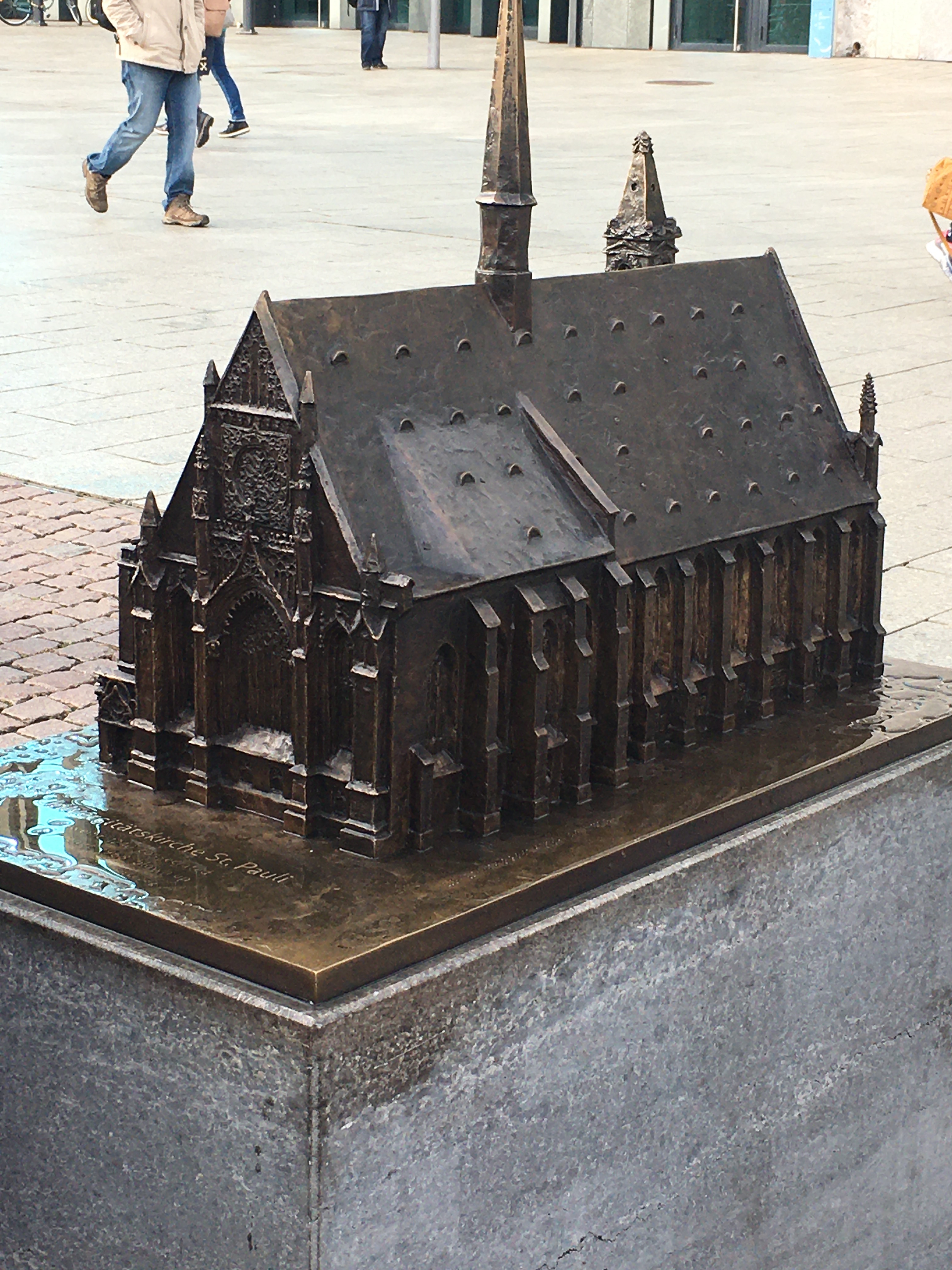
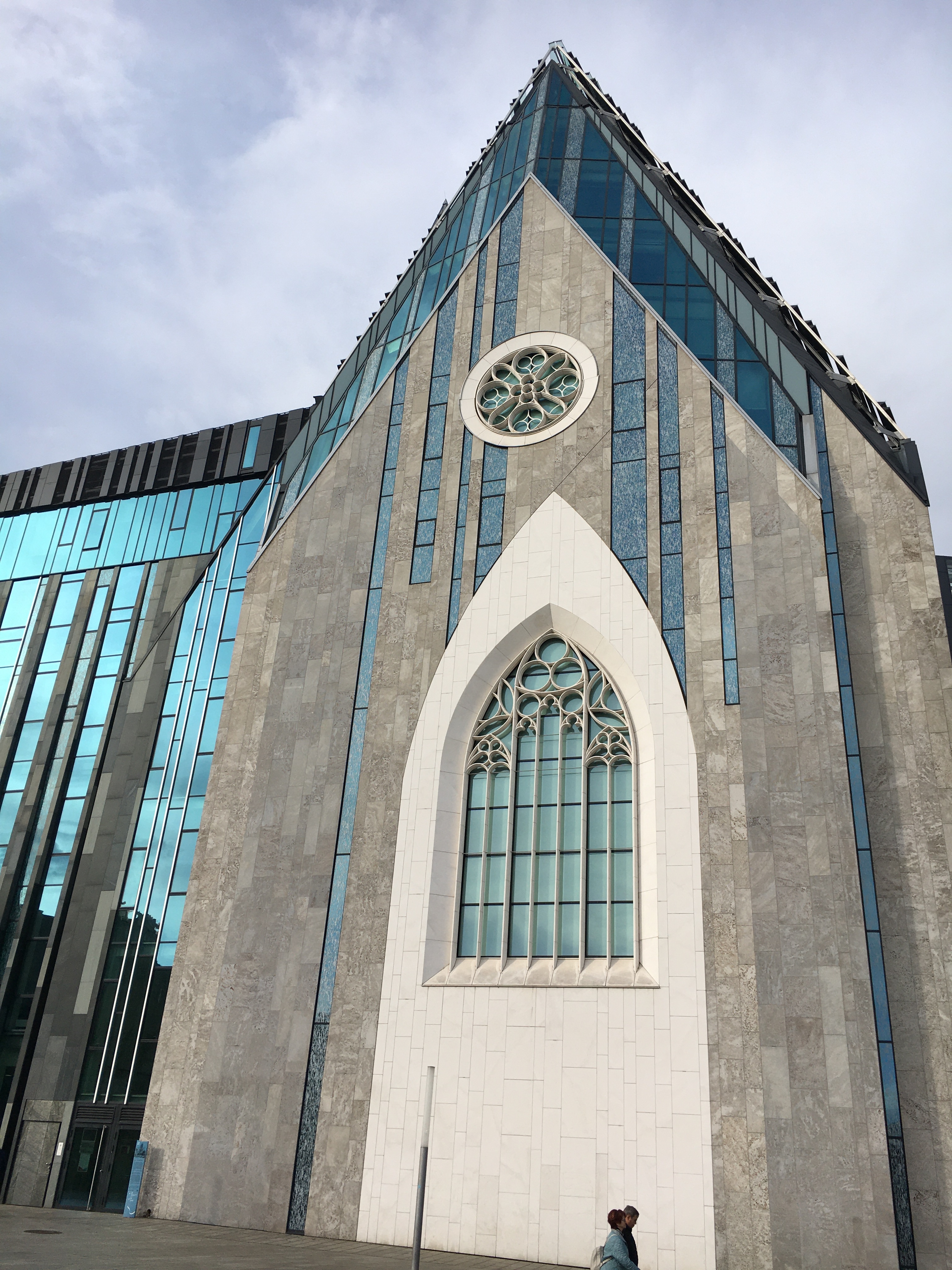
In 2004, a new university building, erected to honor the old church, opened. It’s stunningly beautiful.
Florian took us to the platz outside of Saint Nicholas Church. This was the epicenter of the “Peaceful Revolution.” Prayer vigils were held in the church every Monday beginning in 1982. On October 9, 1989, up to 70,000 peaceful demonstrators showed up to protest oppression under the Soviets. The demonstration coincided with a world trade fair so the media was there, and basically protected the demonstrators from the police. One month later, the Berlin Wall fell. I loved standing in this holy place where prayers really did make a difference.
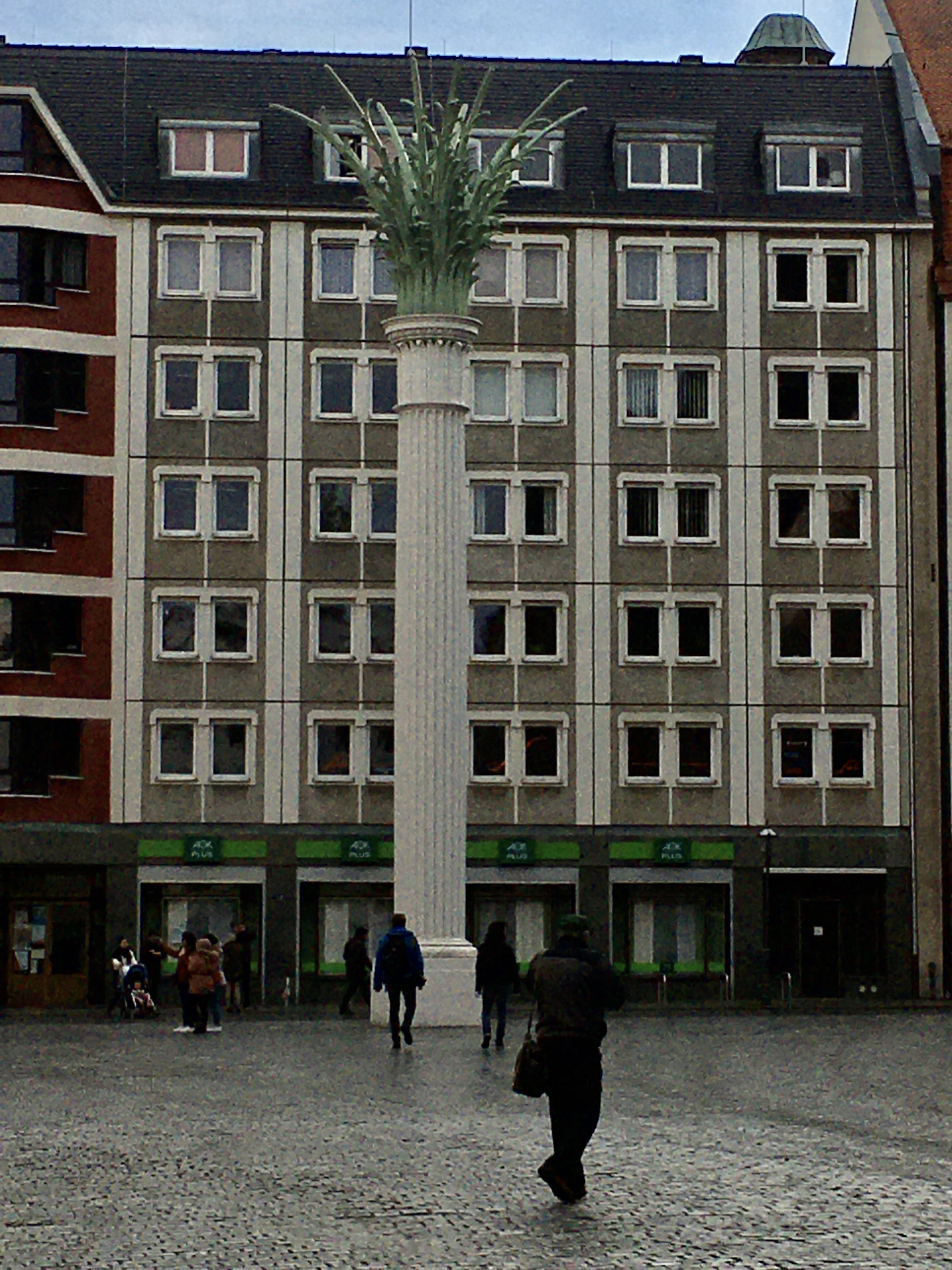
Florian’s stories of this recent history touched me deeply. Three years ago when I was in Cuba observing the poverty of Castro’s regime, I felt a sadness similar to this.
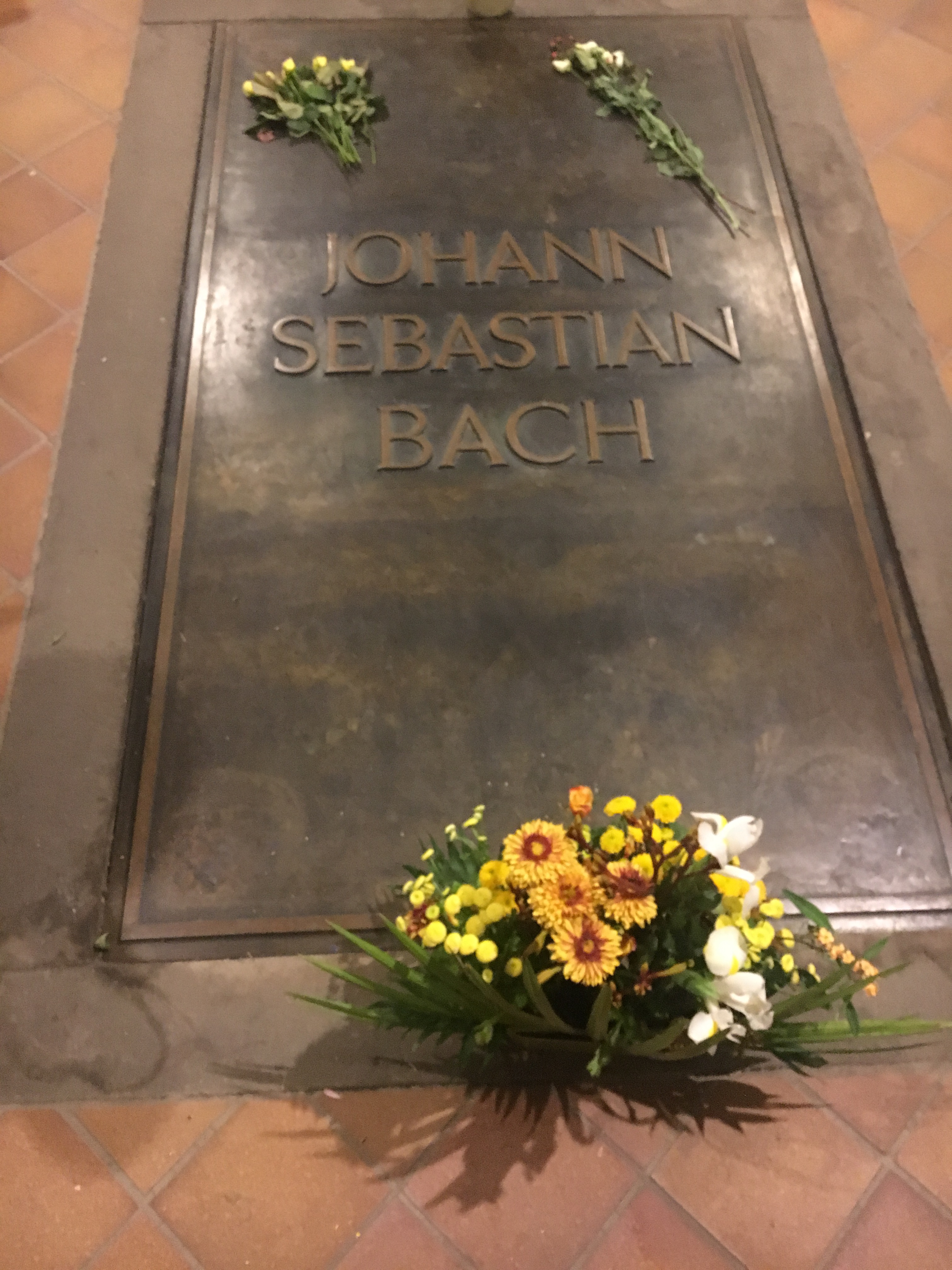
Later in the day we returned to Thomaskirche to hear Bach’s Mass in G. After the breathtaking concert, we stood by Bach’s grave. I thought about wars, destruction, politics, and how his music survived and transcended all of this.


I feel so grateful to be sharing these glimpses into your travels. Thank you for writing and sharing them Katy.
LikeLike
Thanks for saying so. Yes they are just vignettes of all that has happened ❤️
LikeLike
It really is interesting to see the difference between how the “west” parts of Europe were rebuilt vs the “east.” So much ugly construction in Eastern Europe — and Russia. I have been wondering to what extent writing a blog causes you to think more deeply about what you are experiencing. Or maybe thinking deeply is just you. For whatever reason, your commentary is very moving and thought provoking.
LikeLike
I feel like I’m just scratching the surface but yes,I’m always thinking
LikeLike
The blog is good. It gives me some quiet time every day when Mike respects my writing time. The blog has seriously cut into my reading time though.
LikeLike
Katy you have disclosed one of the huge effects of traveling and seeing places and people. Sometimes it is thrilling and magnificent. Sometimes it is so heartbreaking it’s almost unbearable. It’s how I felt when I went to the 100 year commemorations of the end of WWI in the Marne in France. The commemorations were kind of giddy – singers in the style of the early 20th century, set ups of what a field kitchen looked like w/tastes of the awful food the soldiers ate. Lots of photos. And some very sad art. Just a few months before that I had learned about the Grandfather No One Ever Spoke About, my mother’s father. He was shot and injured in the Marne and was also gassed. He had a short life and damaged lungs. And it was all too much for me to hold on to. The costumed singers, the sad army kitchen tent, the horror of that war. And humans aren’t very good at learning from the past, and looking forward it very alarming too. You’re a good reporter. Thank you.
LikeLike