
We did a palace and a castle today, but what I’ve thought about all day is how the Germans think about World War II.
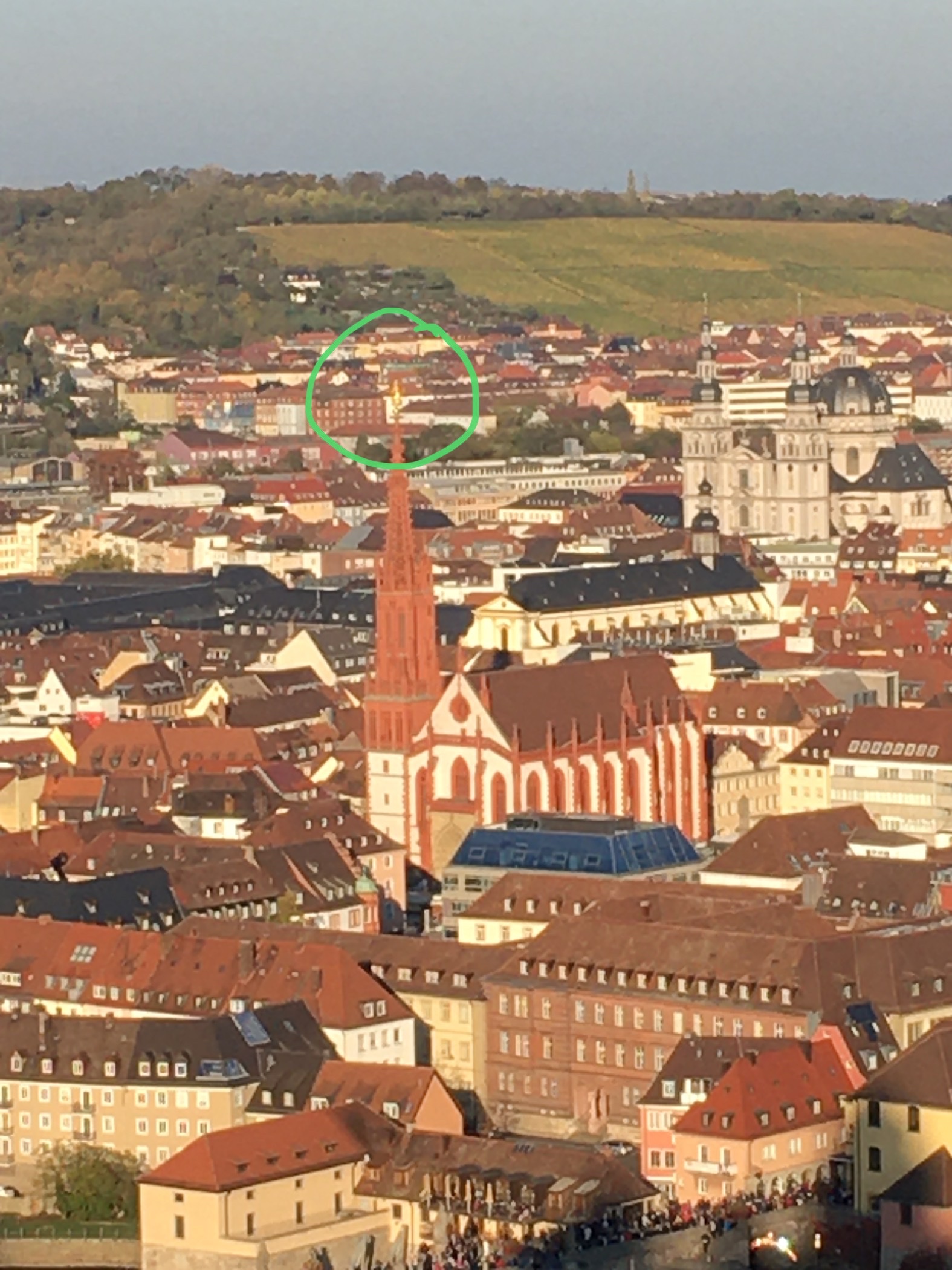
In every town we’ve visited, the topic of how it survived the bombings comes up. The local guides don’t seem sad or angry, just matter of fact. This morning our cheerful guide Suzanne explained that the English severely bombed Wurzburg on March 16, 1945. Then they sprayed on phosphorus that kept the fires burning for many days. Ninety percent of the buildings burned, leaving stone shells. Returning to the town seemed hopeless, but there’s a story that, from the vineyards up the hill, people could see the golden Mary statue on a steeple above the thick smoke. They look this as a sign to rebuild.
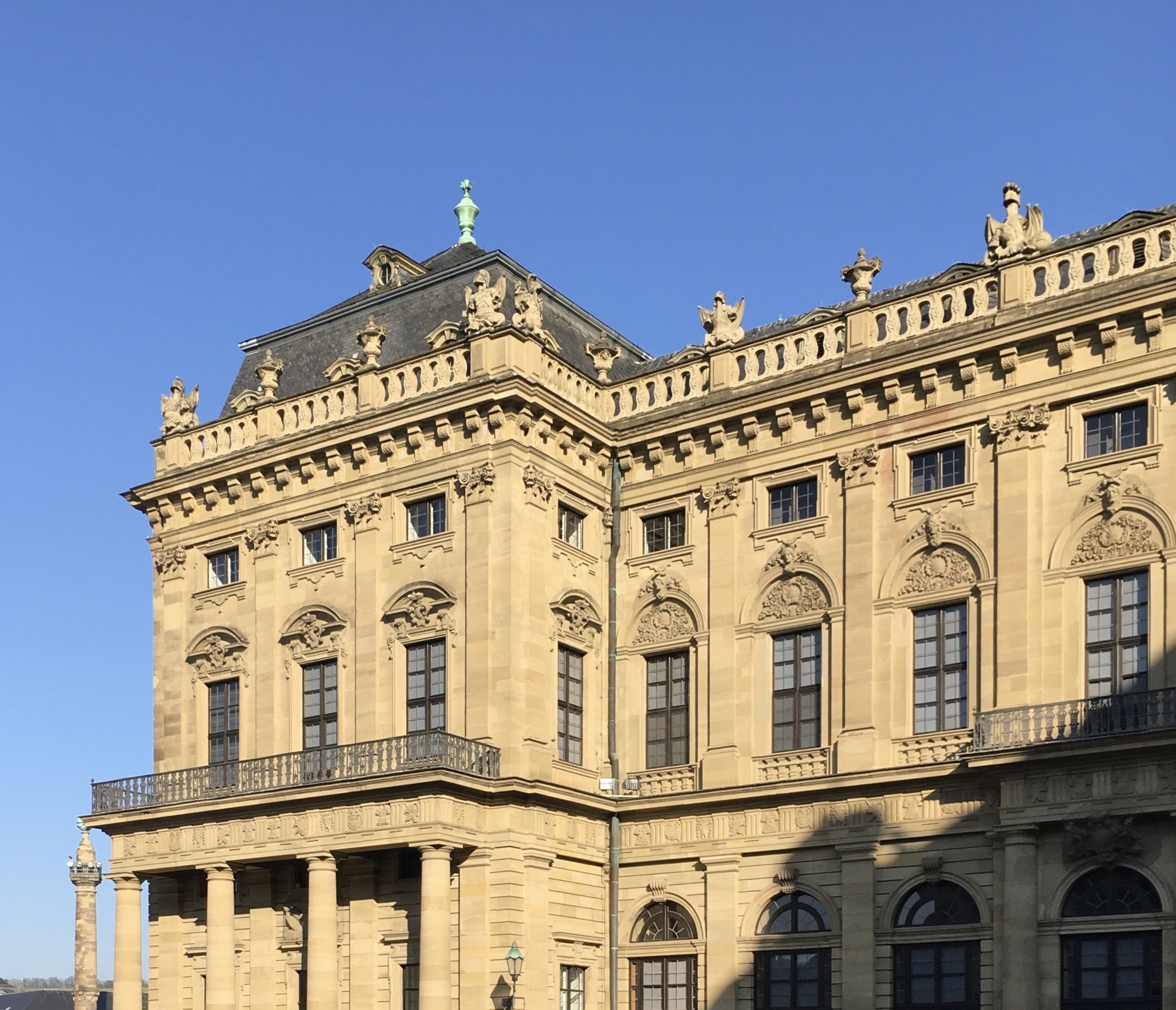
A huge baroque palace in the middle of town was wrecked. Once housing was secured for the survivors, town leaders saved the beautiful paintings on the grand staircase ceiling and decided to rebuild. The German government funded the restoration. It took thirteen years to replace the elaborate plasterwork, paintings and tapestries. Today the place is in beautiful condition, housing a museum, university, and municipal offices.
Suzanne showed us 1945 photos of the bombed out palace. She said that one day she was giving a school tour to some immigrant children from the Middle East. They were most interested in these images and told her that that’s what their town looked like when they were forced to leave. The children told her that the beautifully restored palace gave them hope.
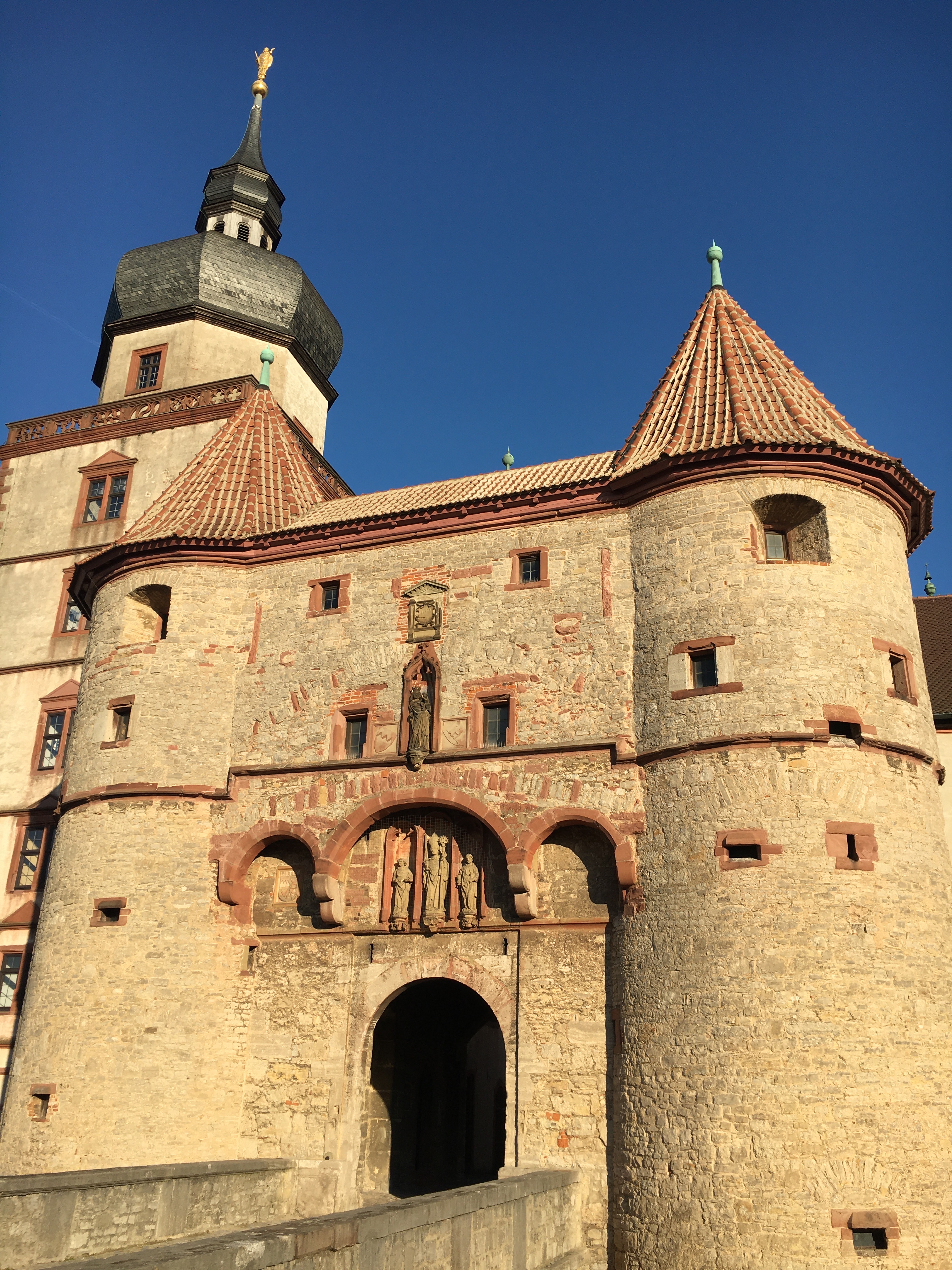
A huge castle, Fortress Marienburg, looms over the town. It’s restoration took almost forty years and wasn’t finished until 1990.
My mother’s grandparents were Germans. They immigrated to the US in the 1880’s. To carry the emotional burden of the Nazis is irrational, but I do. Every reminder of the Holocaust puts me in tears. I can’t imagine how German people cope but I’m comforted that they make efforts to not forget the country’s past.
Many cities and towns in Germany have installed “stumbling stones.” These are metal markers embedded in the streets in front of houses (or where houses were) of Jewish people who were removed. Engraved with names and dates, these markers are a little higher than the cobblestones so you trip a little on them as you walk by.
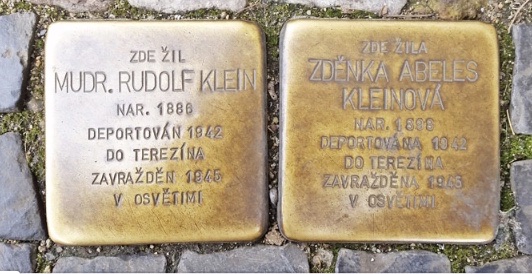
Thanks to Benno, sharp eyed historian, for correcting me on the following photo. It is a marker we found in front of a house in Bonn for Bertha von Suttner. She was the first woman Nobel Peace Prize winner. She died in 1914.

 Katy’s Blog Trip to Europe 2019
Very interesting to hear about German attitudes toward WWII. That is on my mind whenever I think of Germany. I am touched by the “stumbling stones.”
LikeLike
Benno and read what is written under that stone, Katy, and found it very unusual, because they usually state home address and date of transportation , or something similar, while this one says Lay down your arms! We wondered about the story behind it. Bennos dad was called up at 17, towards the end of the war, and ended up in an english camp. He was lucky.
LikeLike
Just looked her up actually…..Bertha was the first female Nobel Peace Prize winner! Died before WW 1, in 1914. So not a Holocaust memorial as such, but a general call for peace. She wasAustrian – Bohemian. Sounds like quite a woman….also a novelist.
LikeLike
Wow I stand corrected. There were quite a few other ones like it nearby. Mike took the photo in Bonn near the Marketplatz.
LikeLike
More corrections. Mike says it was in Cologne
LikeLike