October 25 Amsterdam Harbor

After over three weeks of independent travel, today we turned ourselves over to the river cruise. I’ve been looking forward to letting someone else take care of the details, and also to being in one room for a week. And also a little anxious about losing control of our lives for twelve days.

We had a lovely morning: coffee, fruit, croissants and cheese at 21 Herengracht. Chit chat with the innkeepers and the other guests. A walk on the now familiar canal. An enlightening visit to the “Canal Museum”, where we learned how the 17th century leaders carefully planned this city to include trees, gardens and public green spaces. Lunch on the canal watching the tour boats and a family of swans. We both agreed we’d love to come back to Amsterdam.

Who would ever want to leave this?

We gathered our luggage and headed past the bike parking garage to the train station. The cruise ship dock is on the other side so we walked through a long tunnel that ran under the tracks. Delft blue designs on the white tiled walls kept my mind off the fact that at least two dozen train platforms were overhead.

Emerging, we entered a modern, busy riverside scene. Busses, trams and cars competed with the bikes. High rise hotels and office buildings loomed. I thought about how this harbor was once busy with sailing ships from the Dutch East India Company. We found the cruise shop dock, and felt relieved that the Emerald Destiny was not so huge.

We boarded and handed our luggage over to a small Asian man. The cruise director checked us in and we were led downstairs to our “steerage” cabin where our bags awaited us. Small, minimalist and sterile, the stateroom made me long for that glorious canal view room we’d just vacated. I felt a little down as I put my clothes away in the carefully designed, sparkling new (and colorless) room.

An announcement came over the intercom: orientation in the main lounge at 5. Dinner at 6. Be on time.

We cleaned up and dressed up. Arriving in the lounge, I found it equally minimalist, with floor to ceiling windows and comfortable grey armchairs. We found seats, chatted with a friendly elderly lady and her son, and listened to the introductions and life jacket demonstration. The speakers were good. Waiters brought around flutes of champagne and little hors d’ourves. . We toasted with the captain. We heard about tomorrow’s schedule. A couple played violin and piano duets. As we headed to dinner my mood changed. This was going to be fun! I felt anticipation like it was the first day of summer camp.

After a surprisingly light 5 course meal, a passenger suggested that we walk off the ship and over to a nearby baroque music concert at a recorder festival. The performers, six person group, the Conjunto Discordato (or something like that) played Telemann and Bach. The woodwind players were athletic, dancing as they played their solos. I’ve never seen such such a virtuoso recorder player.

After a lovely concert, I’m tired and happy to return to our neat, comfy little stateroom.
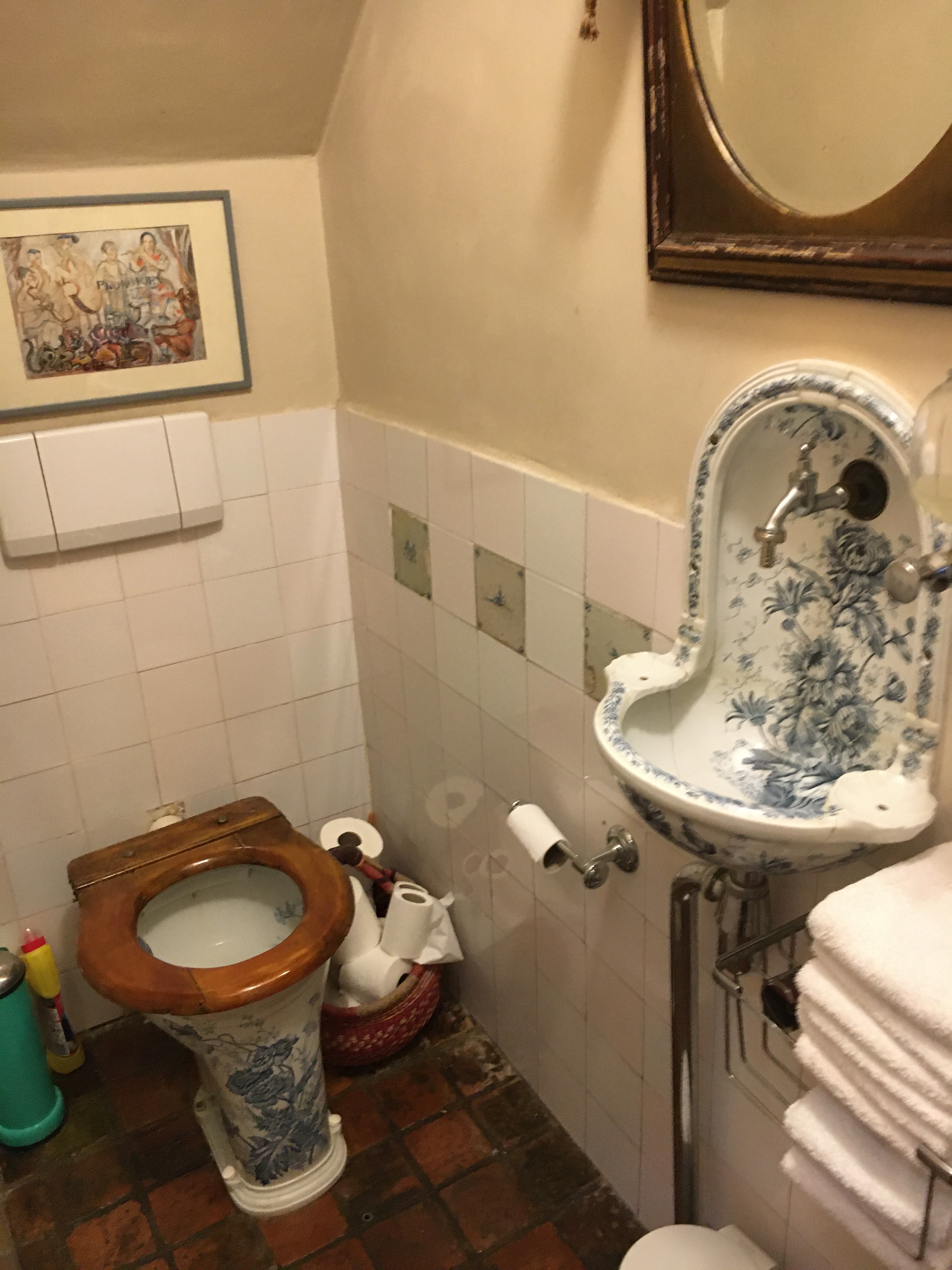

More Delft in the B&B

October 24 Amsterdam

One of my very favorite things about travel is when I’m in a place long enough to do some “normal” things. I desperately needed some foot powder so we stopped in at a little apothem last night. The gentleman showed me what he had in stock but nothing was quite right. He told me he would order a small can of special foot powder and it would be delivered at ten in the morning. He would not be there but his assistant would take care of me.

The little shop is in a side street about a seven minute walk down and across the canal from our house. I arrived there at about 10:30 this morning. A grey haired woman listened to my request and rummaged in a large box. Yes! There was the foot powder. I also needed something to help relieve leg cramps. I showed her my empty pill bottle. We both laughed as we took our glasses off trying to read the fine print. She found an equivalent and we discussed the pros and cons of tablets versus liquid. I took the tablets because they were smaller.

My third need was new deodorant. Yesterday I had noticed some pretty containers and looked forward to seeing what they were. The other natural deodorants looked very clinical, but these in cardboard cylinders were printed in pastel designs. What scents were they? The shopkeeper opened up several so we could smell them. I liked the purple one named Provence. We opened it and a lovely lavender aroma wafted out. That was the one.

The transaction took about fifteen minutes. The cost was about thirty Euros. I wish I could shop there whenever I had apothecary needs.

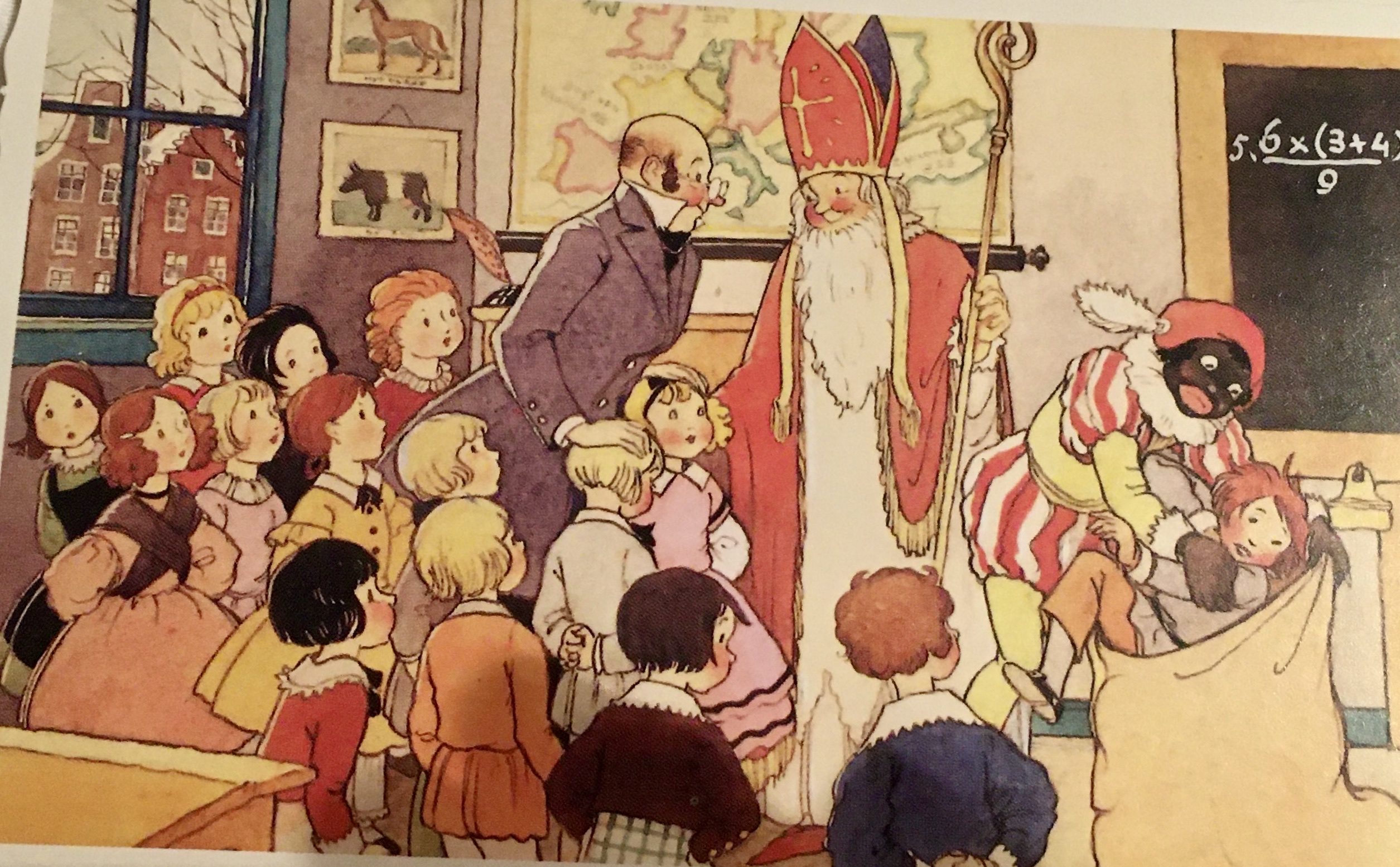
We also visited the post office so I could mail some books and souvenirs home. While the attentive clerk did the paperwork and taped my bulging box shut, I found these adorable Christmas postcards.

(A little internet research revealed that St. Nicholas is Amsterdam’s patron saint. The dark helper is “Black Peter,” a traditional Christmas character who is supposed to be a Moor. He has become controversial in recent years.)

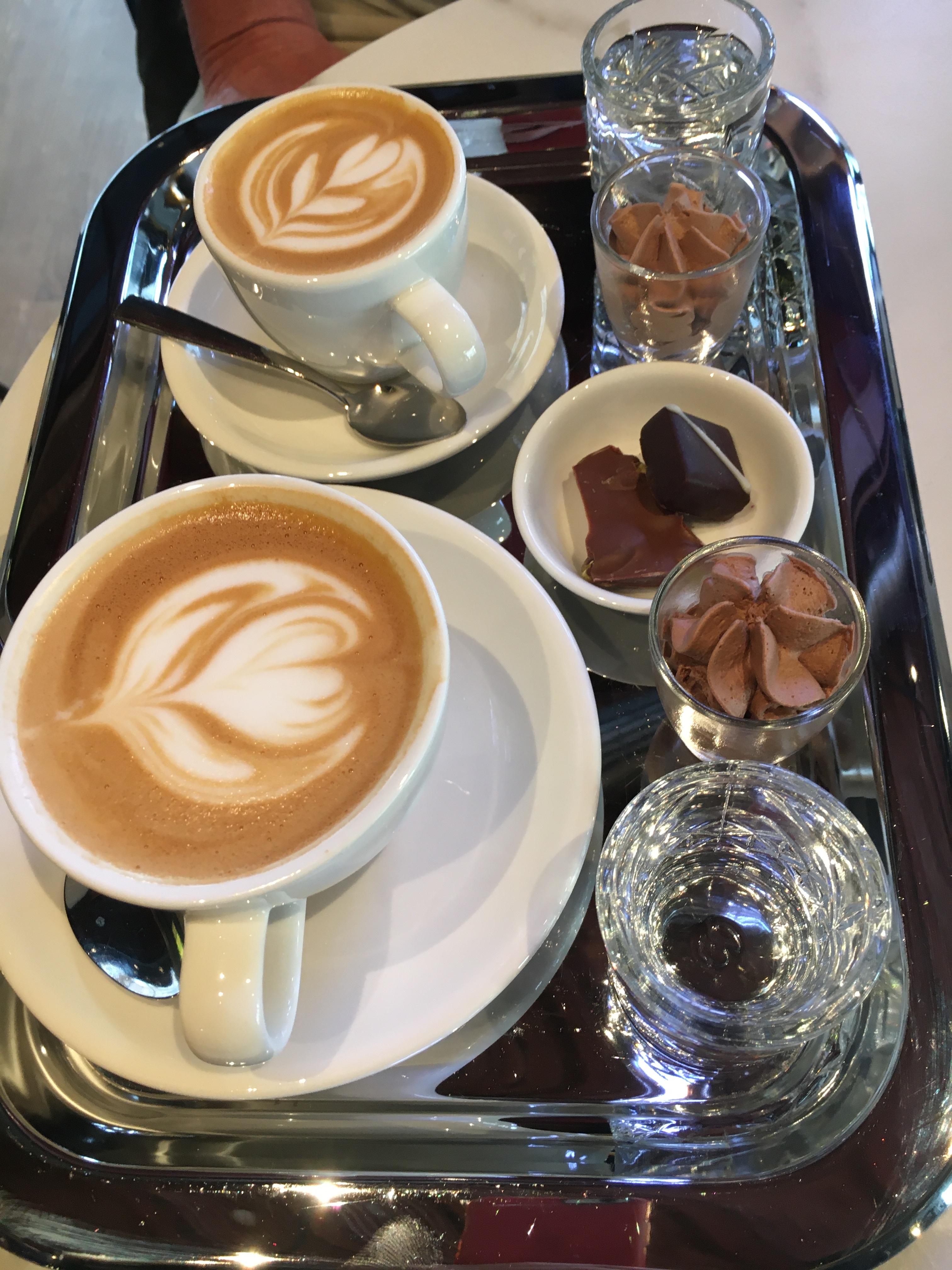
We went into a high end candy store. I wanted a little gift for Lues, our landlady. And we were ready for a coffee. We ordered an espresso and a cappuccino. Every Amsterdam coffee comes with a little cookie, but this tray exceeded all expectations:

Yes that’s chocolate mousse. And chocolates.

I love the European customer service. With the errands completed, we spent the afternoon as tourists.

October 24 Amsterdam

One of my very favorite things about travel is when I’m in a place long enough to do some “normal” things. I desperately needed some foot powder so we stopped in at a little apothem last night. The gentleman showed me what he had in stock but nothing was quite right. He told me he would order a small can of special foot powder and it would be delivered at ten in the morning. He would not be there but his assistant would take care of me.

The little shop is in a side street about a seven minute walk down and across the canal from our house. I arrived there at about 10:30 this morning. A grey haired woman listened to my request and rummaged in a large box. Yes! There was the foot powder. I also needed something to help relieve leg cramps. I showed her my empty pill bottle. We both laughed as we took our glasses off trying to read the fine print. She found an equivalent and we discussed the pros and cons of tablets versus liquid. I took the tablets because they were smaller.

My third need was new deodorant. Yesterday I had noticed some pretty containers and looked forward to seeing what they were. The other natural deodorants looked very clinical, but these in cardboard cylinders were printed in pastel designs. What scents were they? The shopkeeper opened up several so we could smell them. I liked the purple one named Provence. We opened it and a lovely lavender aroma wafted out. That was the one.

The transaction took about fifteen minutes. The cost was about thirty Euros. I wish I could shop there whenever I had apothecary needs.

We also visited the post office so I could mail some books and souvenirs home. While the attentive clerk did the paperwork and taped my bulging box shut, I found these adorable Christmas postcards.

(A little internet research revealed that St. Nicholas is Amsterdam’s patron saint. The dark helper is “Black Peter,” a traditional Christmas character who is supposed to be a Moor. He has become controversial in recent years.)

We went into a high end candy store. I wanted a little gift for Lues, our landlady. And we were ready for a coffee. We ordered an espresso and a cappuccino. Every Amsterdam coffee comes with a little cookie, but this tray exceeded all expectations:

Yes that’s chocolate mousse. And chocolates.

I love the European customer service. With the errands completed, we spent the afternoon as tourists.

October 23 Amsterdam

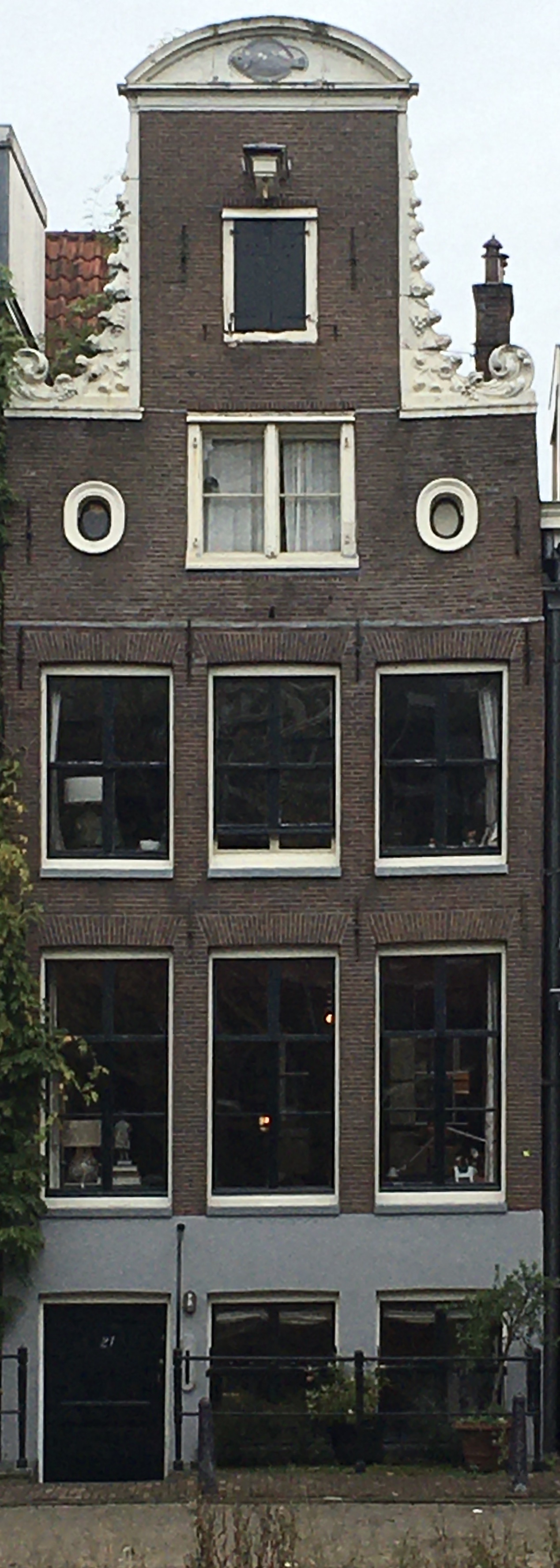
We are staying in number 21 Herengracht Canal. The house is about eighteen feet wide, maybe forty or more feet deep and four stories tall, plus an additional little attic. It abuts right up to the houses on either side. Our beautiful third floor room has high ceilings with wooden rafters, and windows all across that overlook the canal. We climb twenty-eight very narrow spiral stairs to get up here.

We are on the third floor

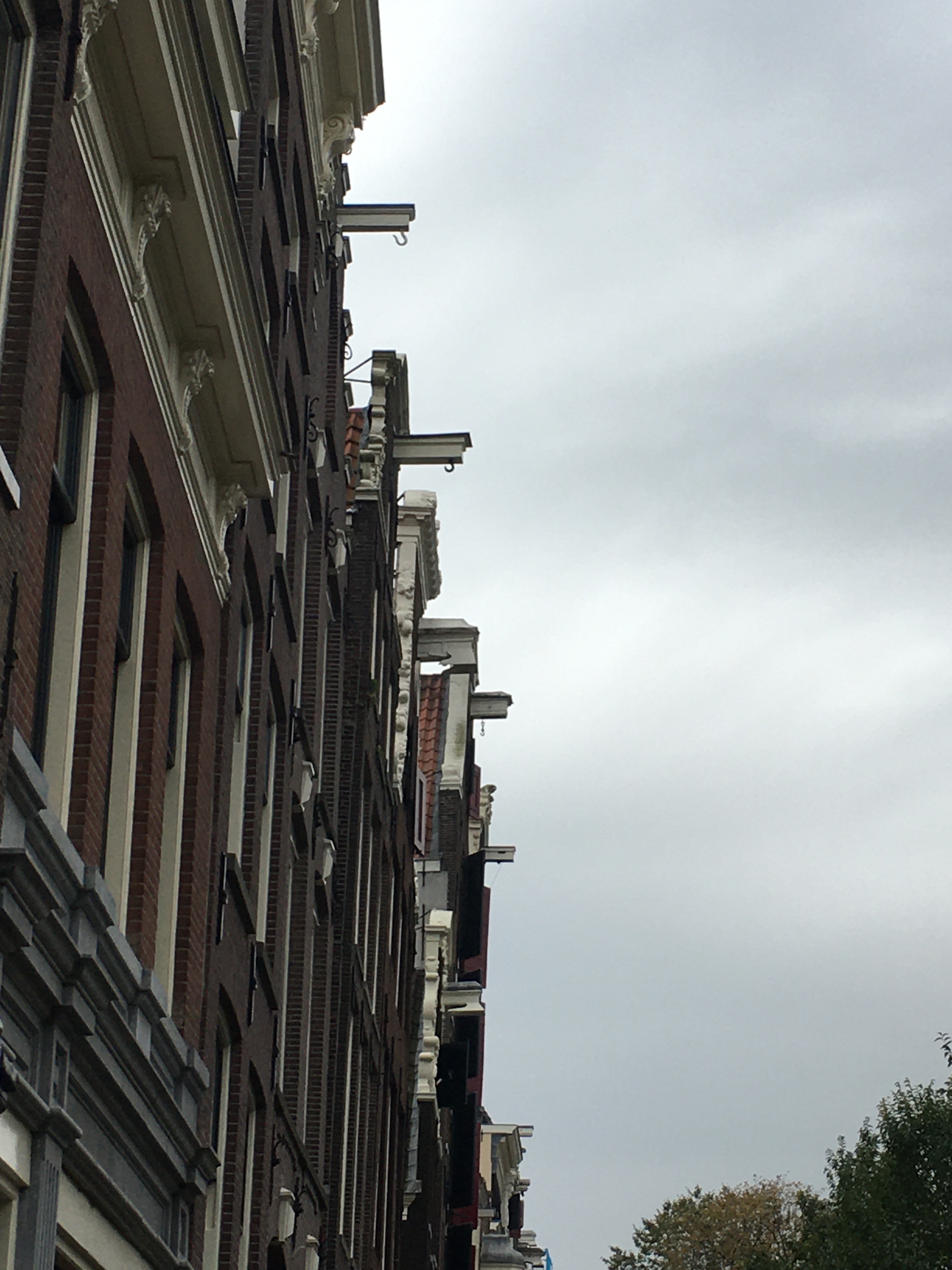
Outside, each house has curlicues on a sort of false front high up on the roof. A fisherman built this house in 1643, so he decorated the very top gable face with a plaster fish. An Amsterdam house leans slightly towards the canal and has a large arm and hook apparatus on the top floor. Because the tiny stairways are less than a yard wide, furniture had to be moved into the house with a cable and pulley system so the large items could then go in through the windows. It’s the same in 2019 as in 1643.

Today I visited a grander house that Rembrandt lived in for twenty years. I was in awe looking up close at some of his engravings but was also charmed by his house with its narrow spiral stairways, big kitchen, living/bedroom, and library of full of plaster busts, natural objects and albums of prints. On the upper floors were studios where he did his work and taught about five students at a time.

Rembrandt House

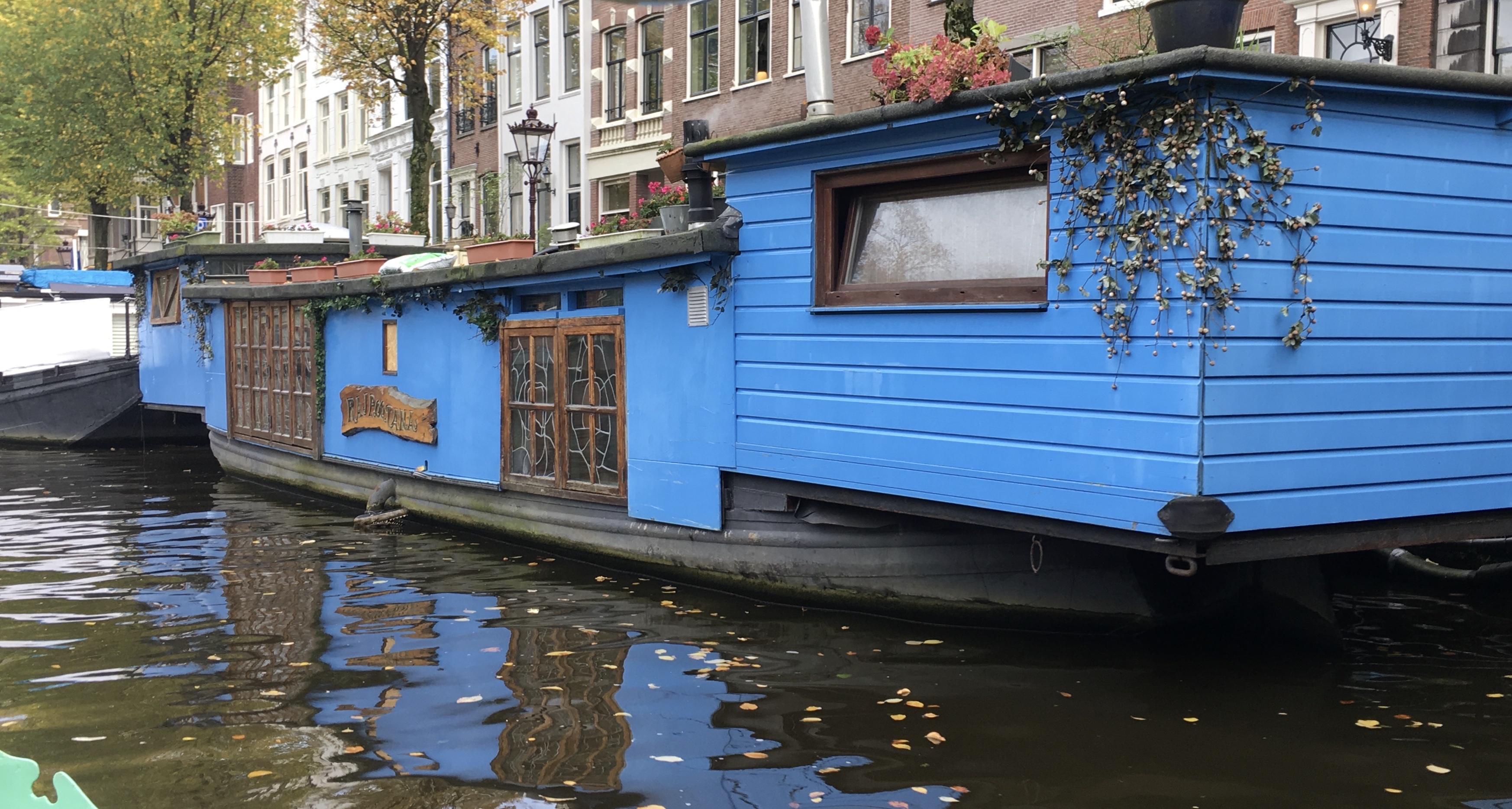
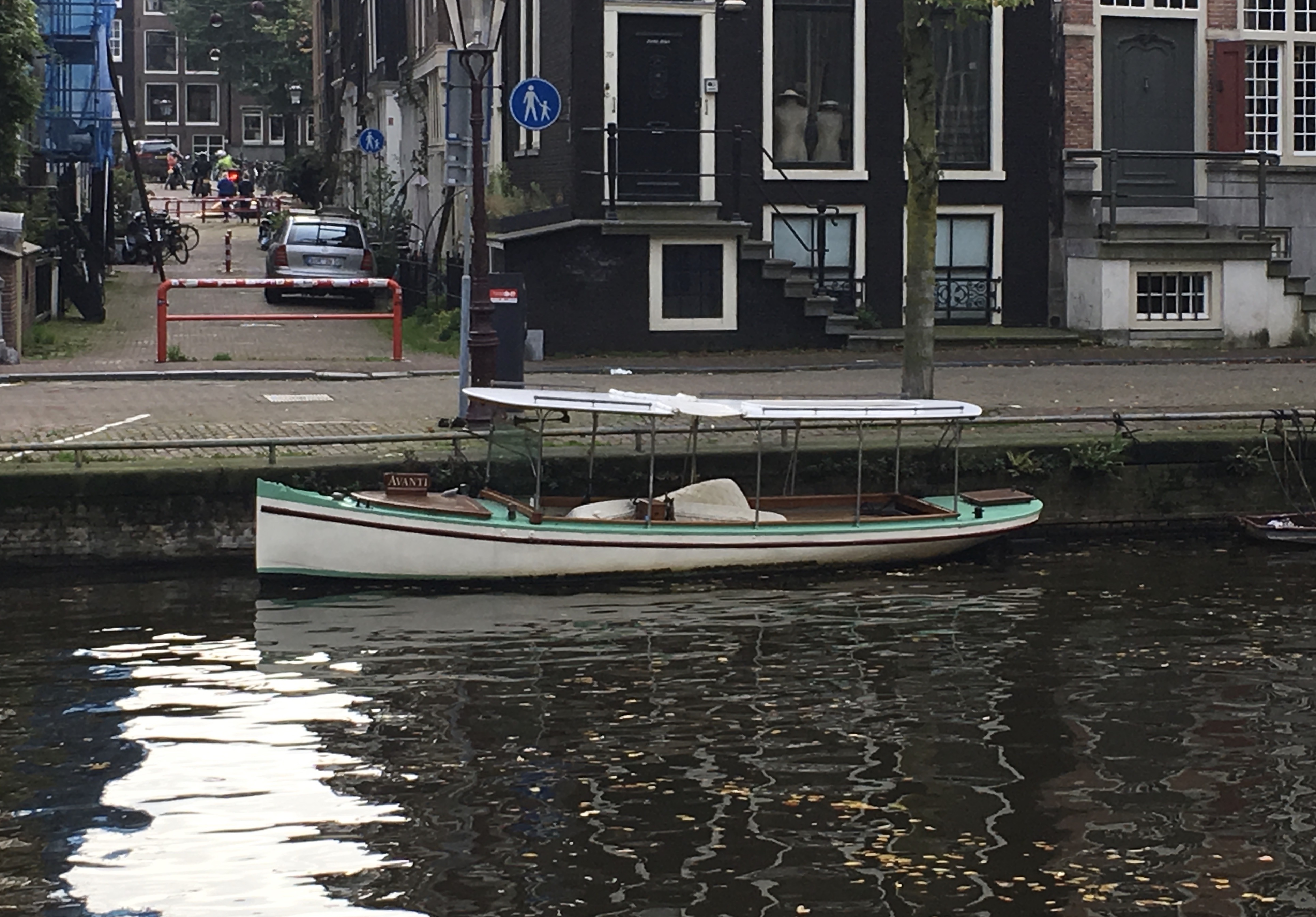
Later in the day, our landlord Tony took us on a cruise in his little six seater “notary boat.” We cruised through the canals and the Amstel River admiring the bridges, houses and houseboats. Tony, a lifelong Amsterdammer and kind of an eccentric, commented that every single house is different. I noticed that every boat moored along our way was different too. (The ladder to get on and off the boat was a lot scarier than any stairway!)

One of many houseboats

The day we arrived here, I twisted my ankle on the spiral stairs and refused to go down even for dinner. Now, I’m not nimble on the stairs but I take them with confidence, grateful to live for a few days in this lovely Amsterdam home.

Tony’s boat Avanti

October 22 Amsterdam

We are looking out the window of our third floor B&B window at the Herengracht Canal. Tonight little lights outline the curved bridges, silent low boats cruise by and the ripples reflect lights from the house windows. The old fashioned street lamps appear to be lit by gas. Occasionally people walk by singing or in quiet conversation.

Herengracht Canal this morning from our room

Amsterdam seems to be the most livable city we’ve visited. People who are obviously not tourists are out and about. Even though it’s cooler and kind of grey, outdoor cafes are busy. Streetcars and some cars ply the large streets but most people appear to walk or ride bicycles.

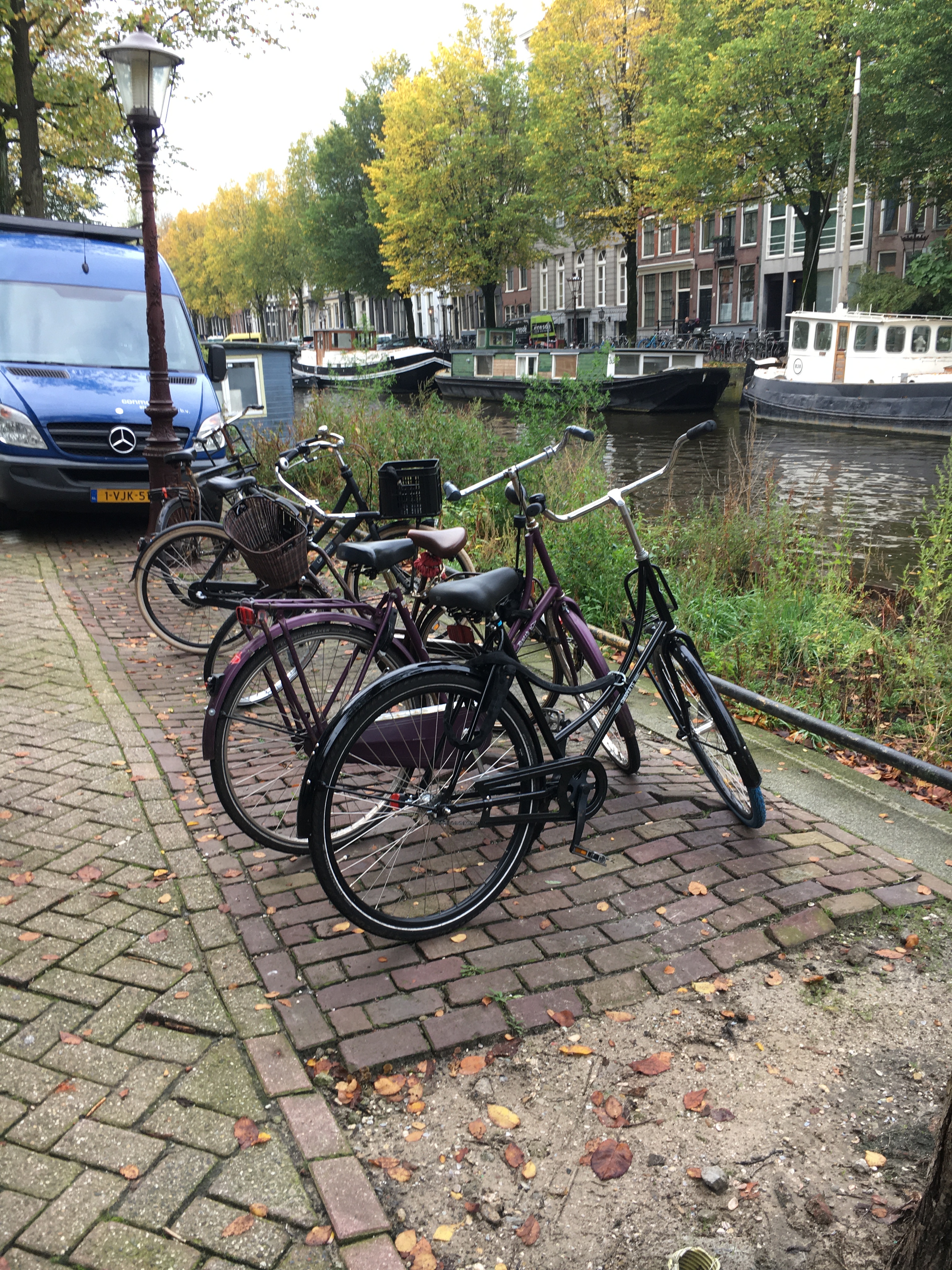
I had heard that the bike riders were crazy here, but I think just the opposite. Bikes are parked everywhere. Thousands of them. Every street seems to have a dedicated bike lane. The bridges have little ramps next to the steps for the bikes.

On our canal

We were in the street at rush hour, and we did see the packs of riders heading home. But the pace is stately. No one is racing. In fact, I have not seen what we used to call racing bikes. These Amsterdam bikes are like Cadillac versions of our old Schwinns. Most are big and black. No gears. Very high handlebars so the riders sit tall and erect. Modifications include baskets, baby and toddler carriers and delivery units. I saw a DHL bike today. They are quiet; I don’t think I heard a bell or an “on your left” all day. So the flow of movement was calm and easy, in this city of no hills. We didn’t see a single rider wearing a helmet. But riders are safe from cars here, and maybe a bike helmet to an Amsterdammer would be as weird as a “walking helmet” would be to us.


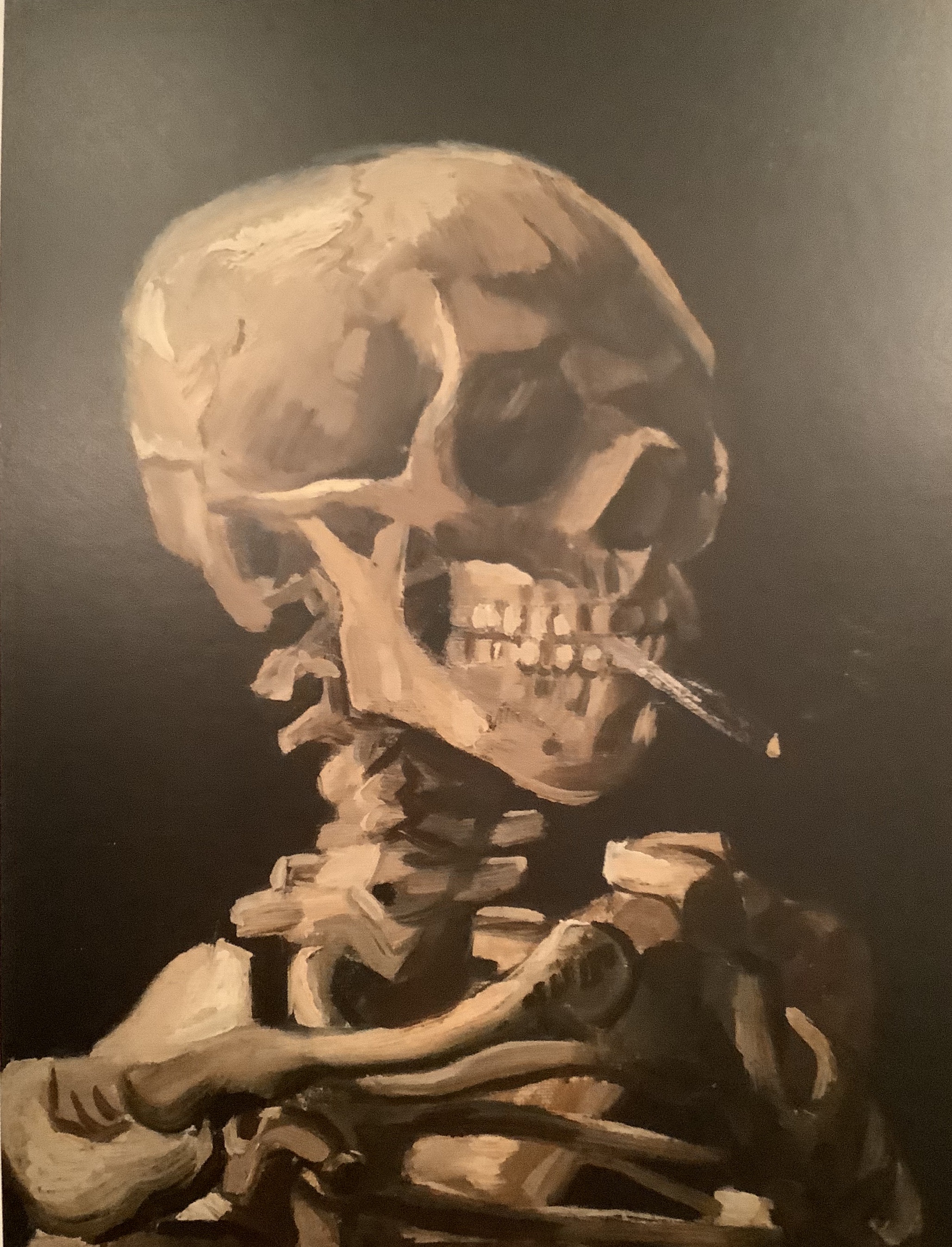
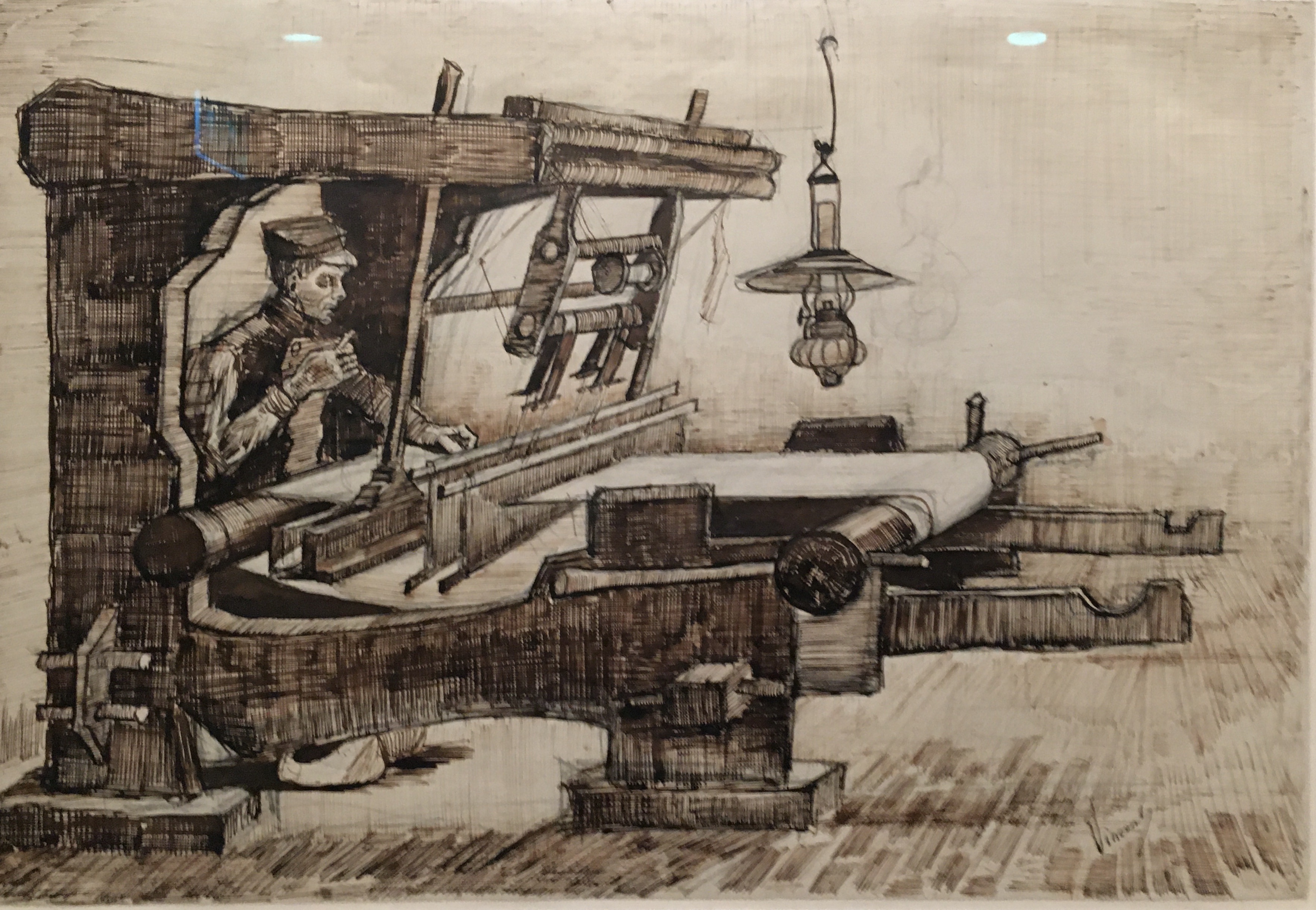
We spent our afternoon in the Van Gogh Museum, a four story modern building with focus on a deep look at Van Gogh’s life and work.

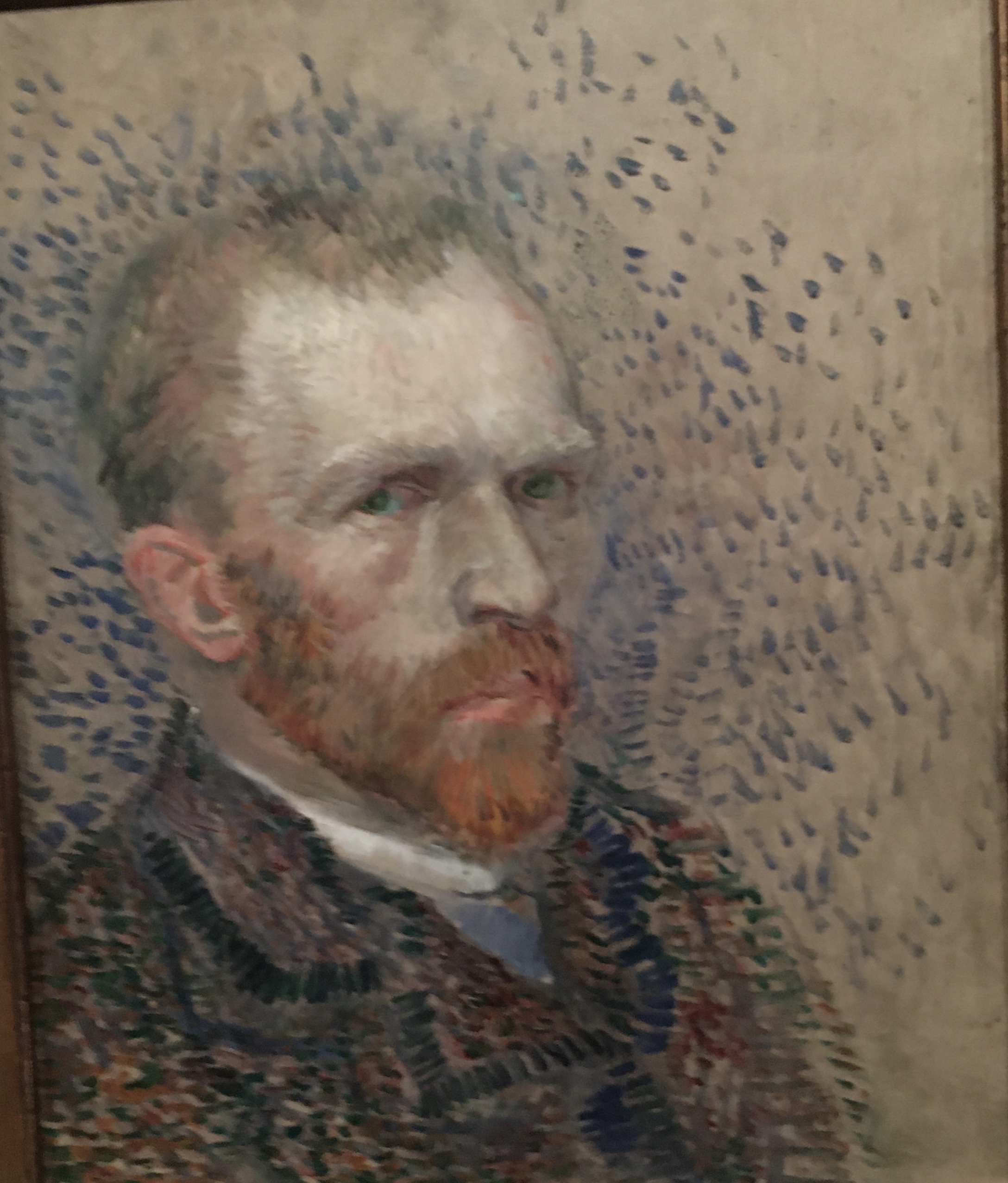
My favorite self portrait

The museum had a few greatest hits (Sunflowers, The Potato Eaters) but I loved the sketches and surprises.

Skeleton with Burning Cigarette
The Weaver

Several of Vincent’s early paintings were amateurish, such as a picture of his pastor father’s church he painted as a gift for his mother when she was ill. He copied Japanese prints, and used stuffed birds as models. A special exhibit showed how Vincent and other great painters copied Millet’s studies of peasants. (I was particularly moved by a drawing in John Singer Sargent’s sketchbook of Noonday Rest from Work.)

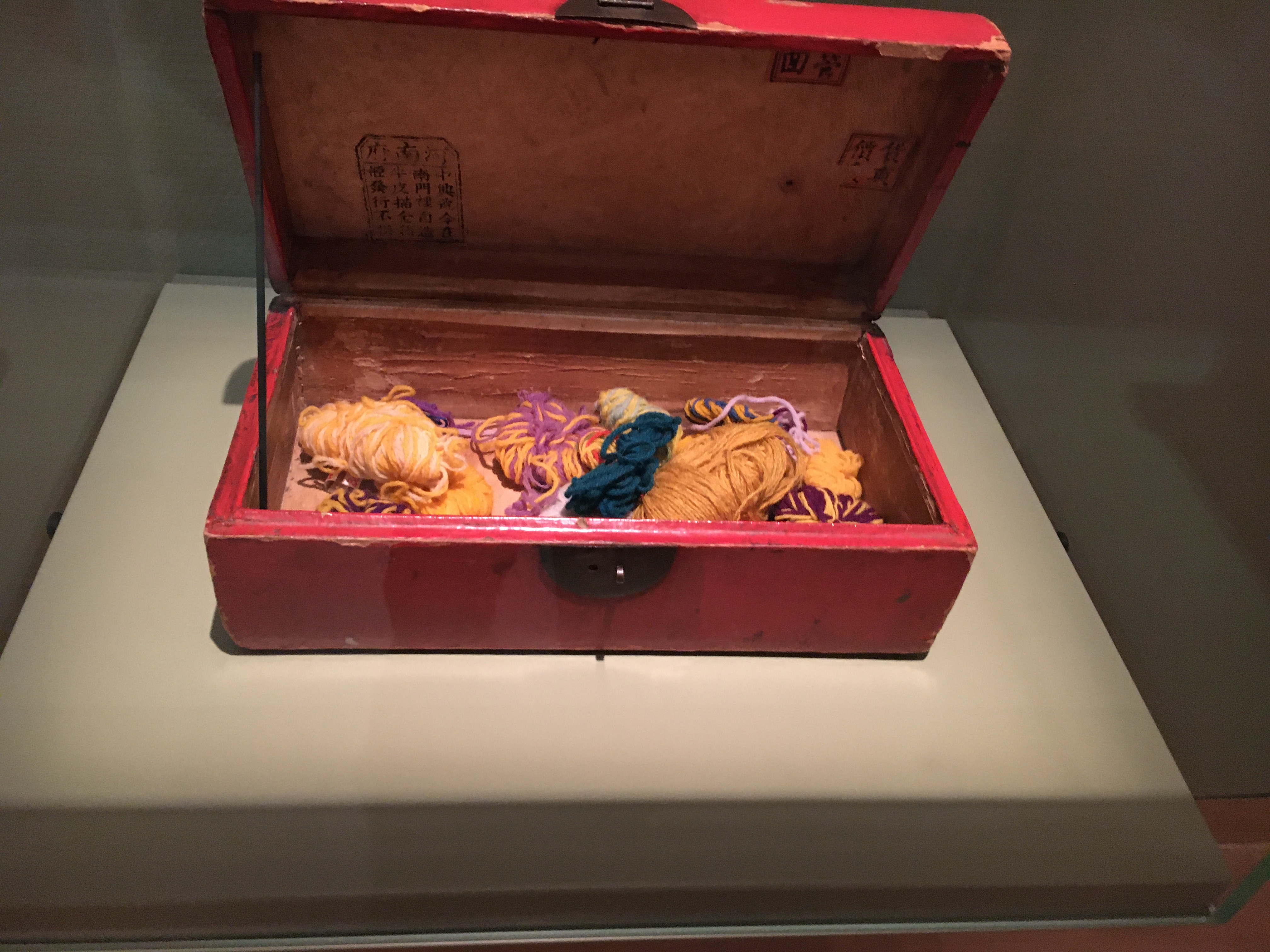
The museum included personal artifacts. Mike was moved by Vincent’s original letters to his brother Theo. Some of the paintings were displayed so you could see both sides of the boards Vincent used for canvas. A palette and some paint tubes were not nearly as poignant to me as this box of yarn Vincent used to test color combinations.

October 21 Amsterdam

Mike bought us Eurail Passes. I’ve always wanted one. You buy the pass and it entitles you to travel on trains and some ships throughout Europe within a time frame. Reserved seats cost a little extra but it’s worth it not to have to search for a seat.

We’ve ridden second class in local trains in Italy and first class in high speed trains from Switzerland via Germany to Amsterdam. I’ve loved every train.

As far as I can tell, all the trains are electric. They are very smooth and quiet coming and going. The fancy trains have a sort of jet nose, like a monorail.

You board on a numbered platform. A sign tells you the train’s number. When it arrives you walk along the platform to find your car. You push a little button and the door slides open. You haul yourself and your bags up a couple of steps, pass through another automatic door, enter your car and walk the aisle looking for your seats.

Seats are configured facing both directions. In Italy we were always assigned aisle seats facing each other between a little fold-down table. The seats were pretty close and our long legs jostled to find room. I would not be very comfortable facing a stranger and trying to avoid “leg contact.”

You can put your suitcase in an overhead rack, and hang your jacket on a little hook. The seats are large and comfortable with armrests and a small cushion behind your head. Some even recline.

We had first class reserved side by side seats today on the fancy ICE (Intercity Express) high speed trains between Basel and Amsterdam. For an hour we were riding backwards. At some point the train reversed direction; facing forward was a relief.

On first class rides an attendant checks tickets and serves food. In Italy we got a towelette to clean up, a little pack of biscuits and a small coffee in a paper cup. On the ICE, we ordered coffees delivered to our seats in china cups (for a fee.) The attendants came through with little Ritter chocolate bars every couple of hours.

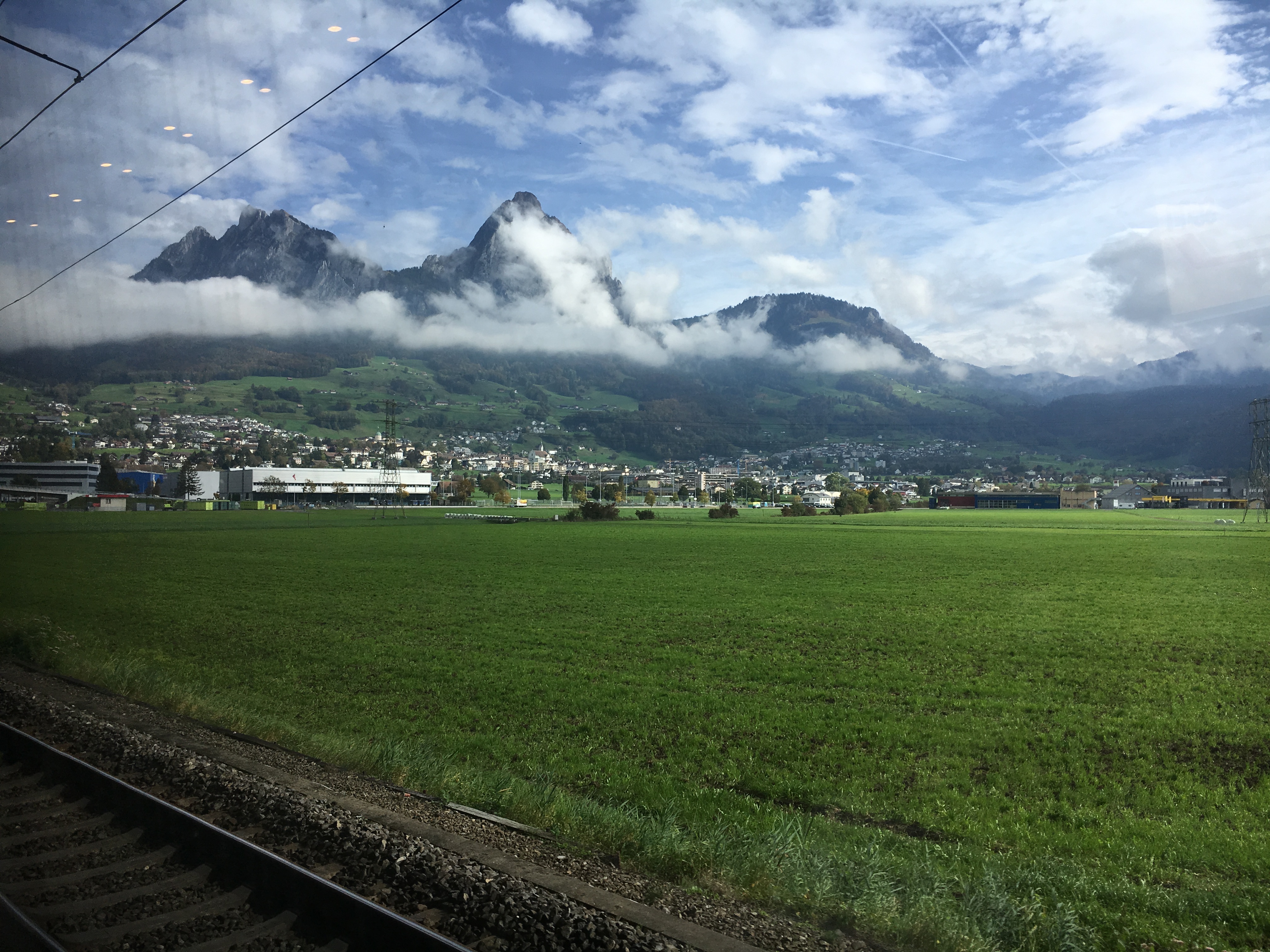
People slept, played games on the little tables, read, drank their beers and coffees and used the excellent internet. I dozed, read, knitted and gazed out the window at scenes as lovely as this

Introduction to Switzerland

or at more industrial factories, graffitied overpasses and long black tunnels.

The trains are smooth and some are pretty fast. The movement is soothing: like on the Alaska ferry, the train is a great place to doze. The bathrooms were modern and fairly clean, with lots of push buttons. On every ride, the train was never more than a few minutes late, but usually right on time.

The train is a comfortable little oasis. You have no responsibilities except to keep track of your stuff and get off at the right station. Today in Germany the announcement that “there are pickpockets on the train” was issued at three urban stops. One guy walked through our car asking for money. Other than that, I felt safe and carefree.

Arrival in a new city is abrupt and disorienting. In Siena we rode a long escalator into town. In Assisi we followed Rick Steves’ advice to take a really crowded bus up the hill. In Basel and Amsterdam we disembarked in gloomy rain. In each city you have to figure out your direction and walk to your lodging. My iPhone helped but not always. We seem to overshoot frequently. Each destination seemed a little grim arriving by train but by the next day, oriented and rested, you saw why you came.

October 20 Basel

I felt like a Basler today. For Sunday morning we slept in, in the loveliest bed. I had muesli and coffee with hot milk for a leisurely breakfast.

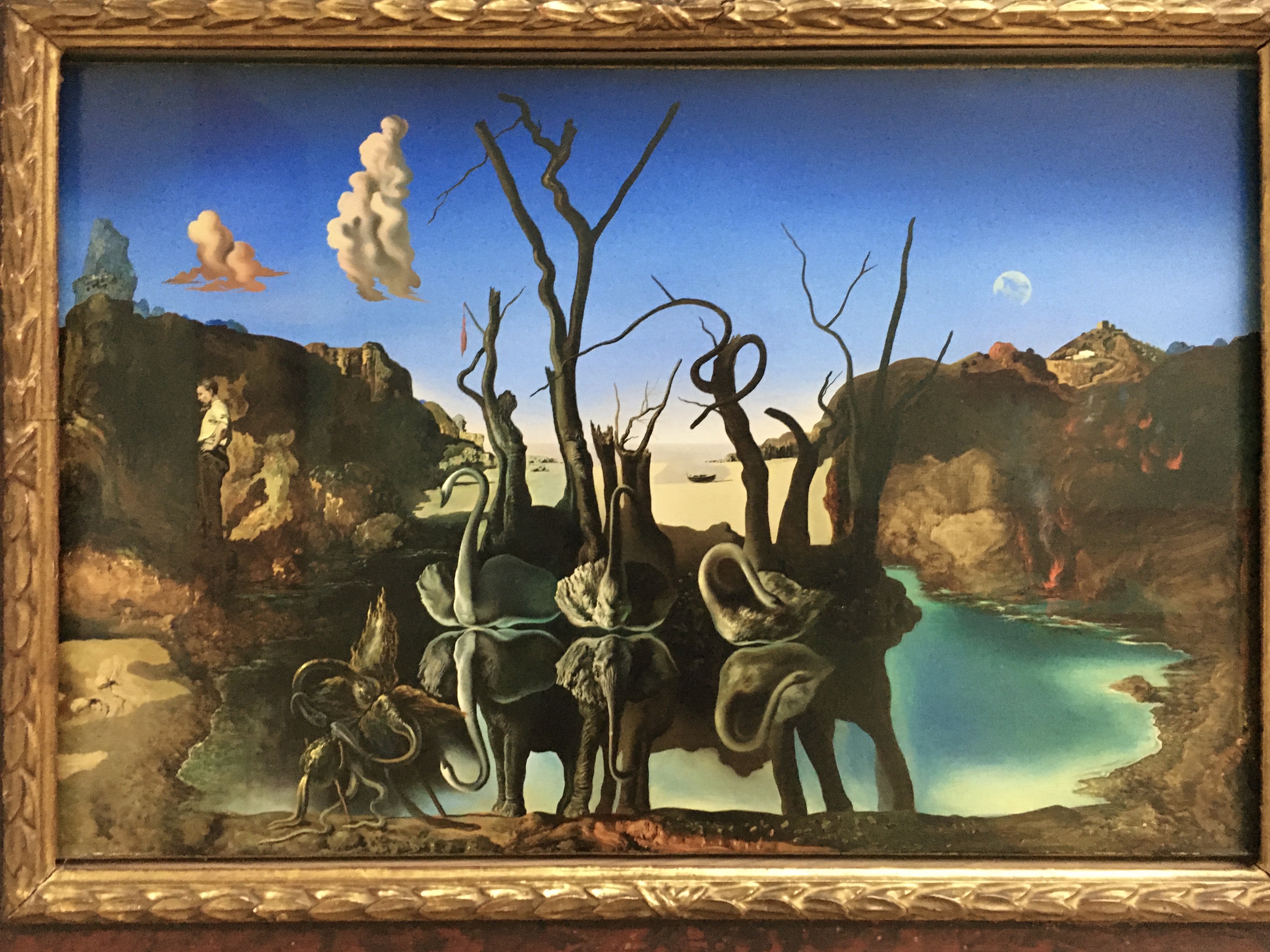
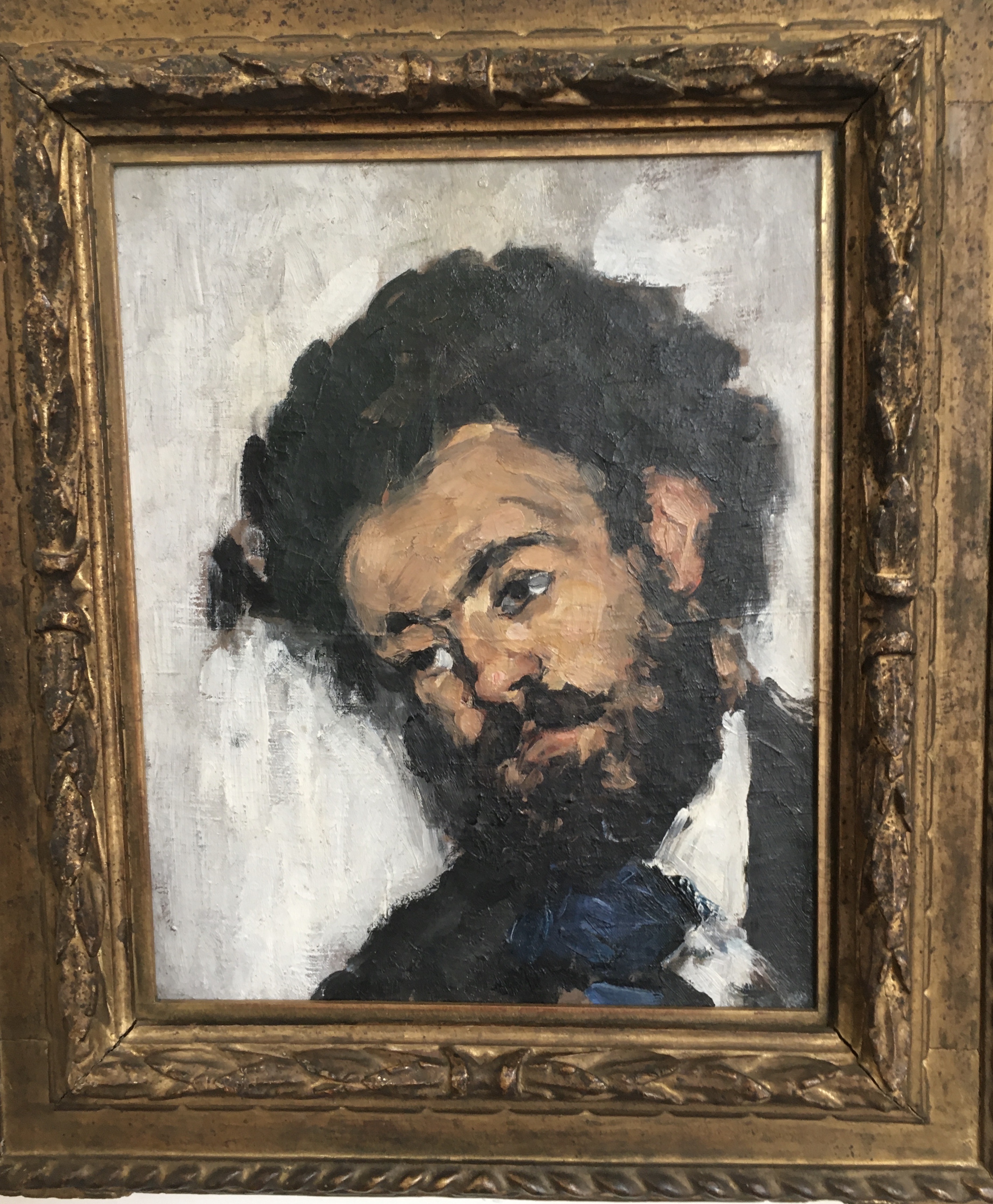
We visited the Kunstmuseum near the Rhine. This is a modern building displaying an extensive modern collection. The spacious galleries were almost empty, so we could linger, even on a comfy leather bench if we wanted to. We couldn’t take it all in so we worked backwards from Picasso. Imagine turning a corner and encountering this:

Or this:

Salvador Dali on swans and elephants

I loved this portrait by Cezanne.

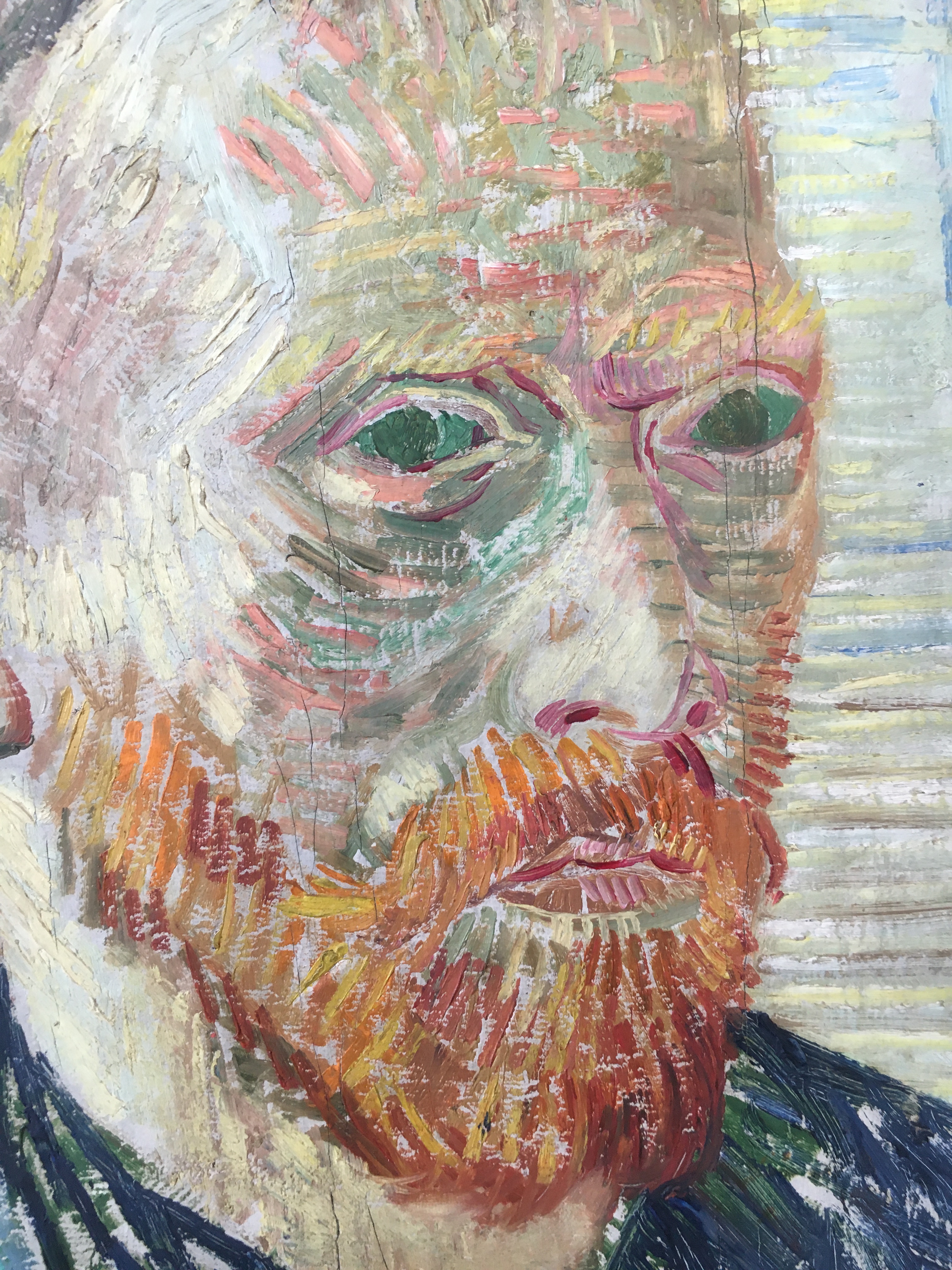
But most thrilling of all, I looked really closely (without my glasses) at Vincent’s brush strokes in this self portrait on wood.

After restorative kaffee mit milch and chocolate cake we went through a very old factory housing the “Paper Museum,” an interactive history of books and writing. Dozens of children were interacting with artisans and docents, making paper, writing with quills and setting type. I paused to think about the genius of the Sumerians’ invention of the sound to symbol relationship. It changed everything.

We joined the Baslers in their Sunday strolls along the Rhine on a sunny, touch of fall in the air, afternoon. We bought hot roasted chestnuts from a street vendor. They came in a clever two sided bag, the second side for the shells. People seemed relaxed and happy, whiling away the time. We stopped for a beer at a sidewalk cafe. We noticed parents on bicycles with large baby carriages built in, and young people taking in the sun down the steps by the water. A boat, hooked in by a cable device, ferried people across the fast flowing Rhine.

We ended the day with a Swiss dinner, raclette for me and venison with spaetzl for Mike. I can’t imagine a more satisfying or lovely day.

October 19 Basel Switzerland

My first time in Switzerland. Only a six and a half hour train ride from Florence, here we are in the land of Alps, Lindt chocolate, alpine lakes and cows in green pastures. It is real. We saw it all from the train.

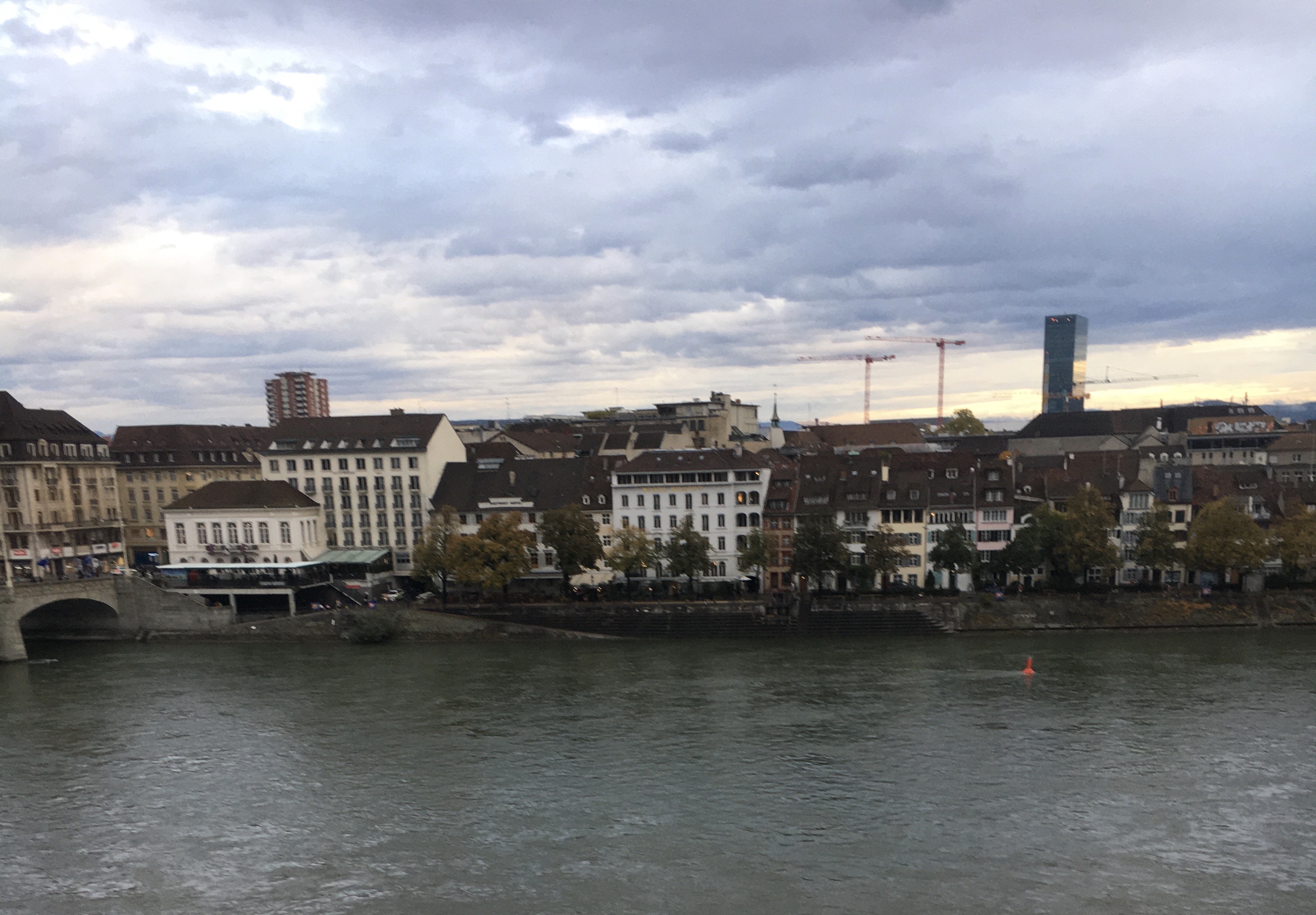
Basel is a total contrast from Florence. First of all, we are in German speaking Switzerland. The Swiss franc is the currancy. Most of the people in the streets are going about their business and seem to live here. It’s lightly raining. The gothic stone is deep red sandstone and the cathedral has flying buttresses. Few cars or motorcycles impede pedestrians; instead, long trolleys quietly ply the main streets. Modern buildings intersperce with the old ones and skyscrapers loom in the distance.

My first view of the Rhine

I am baffled by the German. I might have a hundred German words in my vocabulary but I’m lost here. Italian was so much more familar. I know that “Platz” is a plaza or square but “Barfusserplatz” made me laugh.

We are staying in a super modern hotel, at the other end of the spectrum from the faded palazzo. I had a little trouble with the push button shower but otherwise it’s a relief to have everything so new and sleek. And now I’m so tired that I’m climbing under the eiderdown with the tasteful ginkgo printed organic sheets and bid you gute Nacht.


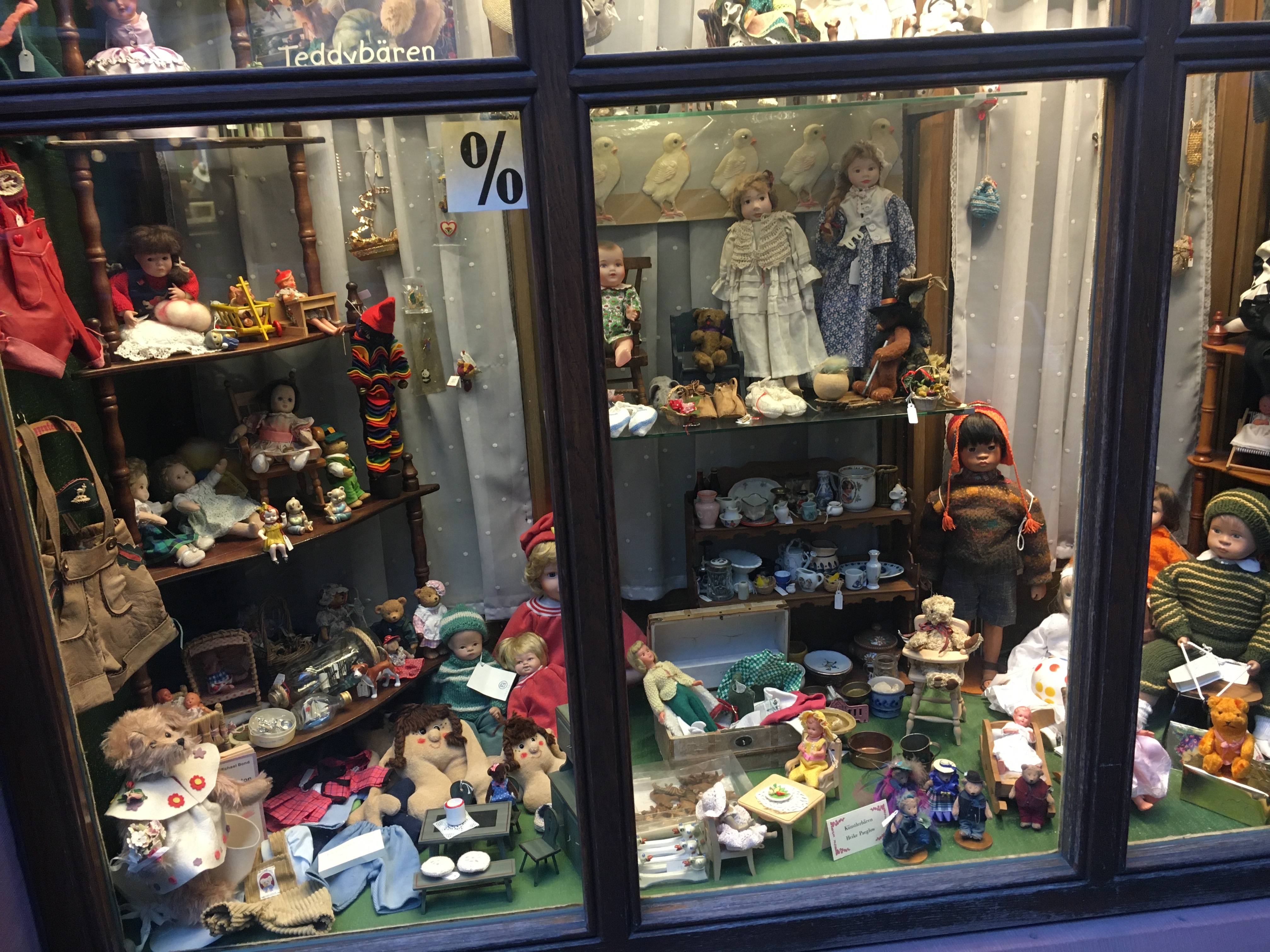
Adorable shop window

October 18 Florence

Today is our last day in Italy. I was in Italy in 1973 for about 10 days with the Lubamersky family. Seven of us traveled in a VW van, camping or staying in budget rooming houses. We did not eat out except to lunch on local bread, cheese and salami. In spite of a freshman course in “Medieval European History,” I knew nothing. I wasn’t interested in churches or religious art. My happy memory of Florence is taking the 11 year old twins out in a rowboat on the Arno.

These two weeks in Italy have helped me viscerally understand broad themes in European history, themes I didn’t “get” as a teenager. Christianity. Wealth. Power. The Renaissance. Science, etc. But I remain humbled by how little I know about this complicated country. (And how pathetic my attempts to speak Italian.)

Today we took a guided tour of the Uffizi Gallery, an office complex built by the Medici family in 1560, and now housing their massive art collections. The guide, a beautiful, passionate young Italian woman, gave us a wonderful Greatest Hits tour. She pointed out art innovations, especially the use of perspective, in paintings by “the big three” Rafael, Michelangelo and daVinci. She explained how DaVinci thought that painting was just sculpture on a flat surface.

We also learned why so many nudes! The Roman and Greek nude statues represented mythology and paganism. So a nude in a painting or statue, such as an angel or a Greek goddess of spring, was no big deal because she was not human.

We saw Botticelli’s Birth of Venus and learned that she was about to be clothed by Persephone as she stepped out of her clamshell to earth and became human.

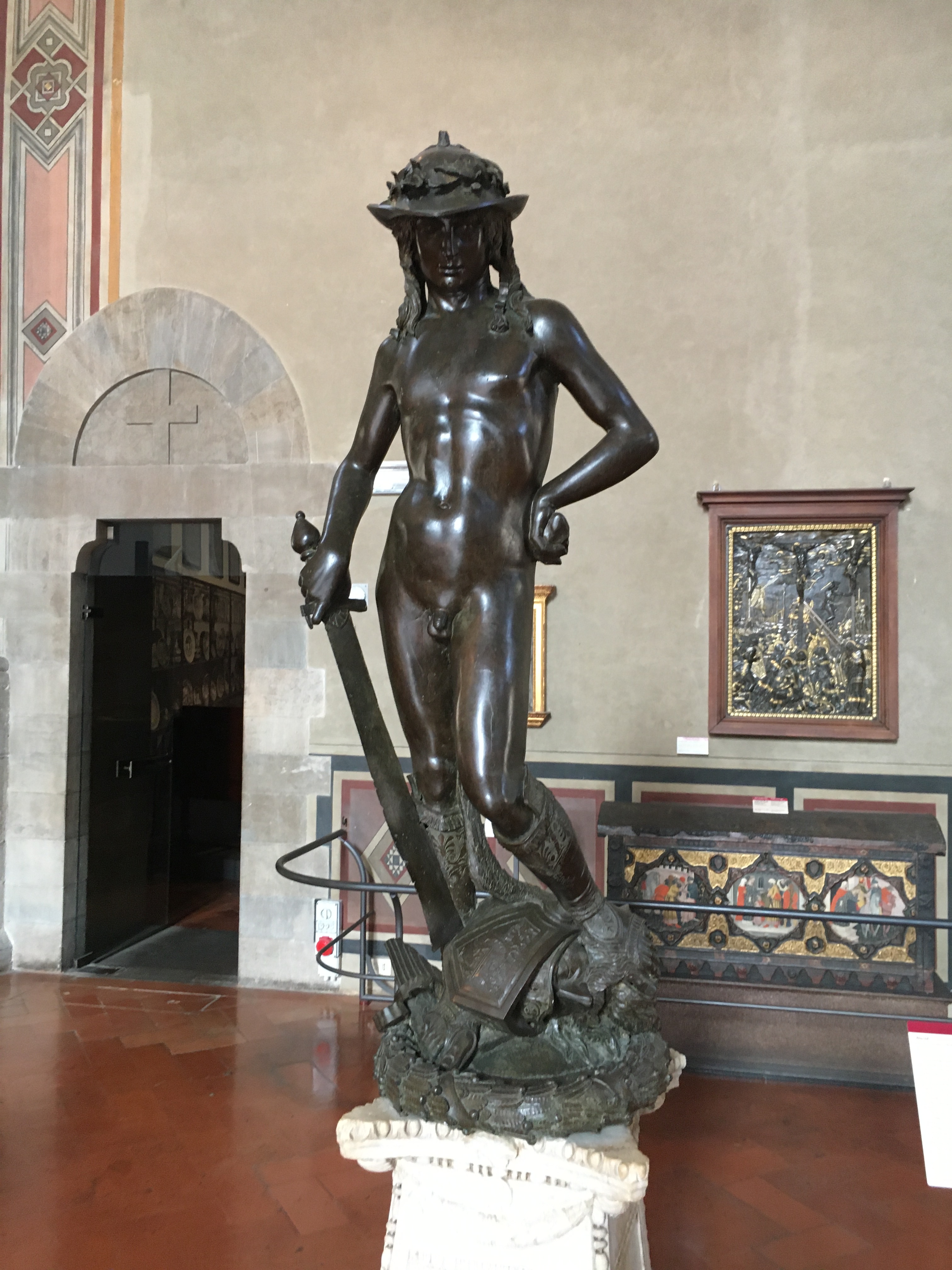
Later in the Bargello Museum, we saw Donatello’s David, (circa 1440-1460) said to be the first nude statue done in a thousand years.

A cocky fellow

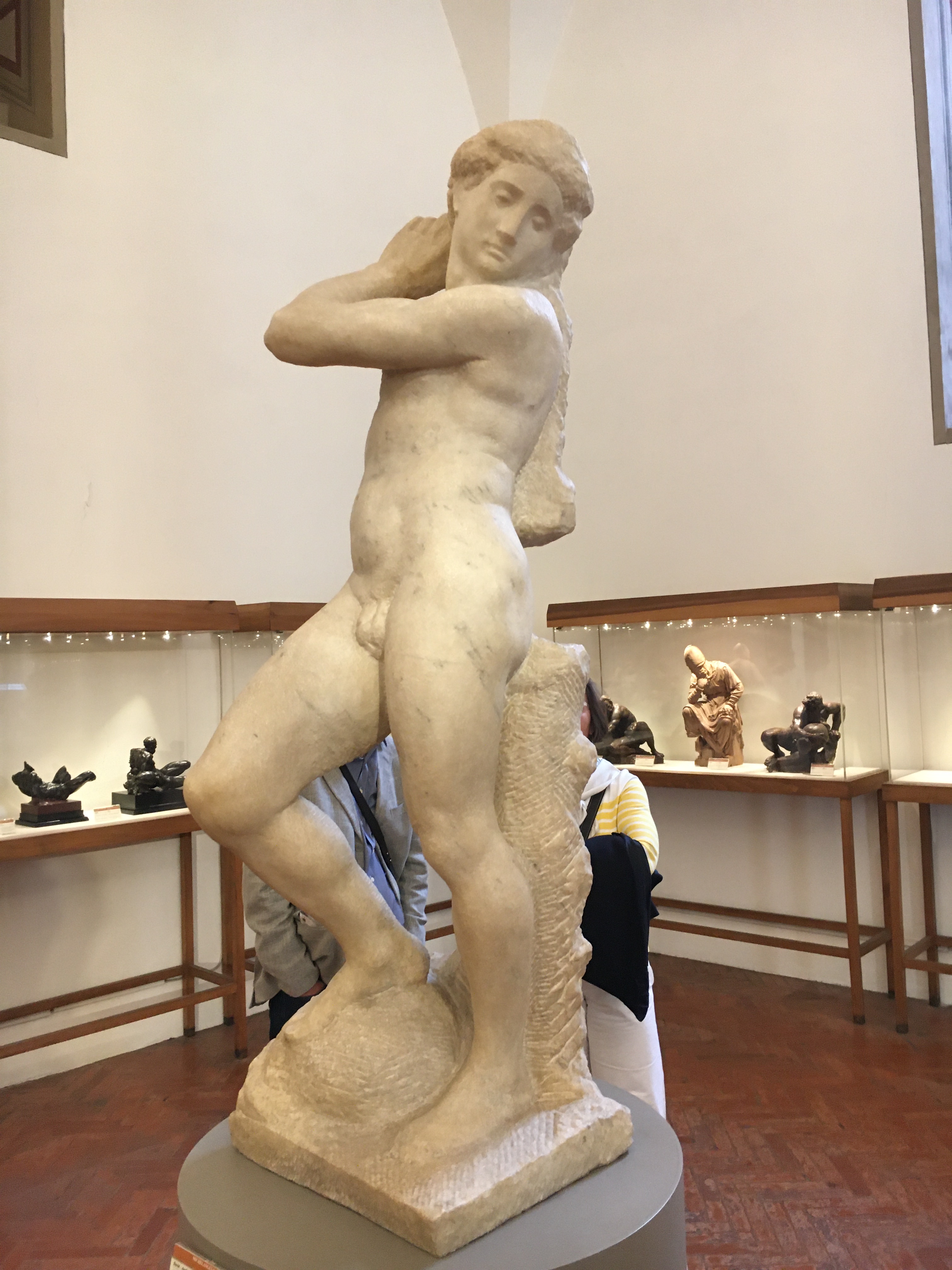
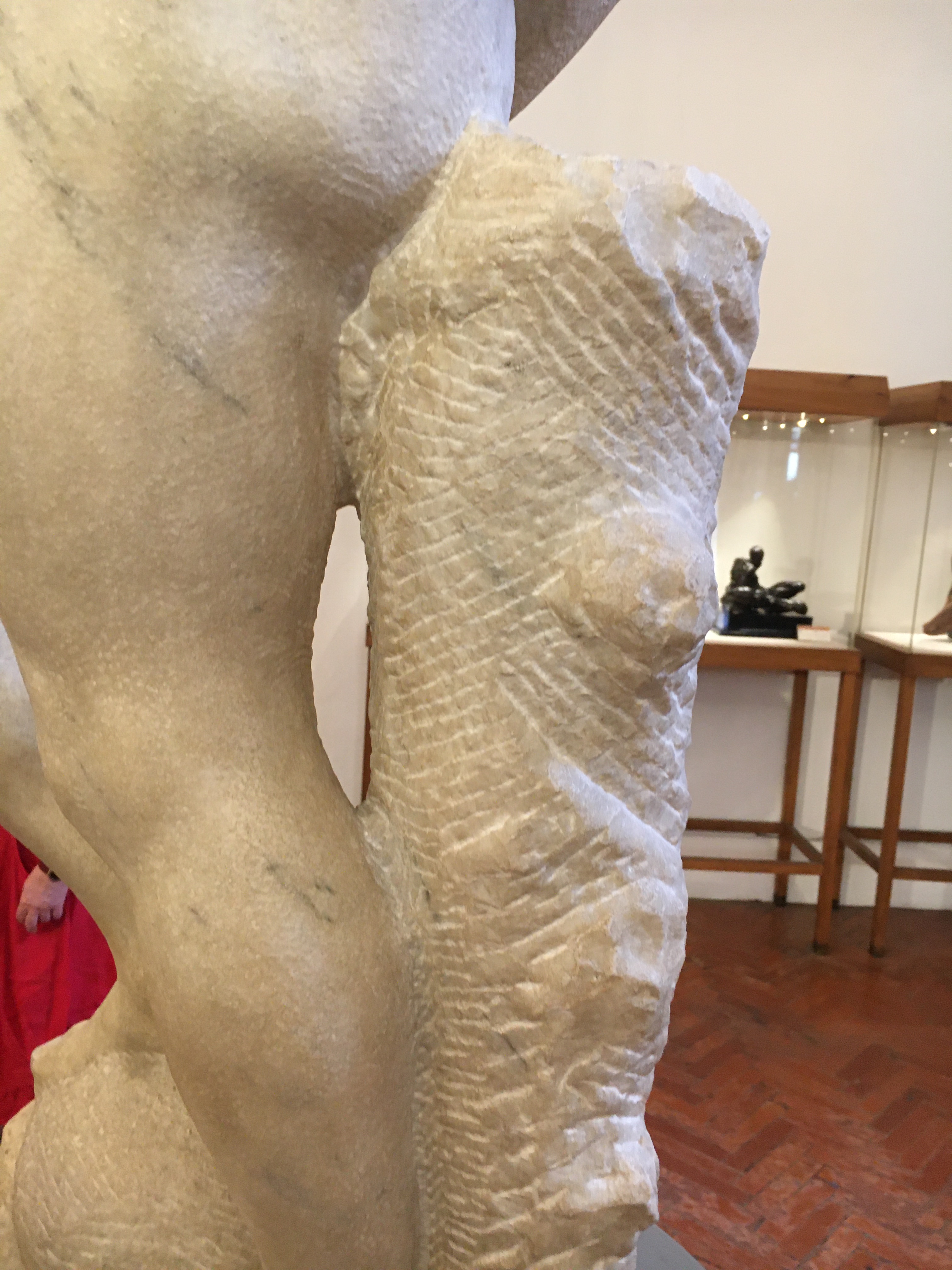
I loved looking closely at a smaller, unfinished David by Michelangelo, and again thinking about Michelangelo actually chipping at this very stone with his chisel.

Upon leaving Italy I do know a little bit more than I did at 23 about art, churches and Italy’s long complicated history. For example, ironically, the various Italian city states were not united into a republic until 1861, the year our own country started the Civil War.


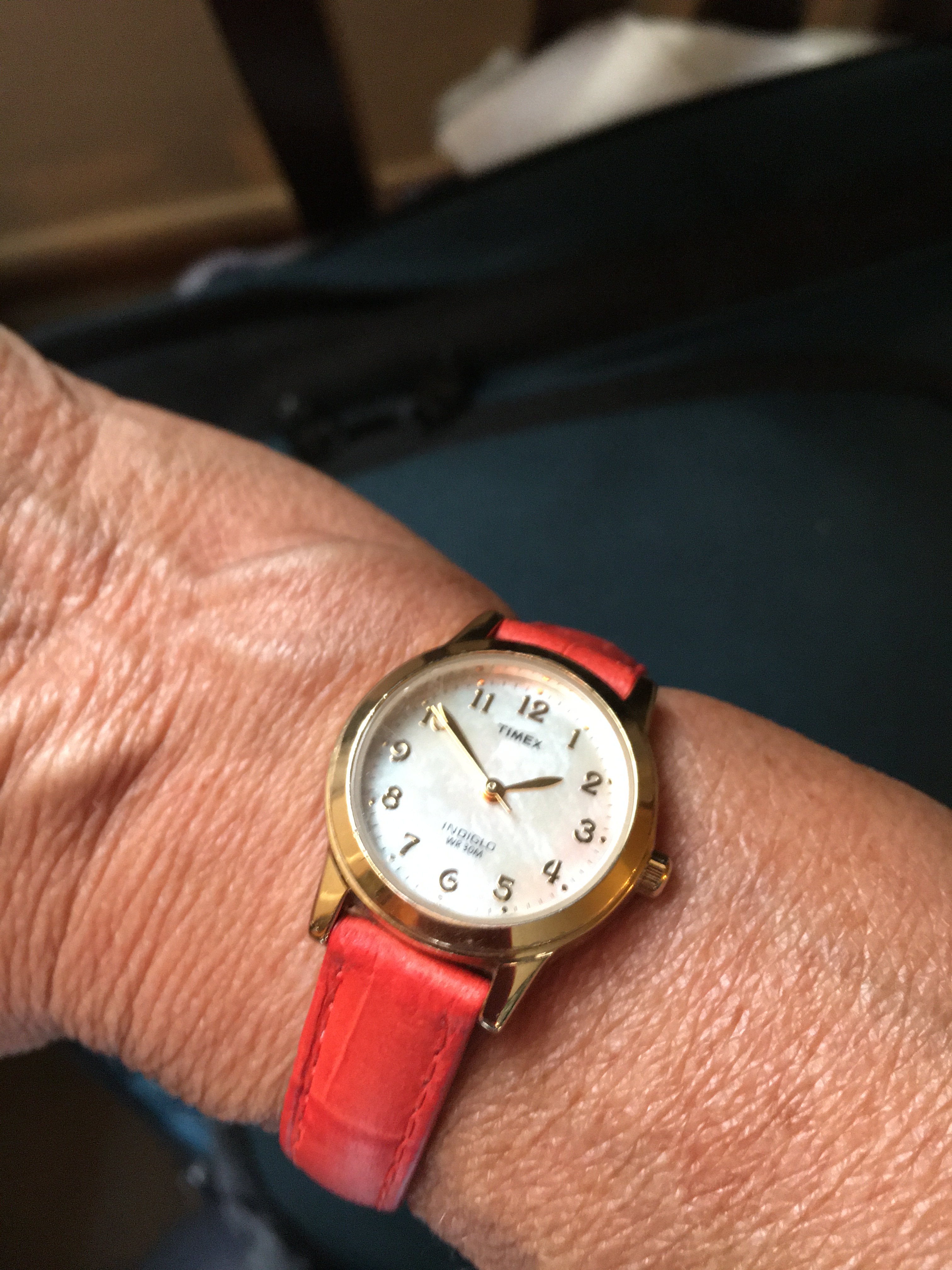
I enjoyed some more mundane things today: a trip to the laundromat, a little shopping and purchasing a lovely Italian leather watch band. The innkeeper here had referred me to his friend the jeweler the day we arrived. Alas, the jeweler had no watch bands that fit so he told me to come back Friday. When I returned today, he had ordered six or seven different bands. I chose the orangey red one. He removed the silver buckle and replaced it with a gold one that matched my Timex. It is “original coco calf” and cost €16. Wearing it makes me feel very chic.


As in a cheesy movie where the American girl has to leave Italy and go home after her fabulous holiday, I feel little bittersweet sadness. Play the accordion music! See the little tear in her eye! She hopes she will be back!

October 17 Florence

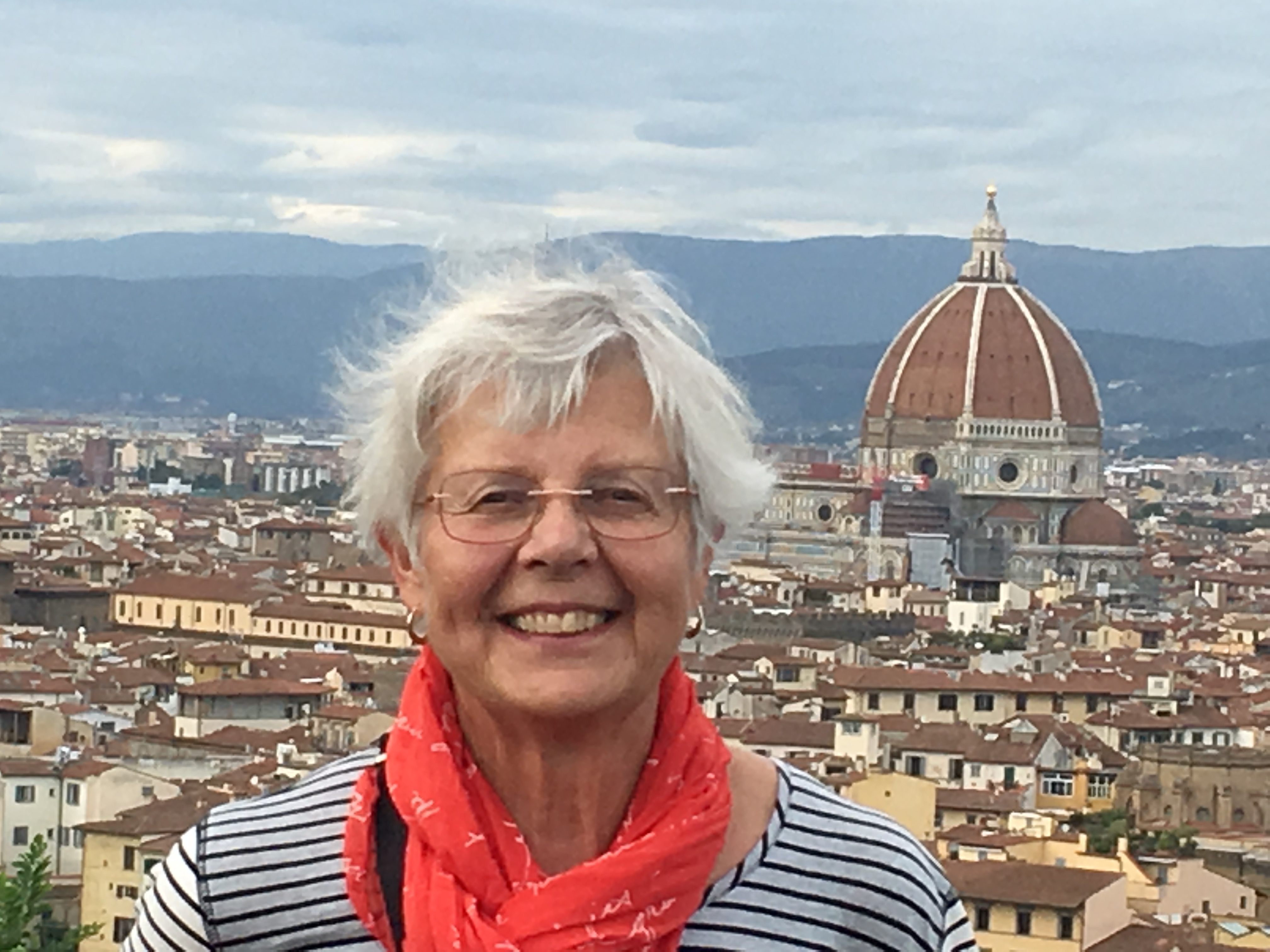
This photo is real. It’s from across the Arno. We climbed a long way up to get to this view point.

Now I want to live here for at least a month. I’d take Italian lessons, shop at the market and visit a new museum every day. Actually that would take me three months.

Ok, so our day on Florence, in terms of timeline, jumped from 15th to the 20th then way back to 11th century.

Leonardo

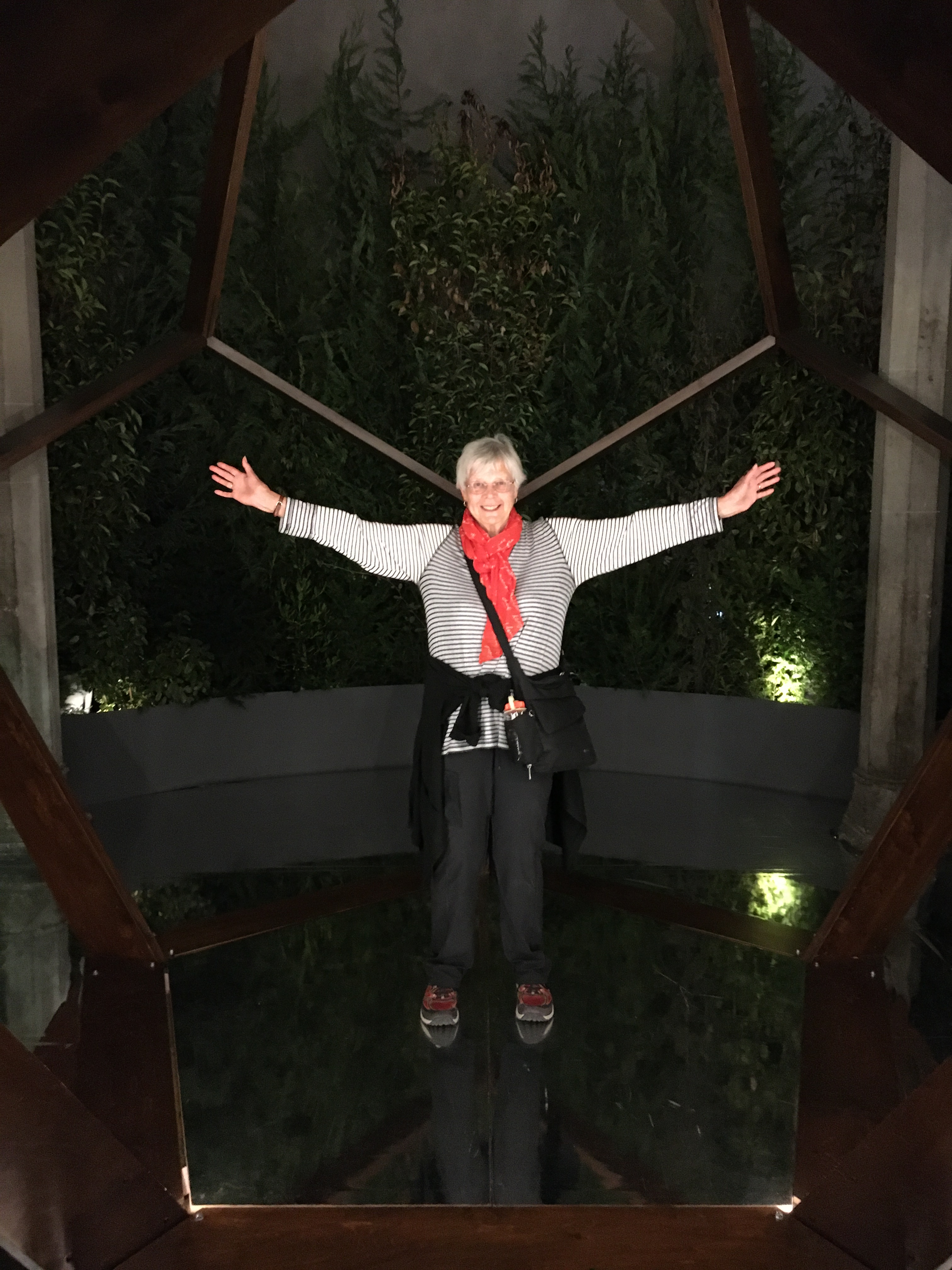
We visited a temporary exhibit in our local basilica that examined Leonardo daVinci’s exploration of the natural world. I can now understand how radical his humanist ideas were of observing nature rather than calling upon divine explanations. For example, he looked at how leaves arrange on branches to maximize exposure to sun and rain. He discovered that the mass of tree branches is equal to the mass of the trunk. He studied rings on trees and made observations chronicling thin rings for dry years and thick for wet. He drew everything, including blackberries. Live trees and plants from his journals lined the exhibit space; juniper, lemon, mulberry. A fun finale was to photograph yourself as his Vitruviun Man.

Or Vitruvian Woman

Gonsharova

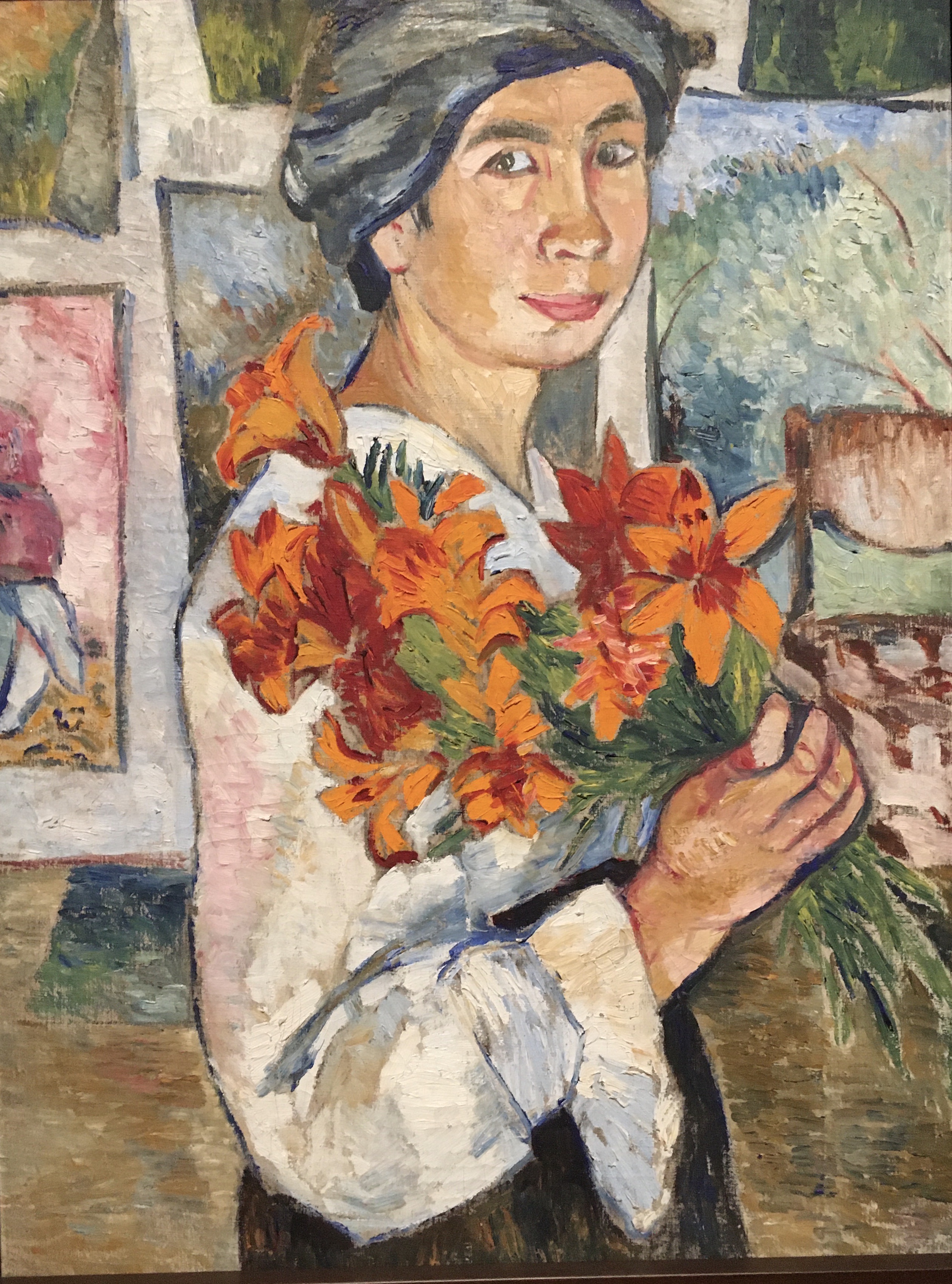
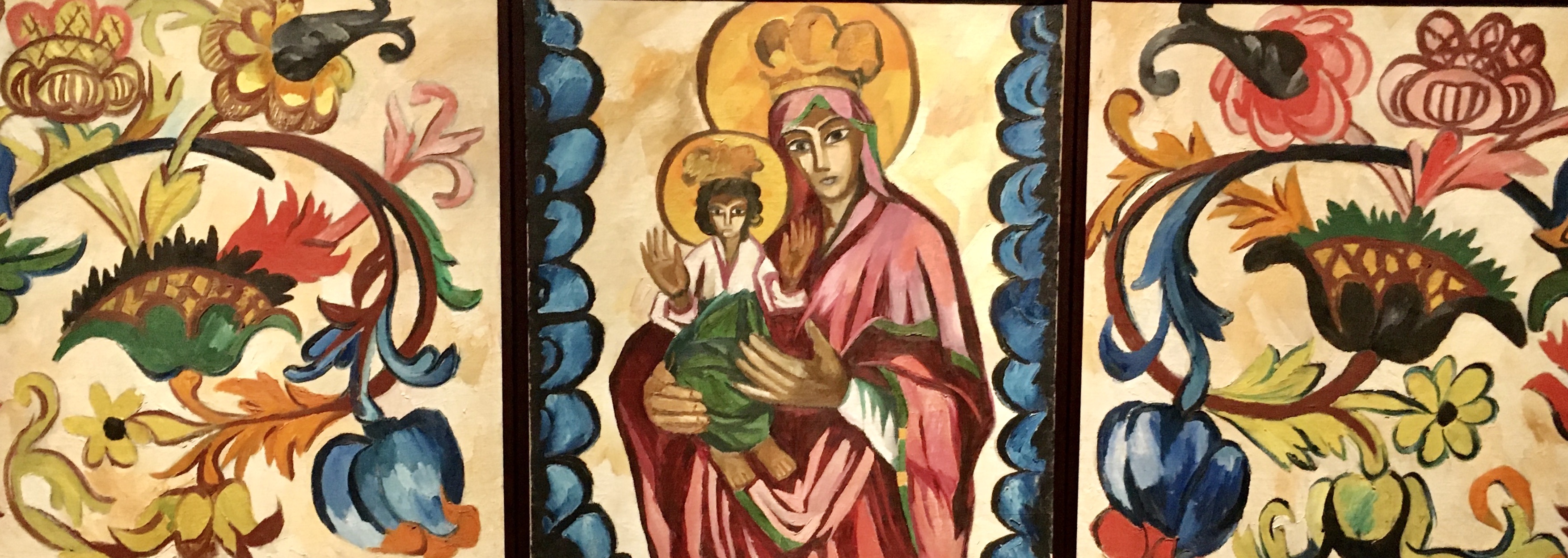
In the Palazzo Strozzi, we jumped to the modern. Natalia Gonsharova was an early 20th century Russian artist. She grew up in the countryside, using peasants and Russian Christianity as early subjects. Influenced by Matisse, Cezanne and a Picasso, she painted in several mediums and did set designs and costumes for the ballet. Her colors were mostly bold and bright; one room featured works in blue and orange!

Self portrait

She was eccentric and prolific. Her work was entirely new to us; a refreshing change from the Renaissance, and fun to tie to artists we know. I loved it that Florence embraces modern art.

20th Century Madonna with Russian motifs

Mass

We crossed the Arno and climbed up to San Miniato al Monte, one of the highest points in the city. The basilica seemed to be at eye level with the Duomo and provided a fantastic view. The Romanesque church was beautiful inside, with fading frescos and alters in at least three levels.

Candles illuminated a lower chapel we were directed to for the 6 o’clock mass. About forty people filled the widely spaced pews. Some lit candles or kneeled in prayer. A man casually dressed in white shirt, black slacks, vest and sneakers opened grilles, poured the communion wine, set up a podium and brought in two 3 foot lighted candles. At six the bells began to ring and a middle aged, bespectacled priest all in white appeared. He greeted an elderly woman (who was on an oxygen tank) and her family in the front row with cheek kisses and blessings on the head. He went behind the alter and donned a red robe.

A beautifully dressed woman sat, then kneeled, next to Mike. As the service began I noticed she was looking at her cell phone. Mike thought she was following the prayers. The priest sang and the worshippers responded. Mike also reported that while the sermon was in Italian, the mass itself was in the Latin he remembered from his childhood.

The priest came in front of the grille with the wine and wafers. About half the people took the communion. Six monks filed in, took places behind the grille and sang to simple organ notes. The priest again greeted the smiling elderly lady and left. The monks were still singing when we made out exit.

The service was simple yet mysterious. I imagined this was a pilgrimage for some of the people, and a daily routine for locals. I was just a humble, grateful observer of a ritual that has taken place for a thousand years in that beautiful holy cathedral.


PS

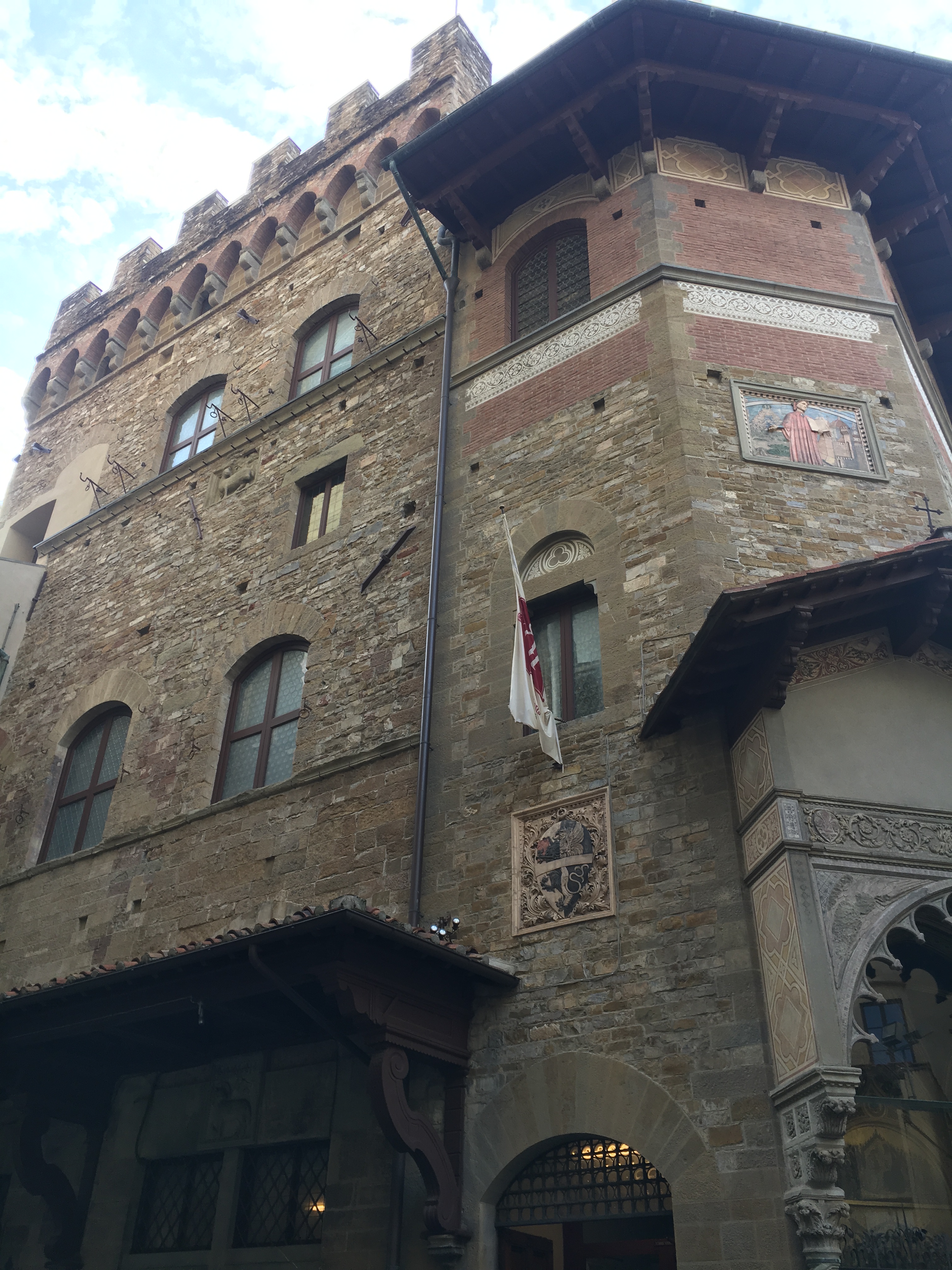
Dante’s House