November 4 Berlin

We have been charmed by ancient and medieval city walls preserved in Italy and Germany. Here in Berlin, the legacy of the Berlin Wall is in-your-face present and anything but charming.

I did not understand that the Iron Curtain was not just a metaphor but an actual fence erected through Germany and Europe. I always naively thought of the Berlin Wall as a north south running wall dividing the two sides of the city. But it was a double wall surrounding all of West Berlin, an island in Communist East Germany.

Reminders of the wall are abundant. Firstly, former East Berlin is filled with Soviet style architecture. Our hotel is one of these. Outside, it’s plain. Inside it’s functional with sharp angles and very long halls. (When I woke up this morning, for about 30 seconds, I thought I was in Moscow.)
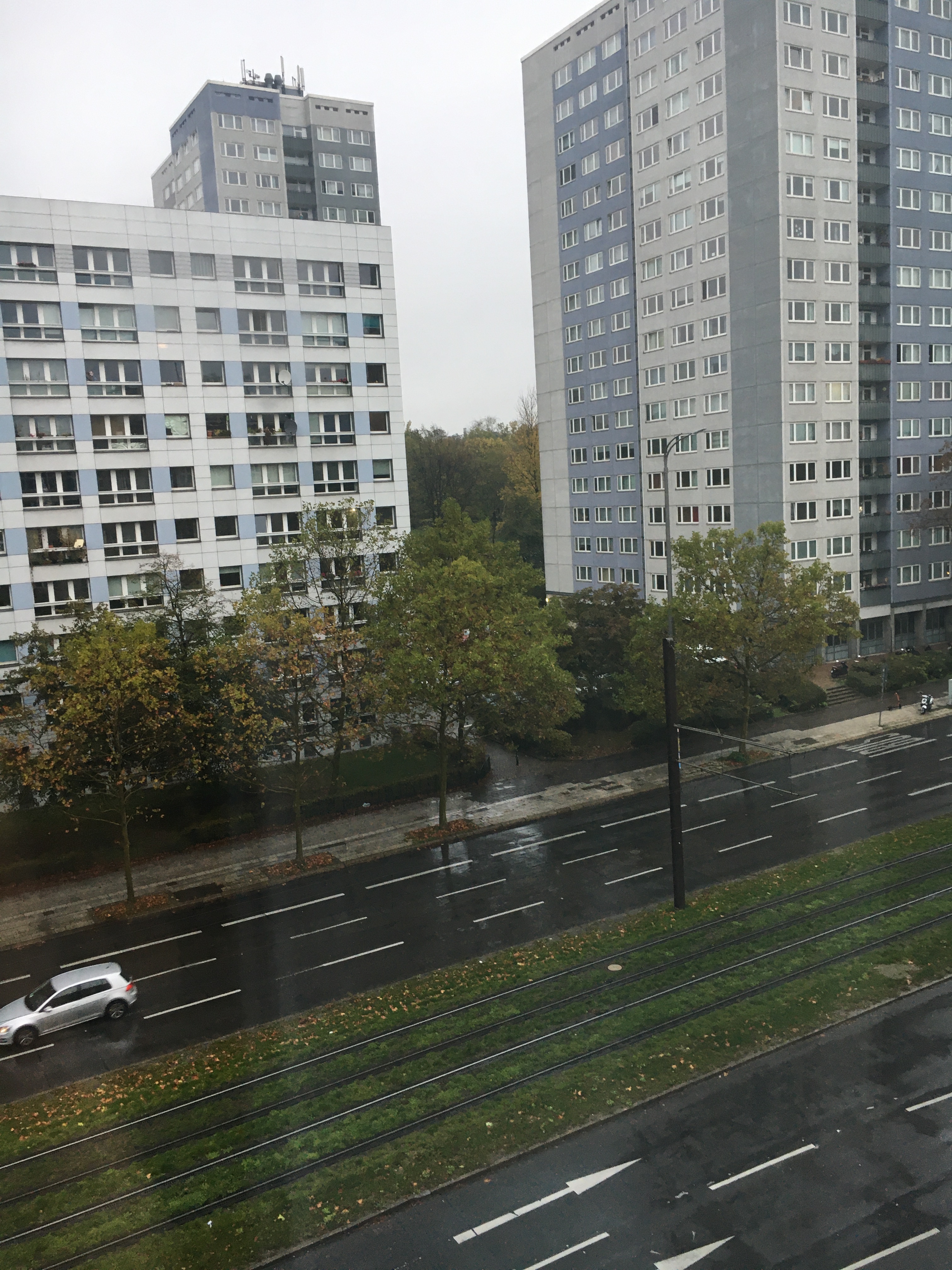
View from our hotel

I learned that seventy to ninety percent of Berlin was destroyed. The big, functional apartment buildings were ugly but, I think necessary to get people housed efficiently.

We saw a few remainders of the wall. Most of it has been torn down but parts of the wall still stand. It’s only twelve feet high, and old wooden water pipes line the tops. Our guide explained that they would grease the pipes to make them difficult to climb over.
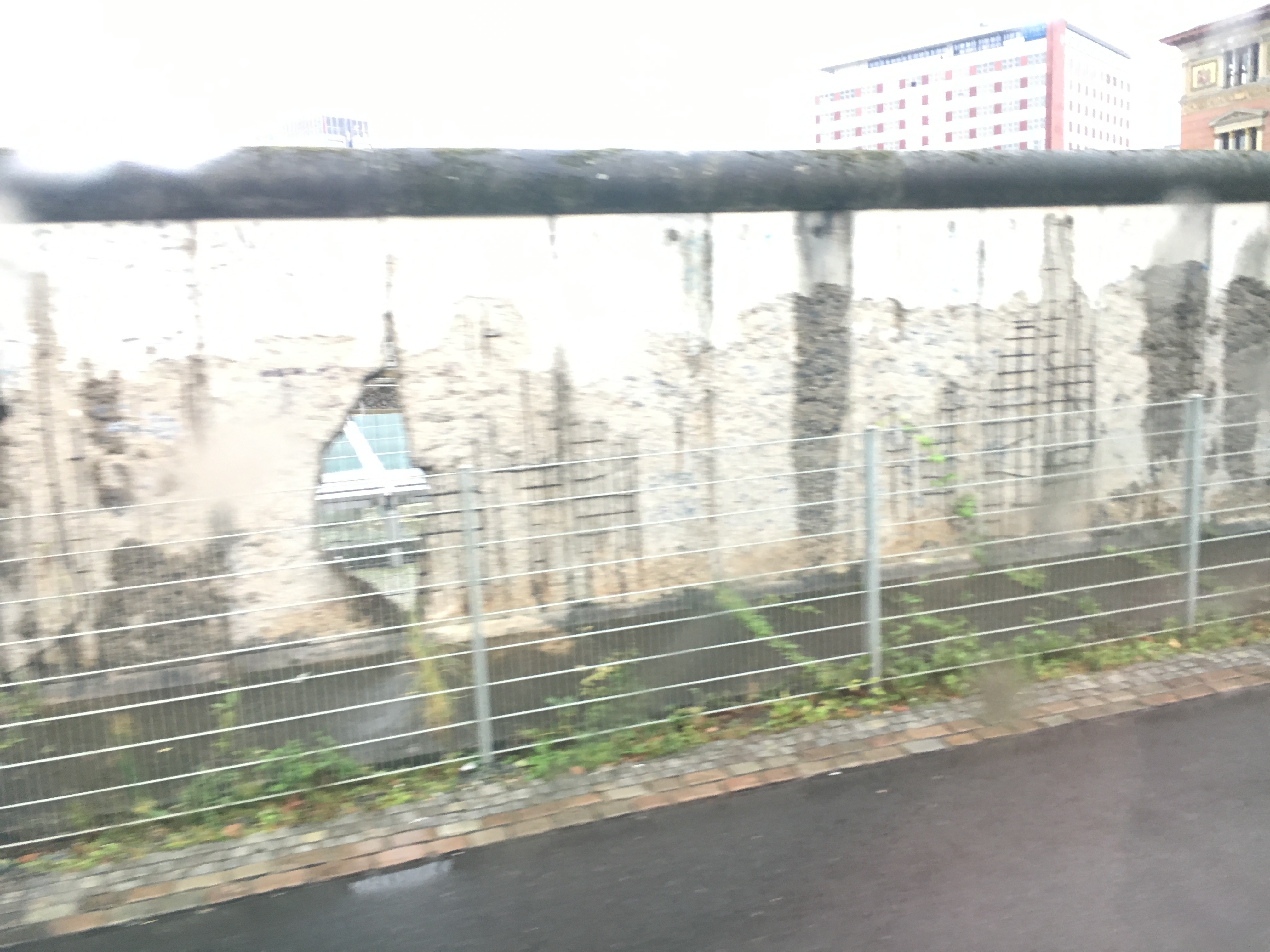
Wall from the bus

The wall was double, with a no man’s land in the middle. I think I’ve seen movies of the watchtowers and ugly scenes of people trying to escape.
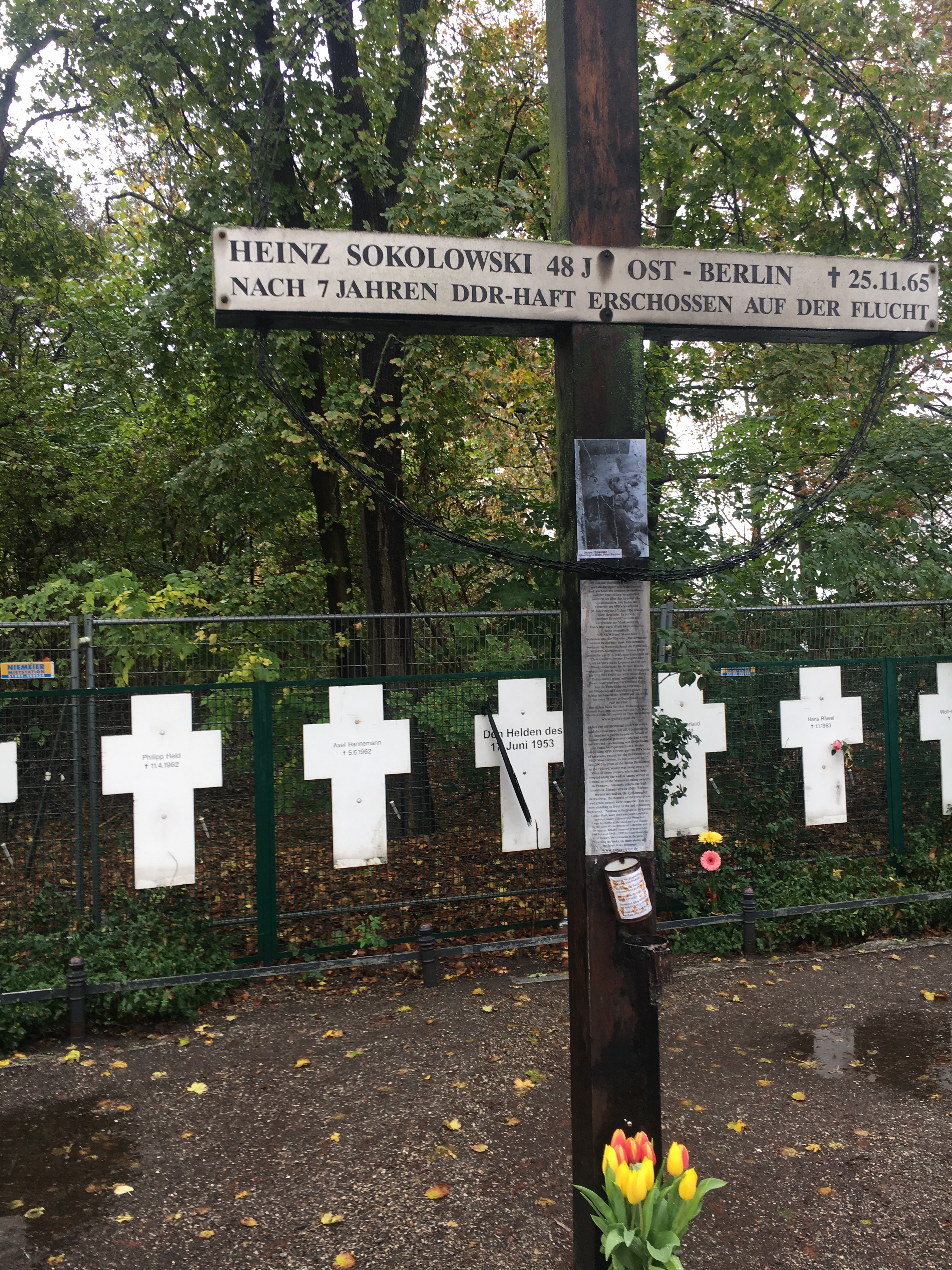
Memorials to those who didn’t make it

Of course most of the wall has been torn down. The city has a Berlin Wall Trail, a brick path in the streets you can follow.
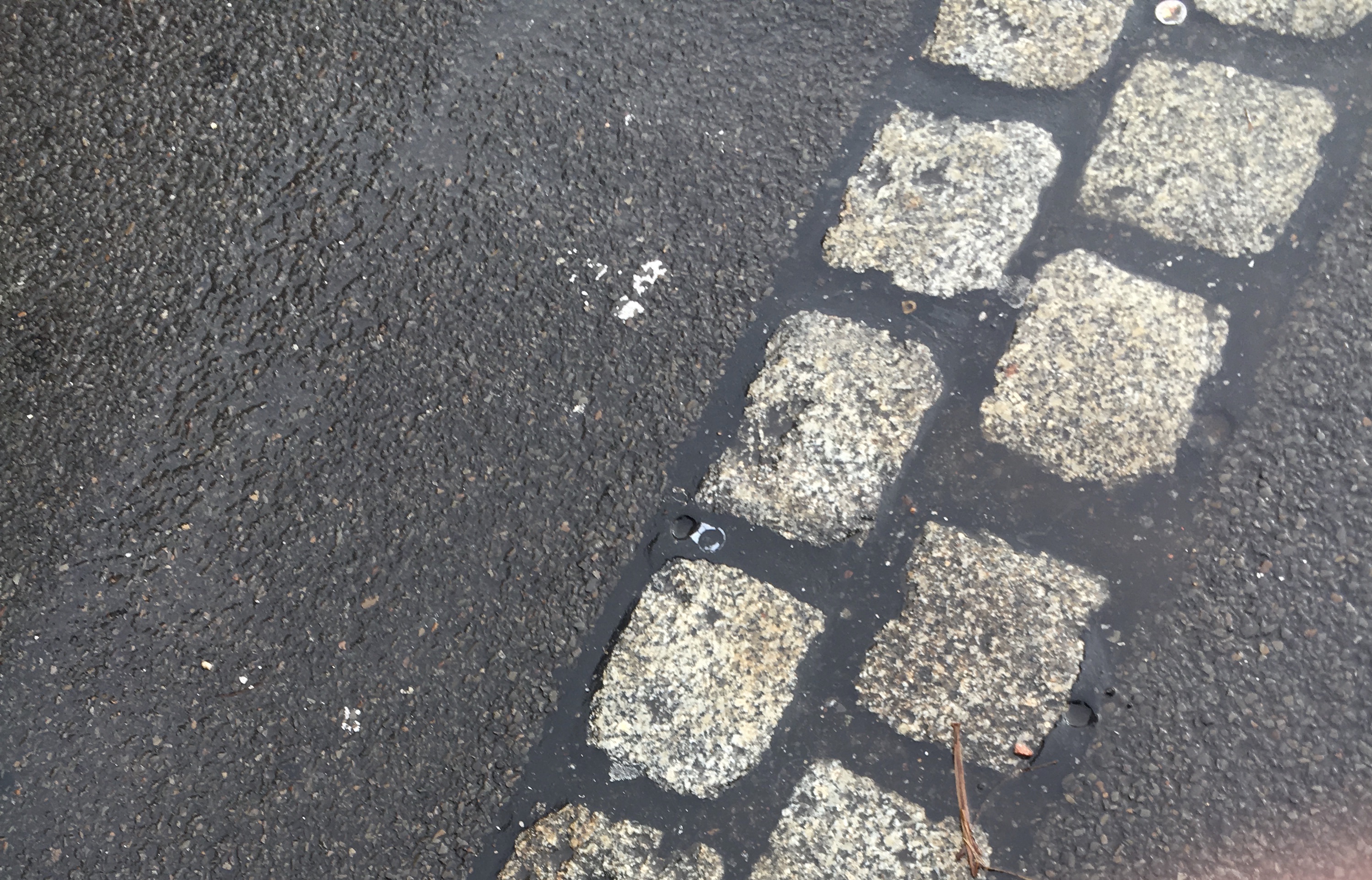
This week, November 9, the “fall” of the Soviet bloc thirty years ago will be celebrated. We saw preparations for the show around the old Brandenburg Gate, now a symbol of unity. We also saw the touristy Checkpoint Charlie, the gate that Americans and foreigners could pass through.
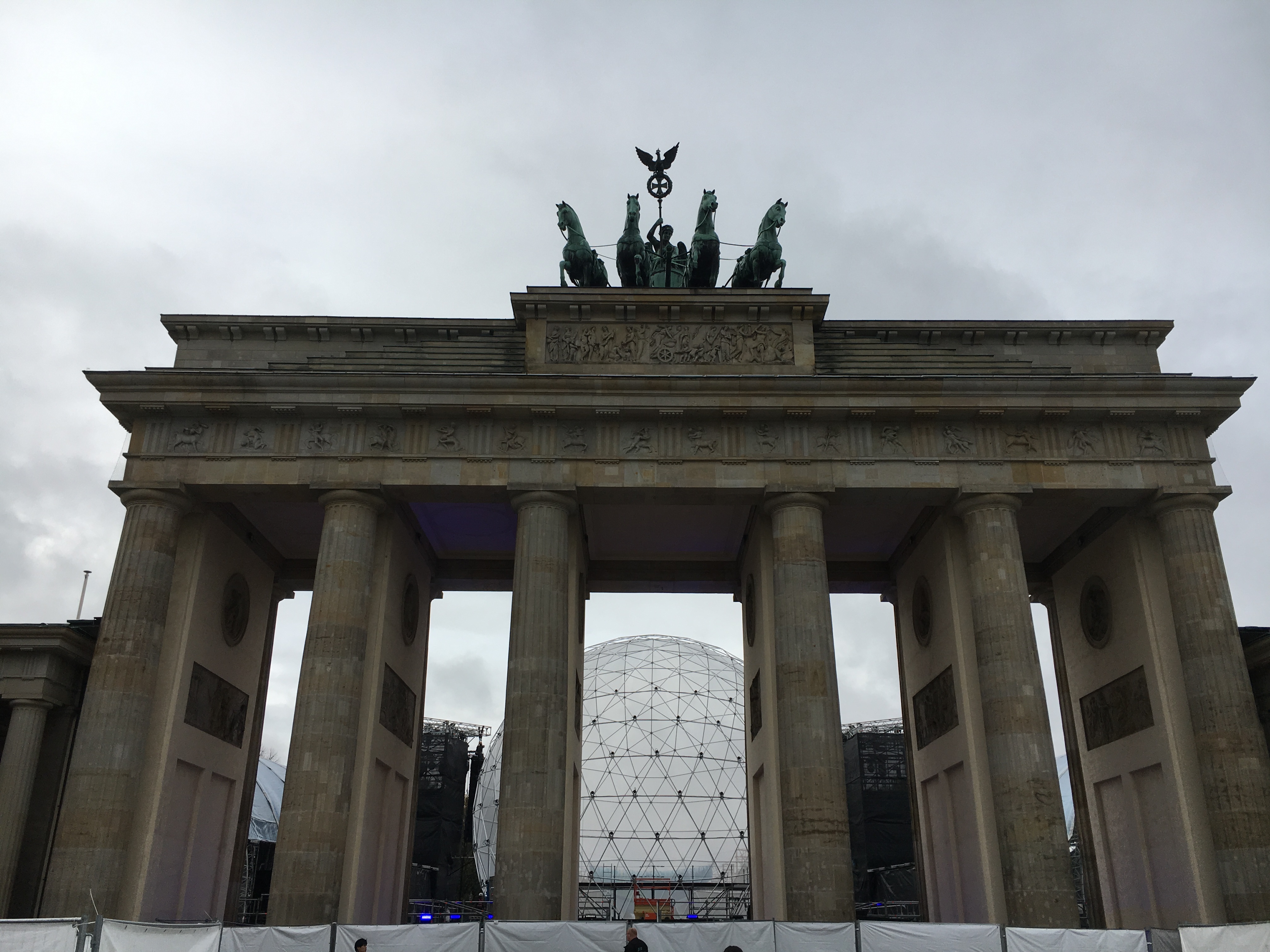
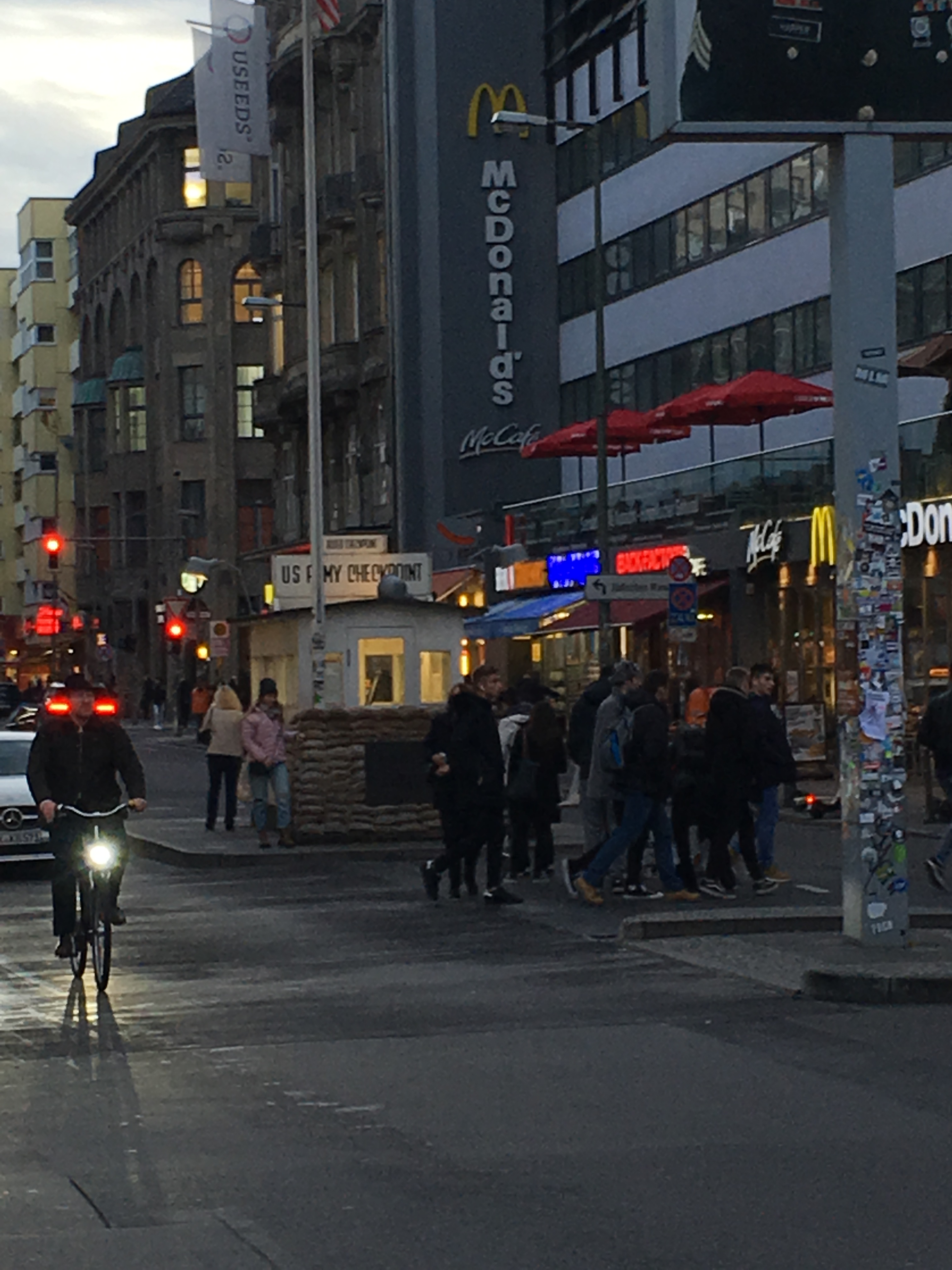
Beautiful Brandenburg Gate
The little white building is Checkpoint Charlie

Psychological scars must remain. I heard people make snarky jokes about East Germans. Our guide, an East Berliner, told me she never went out of East Germany through any gate. Her older sisters escaped, and as a result her dad was demoted in his Communist post, her journalist mother lost her job and she was kicked out of grad school before she could finish her a PhD. She later researched her “file” and guessed that her advisor was a spy, and that he reported her.

I am drained by thoughts and images of barbed wire, machine guns, protesters, ugh. This wall dividing Berlin was tragic, and the repair and reparation will go on for many more years.

November 3 Berlin

Berlin has never attracted me. Today as we drove in on the bus dark clouds hung low and a light rain fell. Forests, parks and waterways softened the landscape of modern high rises and wide streets, but it was grim. Berlin was as depressing as I feared.

Our destination was the Berlin Philharmonic, one of three major symphony halls in this city of three and a half million people. The “Phil” was completed in 1963. As far as a mid-century modern public building goes, it is magnificent outside and in. My first impression as we walked in was how huge it is; under asymmetrical roofs, two wings spread across the area the size of at least two football fields. The interior felt light and airy in contrast to the darkening sky.

We checked my coat (required), found the restroom and bought a €2 program. We walked up a couple of wide staircases to our Section A. As I waited for Mike who was checking our the on-site record store, I peeked in the door. It looked like we would walk in very close to the stage.

When the usher let us in, we did walk right in front of the stage. Our seats were in Row 2, right next to the first violins! While we waited for the show to start, I looked around the hall. I’ve never seen anything like it. Seating sections for almost 2,500 patrons surrounded the stage in an irregular pattern. The balconies did not jut out over other sections, but sort of spiraled up and around the stage. The sold out concert hall rapidly filled.

View from our seats

The lights darkened and a choir began to fill the risers behind the orchestra area. They kept coming and coming! The program opened with two lovely a cappella pieces from 1619. Then the orchestra and more choir members moved onto the stage. Someone counted 180 in the choir and I’ll bet there were a hundred in the full orchestra. I counted eight double basses, two harps, an organist, and a very full wind section including a contra bassoon and tubas. The door right next to where we walked in opened and in walked two soloists and the conductor, Vladimir Jurowski. Once all were settled, Vladimir delicately raised up a long baton and set off with Brahms’ German Requiem opus 45.

I can honestly say I’ve never in my life been as captivated by a symphony as this one. I know that the Berlin Radio Orchestra is the highest caliber, and the sheer number of performers was staggering but I was not familiar with this piece, so I didn’t have melodies to follow or sections to expect.

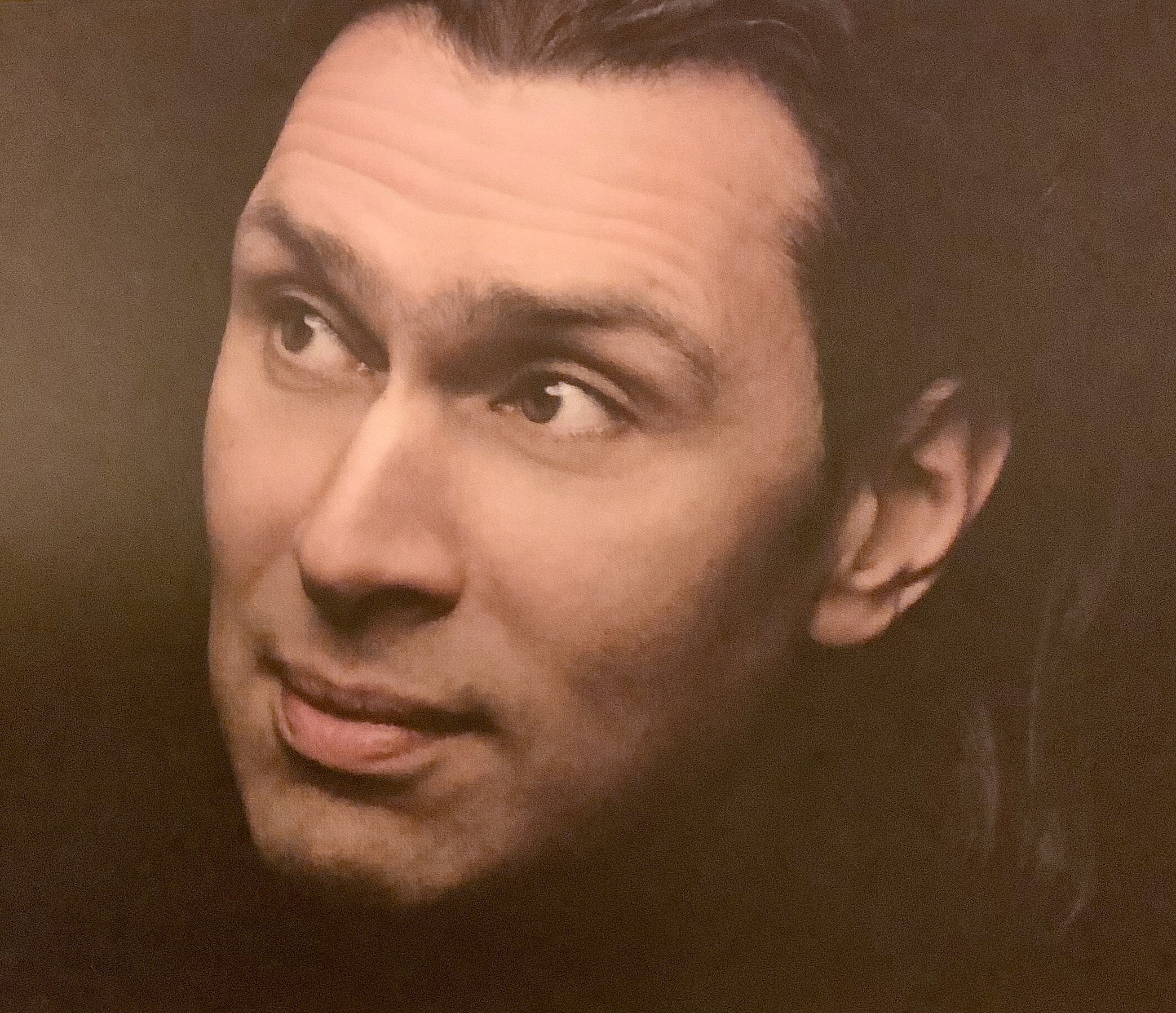
Only about twenty feet from our seats, the conductor mesmerized me. He had a big job keeping it all together. Dressed casually in a black shirt and slacks, he had long hair and very long arms and fingers. While he delicately kept time with his baton, his left hand would gesture. Sometimes with a “come to me motion” and other times like a magician, I thought of abracadabra. All the while he sang with the chorus.

Program photo of handsome Vladimir Jurowski

I loved watching the chorus. The moved freely as they sang, and packed together reminded me of wind blowing through a field of ripe wheat. The male soloist was older, in a rumpled jacket. His face turned red as he sang, and sometimes he held on to the podium, but boy, could he sing the bass! The soprano, a beautiful blonde, had a lovely voice. She wore a very low cut black lace dress that was a bit incongruous with the sacred nature of the music. She would reach way forward, music in hand, in the stronger sections of her solo.

I was especially excited to hear the organ. The massive pipes were high above the stage to the right but the organist was near us just behind the violins. He only played when the orchestra was in full force so I did not hear a blast. I wondered about the audience members seated in front of the pipes, if they felt vibrations.

The seven movement Requiem lasted at least seventy minutes. I was totally engaged the whole time. At the end, the audience applauded enthusiastically. Ushers brought flowers to the soloists and conductors. Vladimir walked back and handed his flowers to someone in the chorus. The applause and bows lasted maybe ten minutes. No standing ovation and no encore.

I realize I’m writing here more about what I saw and felt, and not much about what we heard. I wish I had better knowledge to be able to describe the music itself, but I suggest you just go on YouTube or an app and have a listen.

Ct

November 2 Leipzig

Every evening when I sit down to write my blog, I have to decide what to focus on. Usually I’ve been thinking about my topic for hours and I know where I’m headed. Time and energy limit me to a short entry. I’ve tried to focus on what moves me each day, and what might be of interest to you. This trip has been so rich and full. Today I reached the point of overload. Everything was making me tear up, but my thoughts kept circling around the years after World War II to 1989.

A nice German guy named Florian was our city guide. Wearing jeans and a white baseball cap over long blond hair, Florian took us in a short walk through central Leipzig. He would stop at a square or street and use the locale to explain overarching concepts in European history by telling us a story. Today, for me, the topics of religion, trade and war all led to the years that Leipzig, in East Germany (called GDR for German Democratic Republic) was part of the Communist Eastern Bloc.

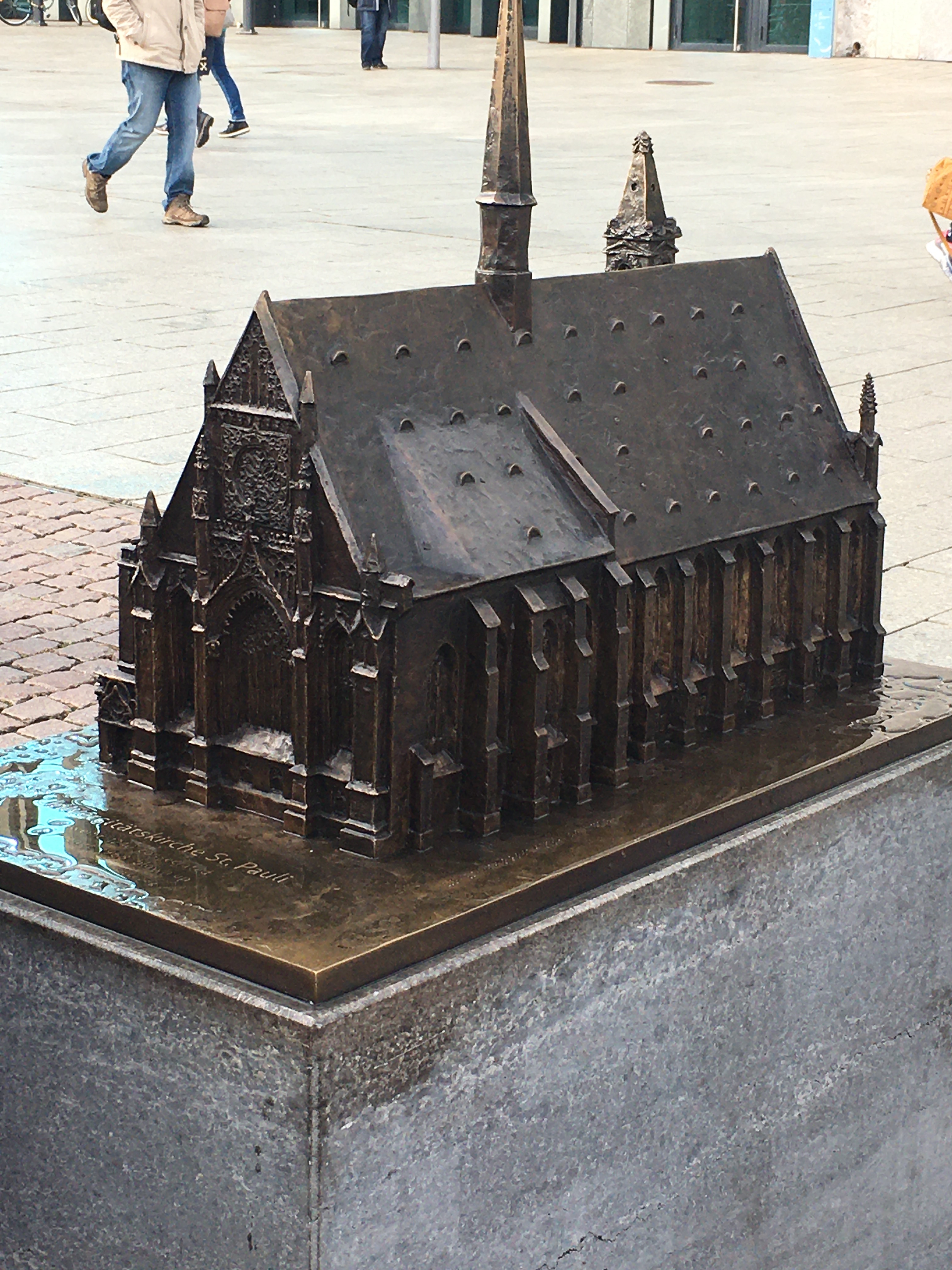
Since Leipzig is a major transportation and trading crossroads, the RAF bombed it heavily. Unlike other parts of Germany that we visited though, I observed how reconstruction took place under the Communists. We stopped in Augustusplatz, one of the largest plazas in Europe. Florian showed us the opera house and university forming two sides of the huge square. During GDR years, the name changed to Karl-Marx-Platz. In 1968, the government decided that the university church building was not socialist enough, and told university officials they were blowing it up in two days. The explosion decimated a beautiful old church, and the art and documents inside. A Soviet style skyscraper replaced the ancient building. A poignant little bronze replica of the church touched me deeply.

They blew it up

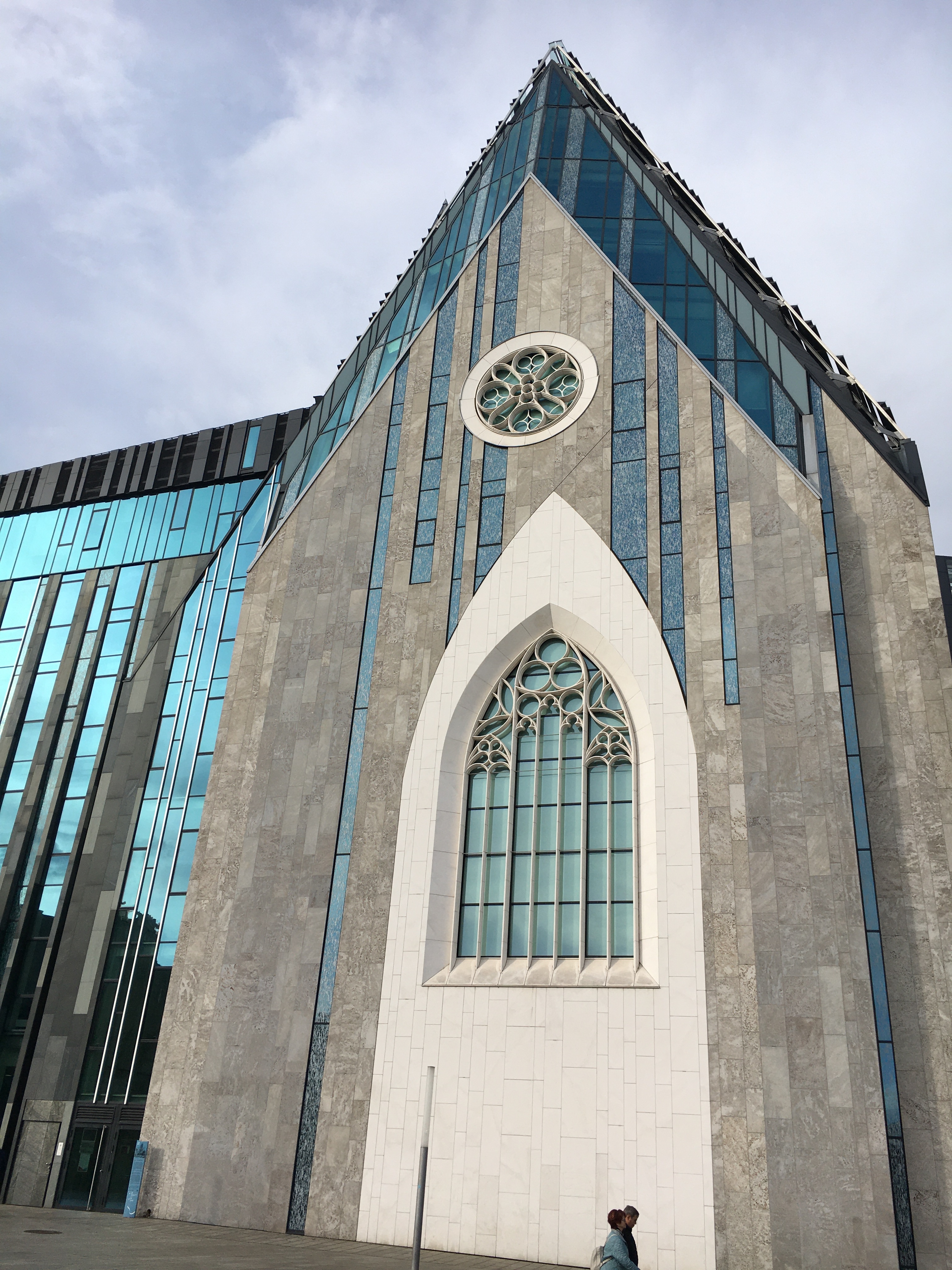
In 2004, a new university building, erected to honor the old church, opened. It’s stunningly beautiful.

The slightly off center window and arch pay homage to the explosion when the old church collapsed to the right

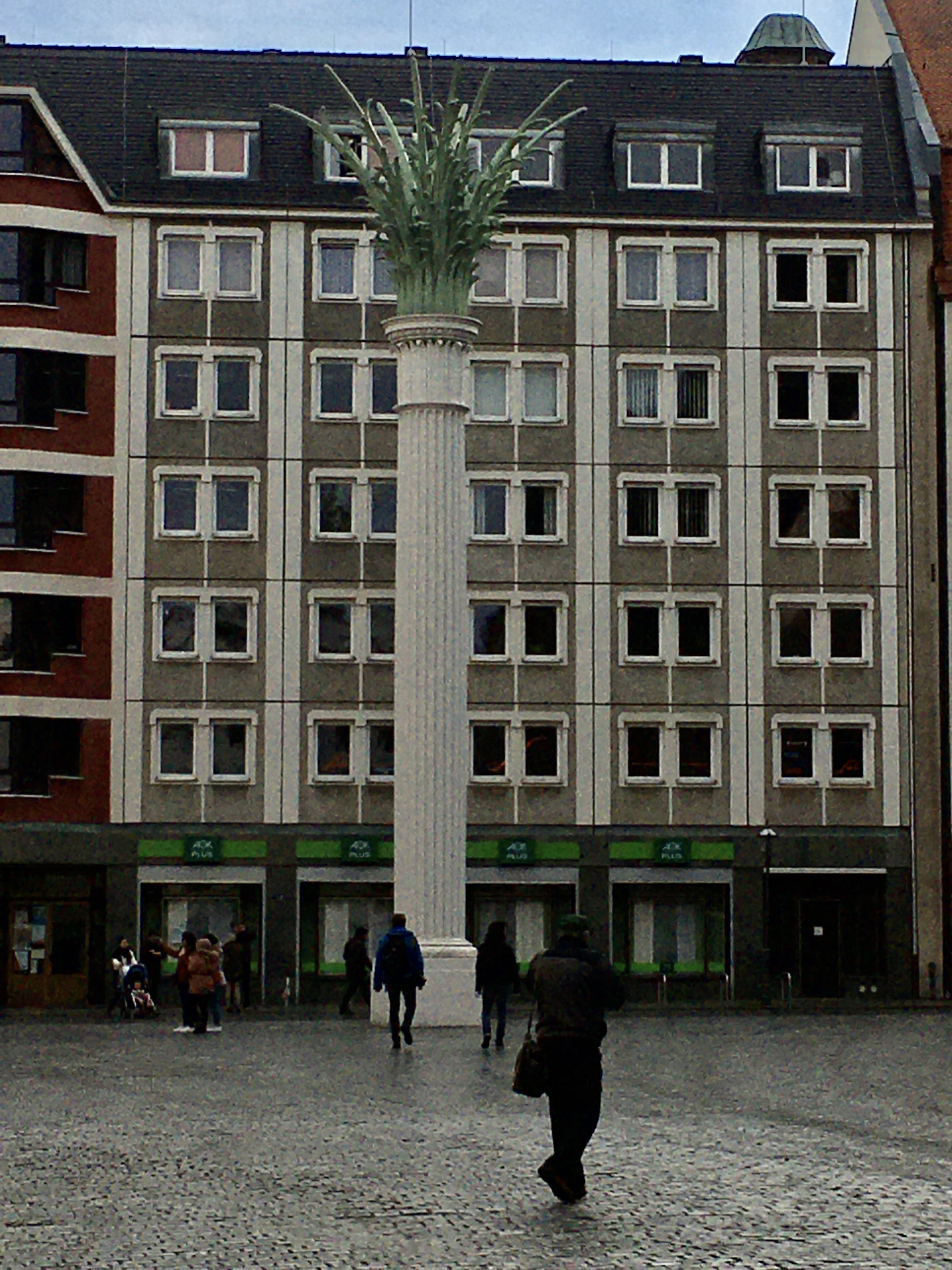
Florian took us to the platz outside of Saint Nicholas Church. This was the epicenter of the “Peaceful Revolution.” Prayer vigils were held in the church every Monday beginning in 1982. On October 9, 1989, up to 70,000 peaceful demonstrators showed up to protest oppression under the Soviets. The demonstration coincided with a world trade fair so the media was there, and basically protected the demonstrators from the police. One month later, the Berlin Wall fell. I loved standing in this holy place where prayers really did make a difference.

Monument in Saint Nicholas Platz to Peaceful Revolution.

Florian’s stories of this recent history touched me deeply. Three years ago when I was in Cuba observing the poverty of Castro’s regime, I felt a sadness similar to this.


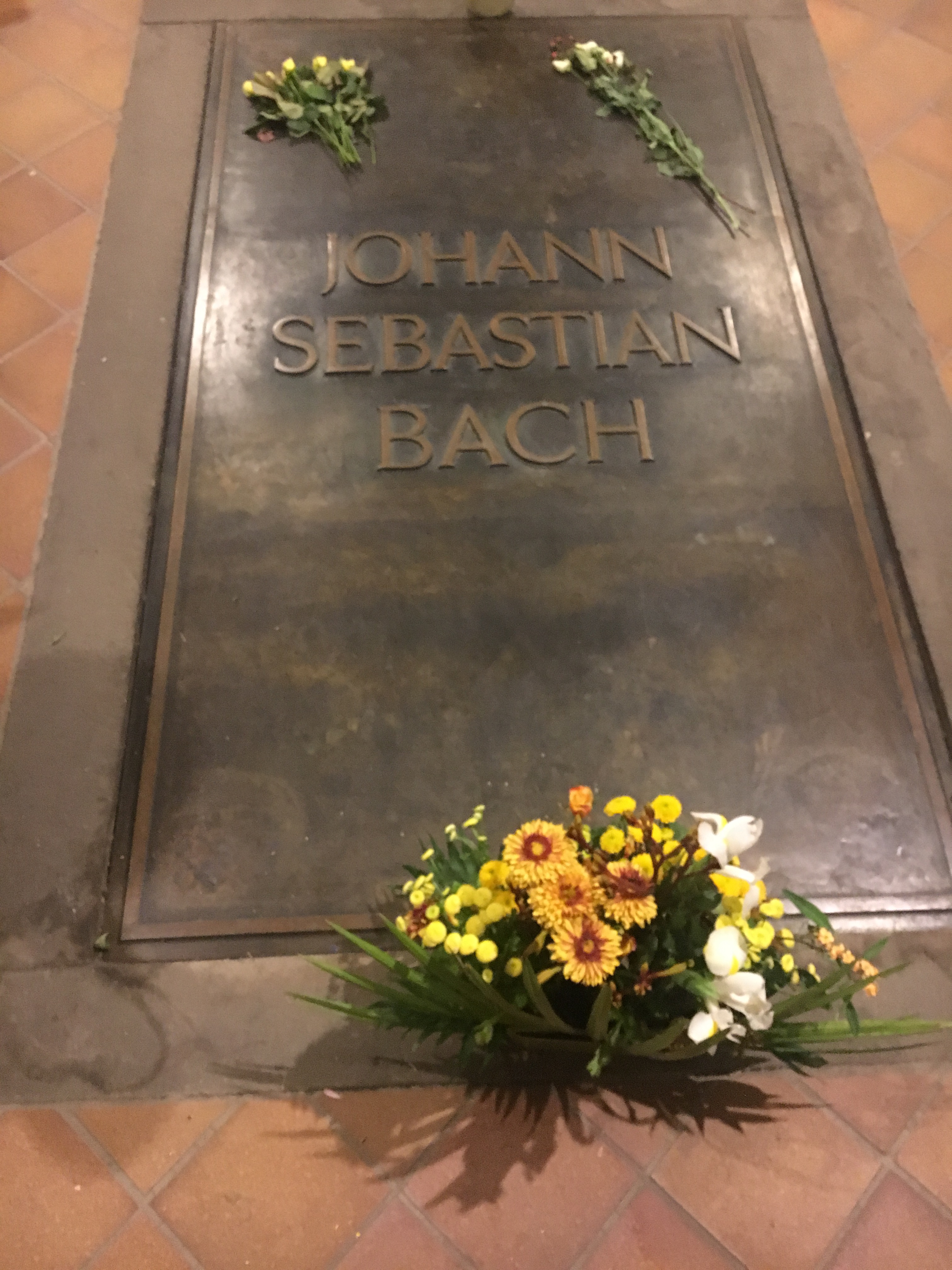
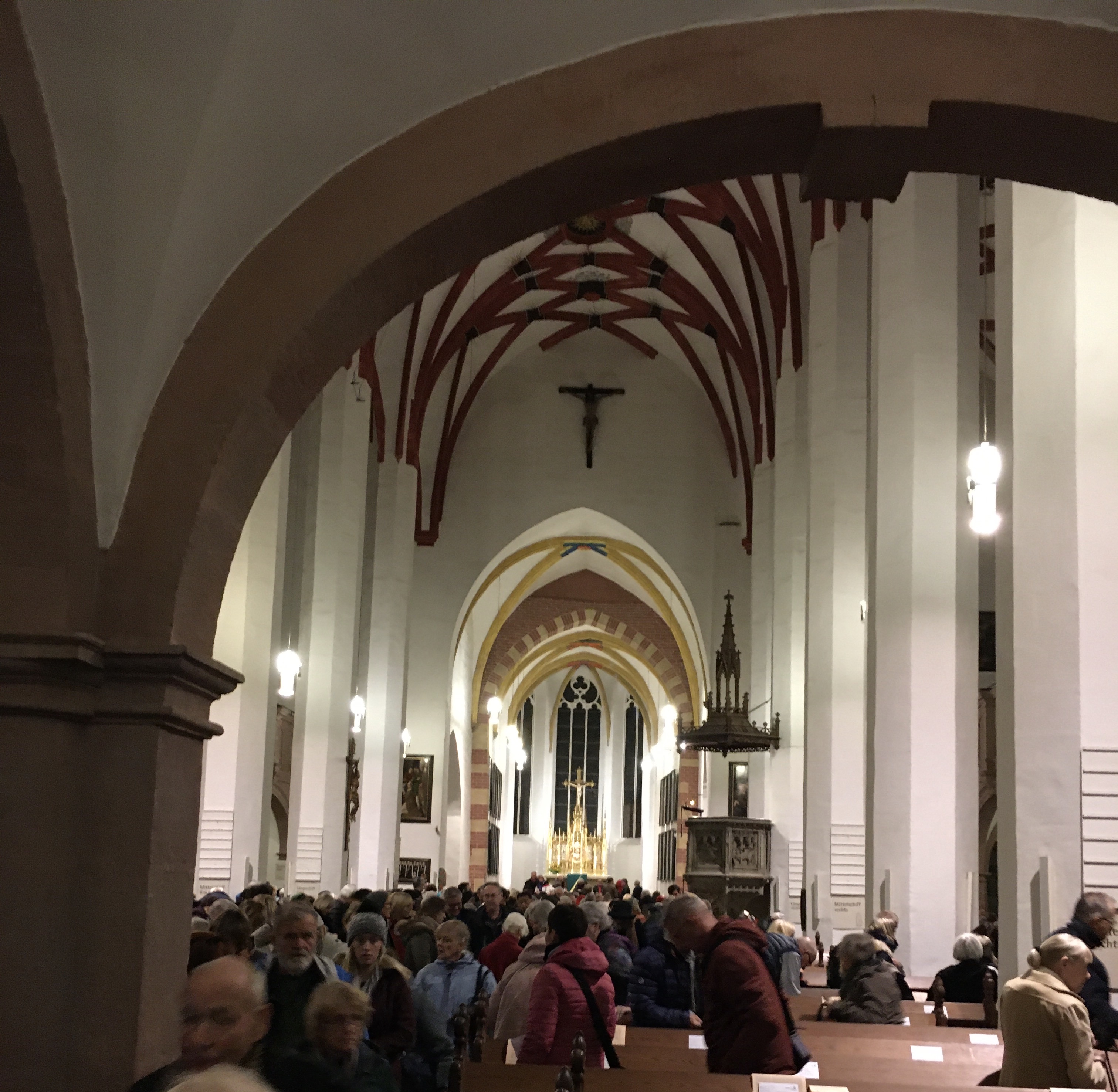
Later in the day we returned to Thomaskirche to hear Bach’s Mass in G. After the breathtaking concert, we stood by Bach’s grave. I thought about wars, destruction, politics, and how his music survived and transcended all of this.

November 1 Leipzig

This morning we left the ship and boarded busses heading north into Saxony, once part of East Germany. After an autobahn rest stop lunch and an onboard lecture on Bach, we dozed and listened to Water Music over the loud speakers. The landscape was not picturesque like Bavaria: it’s fairly flat with many huge windmills, factories and solar power farms. All the better reason to close the eyes and drift with the beautiful music. As we drove, I vowed to put classical music back into my daily life when I get home.

Leipzig is another city that was heavily bombed. We saw many stark apartment complexes and factories as we rolled in, but the city center is a beautiful combination of restored old and sleek modern buildings on wide boulevards. We checked in to the luxurious Marriott and quickly prepared for today’s main event, a visit to Bach’s church.

We had learned that Johann Sebastian Bach was the cantor (music director) of Thomaskirche for 27 years and wrote new music for the church services every week. We headed out this dark, rainy evening for the 6 pm service. We went in a side door where a woman gave us a five page program. The church that holds 900 people was almost full. We found seats towards the back. The high backed wooden pews were outfitted with individual fold down chairs. There are no kneelers but the back of the pew ahead formed a little shelf for your hymnal or materials.

At 6 o’clock a small choir and a woman pastor walked down the aisle. The pipe organ began playing a loud and jarring piece. The pastor welcomed us in German and the choir began to sing. The choral music was fantastic. There were only about twenty five singers, but they filled the huge cathedral with an ethereal sound, even in the back. The service consisted mostly of chorales, with some audience participation. I was able to follow the German program, and join the singalongs. After the sermon and a Lord’s Prayer came the part the tourists had come for; a J.S. Bach organ piece called “Guten Nacht, o Wesen.” (Good Night Existance). It was short but thrilling to think that Bach composed this piece and played it in that very place.

After the service

The people sitting around us were Germans, and seemed involved in both worship and enjoying the music. A screaming toddler had to be carried out, and the man in front of me had terrible BO….so I was never fully transported into musical ecstasy. But it was close enough. Mike and I plan to go again tomorrow for the 3 pm service.

October 31 Wurzburg

We did a palace and a castle today, but what I’ve thought about all day is how the Germans think about World War II.

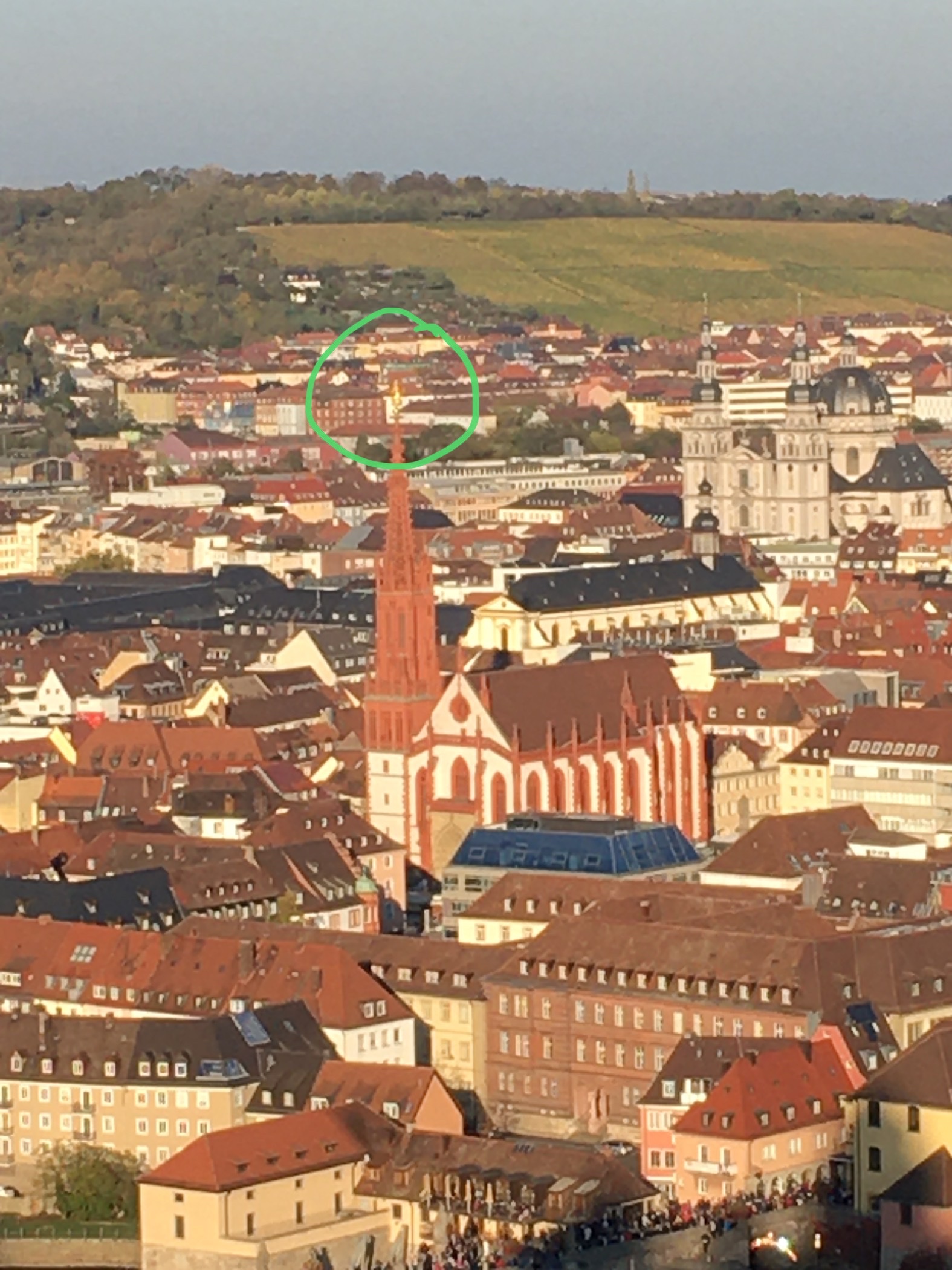
In every town we’ve visited, the topic of how it survived the bombings comes up. The local guides don’t seem sad or angry, just matter of fact. This morning our cheerful guide Suzanne explained that the English severely bombed Wurzburg on March 16, 1945. Then they sprayed on phosphorus that kept the fires burning for many days. Ninety percent of the buildings burned, leaving stone shells. Returning to the town seemed hopeless, but there’s a story that, from the vineyards up the hill, people could see the golden Mary statue on a steeple above the thick smoke. They look this as a sign to rebuild.

Mary sent the sign

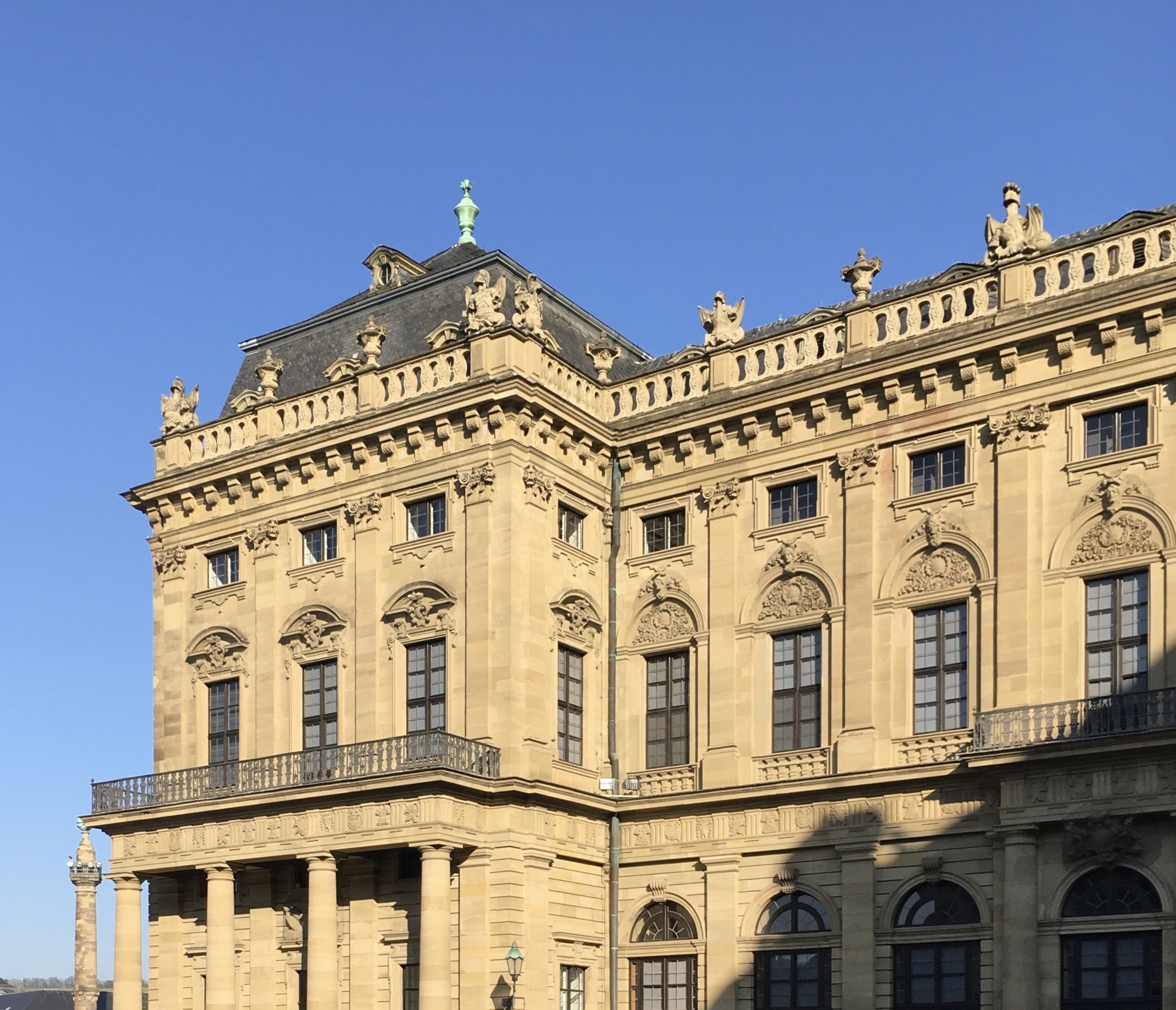
A huge baroque palace in the middle of town was wrecked. Once housing was secured for the survivors, town leaders saved the beautiful paintings on the grand staircase ceiling and decided to rebuild. The German government funded the restoration. It took thirteen years to replace the elaborate plasterwork, paintings and tapestries. Today the place is in beautiful condition, housing a museum, university, and municipal offices.

Prince-Bishop’s Palace

Suzanne showed us 1945 photos of the bombed out palace. She said that one day she was giving a school tour to some immigrant children from the Middle East. They were most interested in these images and told her that that’s what their town looked like when they were forced to leave. The children told her that the beautifully restored palace gave them hope.

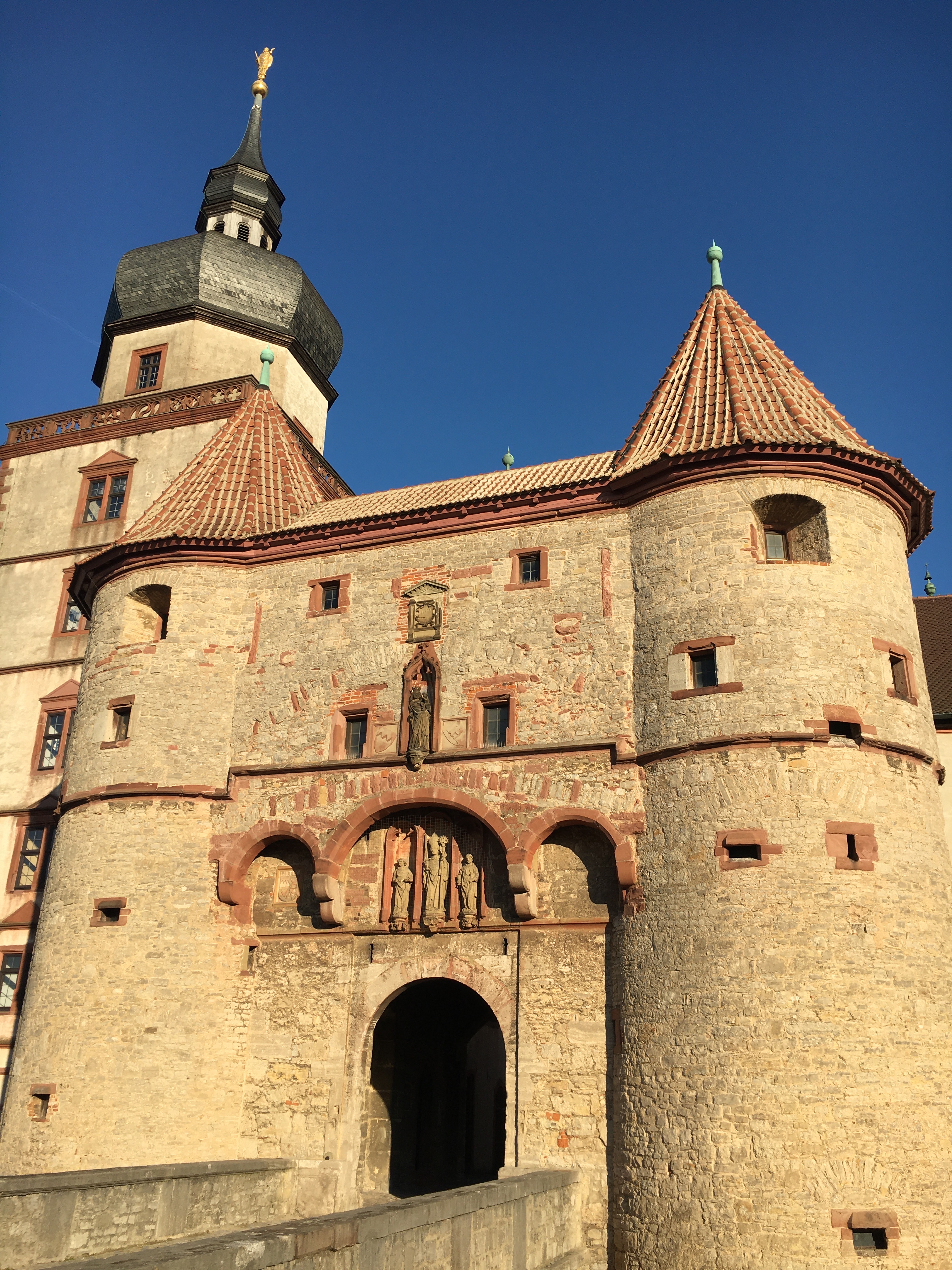
A huge castle, Fortress Marienburg, looms over the town. It’s restoration took almost forty years and wasn’t finished until 1990.


My mother’s grandparents were Germans. They immigrated to the US in the 1880’s. To carry the emotional burden of the Nazis is irrational, but I do. Every reminder of the Holocaust puts me in tears. I can’t imagine how German people cope but I’m comforted that they make efforts to not forget the country’s past.

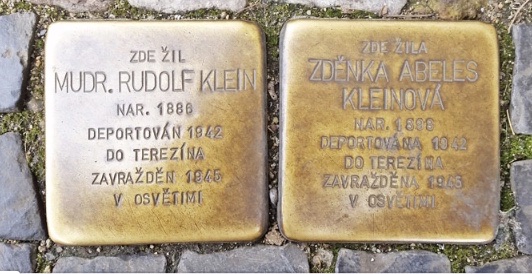
Many cities and towns in Germany have installed “stumbling stones.” These are metal markers embedded in the streets in front of houses (or where houses were) of Jewish people who were removed. Engraved with names and dates, these markers are a little higher than the cobblestones so you trip a little on them as you walk by.


Thanks to Benno, sharp eyed historian, for correcting me on the following photo. It is a marker we found in front of a house in Bonn for Bertha von Suttner. She was the first woman Nobel Peace Prize winner. She died in 1914.

A stumbling stone in front of Bertha’s house

October 30 on the Main/Miltenberg, Bavaria

We left the Rhine today and entered the smaller Main (pronounced mine) River this morning. The Main is calmer, narrower and more like a canal because of all the locks. The dimensions of these river cruise boats are determined by the size of the locks, which are only twelve meters wide. Our cruise ship seems to fit in like a glove. We know we are in a lock when the engine stops and there’s a slight bumping, like a small earthquake. Standing outside this morning, I watched the ship slowly rise several meters within the lock. Crew members jumped around untying ropes and we were off. Passing through a lock is certainly less romantic than crossing the Lorelei’s bend, but I enjoy this passage. The Main is a major shipping route for Germany, and the locks make it possible.

In the lock

Our excursion today was to the Engleberg Abbey, high above Miltenberg. Unlike the pilgrims who climbed 638 steps on their bloody knees, we made it up the hill in quiet electric motor coaches that skillfully navigated narrow streets and hairpin turns. We briefly toured the church and vineyards but the main event was beer tasting.

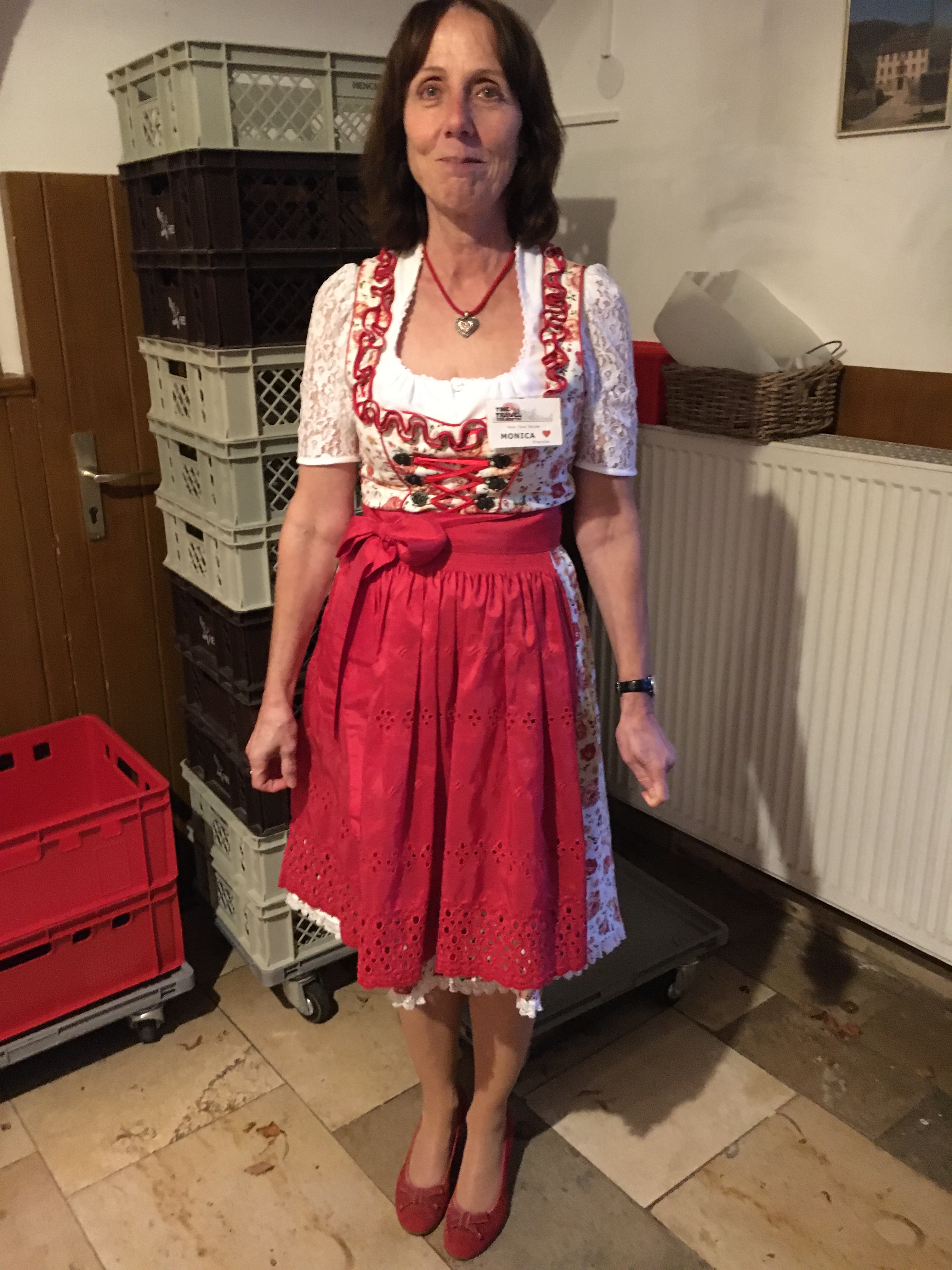
Lovely ladies served us half liters of dark beer, cheese, sausage and pumpernickel bread, all made by the monks. I enjoyed the beer but the thought of the bus ride back to the ship made me anxious. One of the lovely servers, Monica, led me through back halls and the kitchen to the staff bathroom. She was proud of her dirndl and let me take her picture.

October 29 on the Rhine

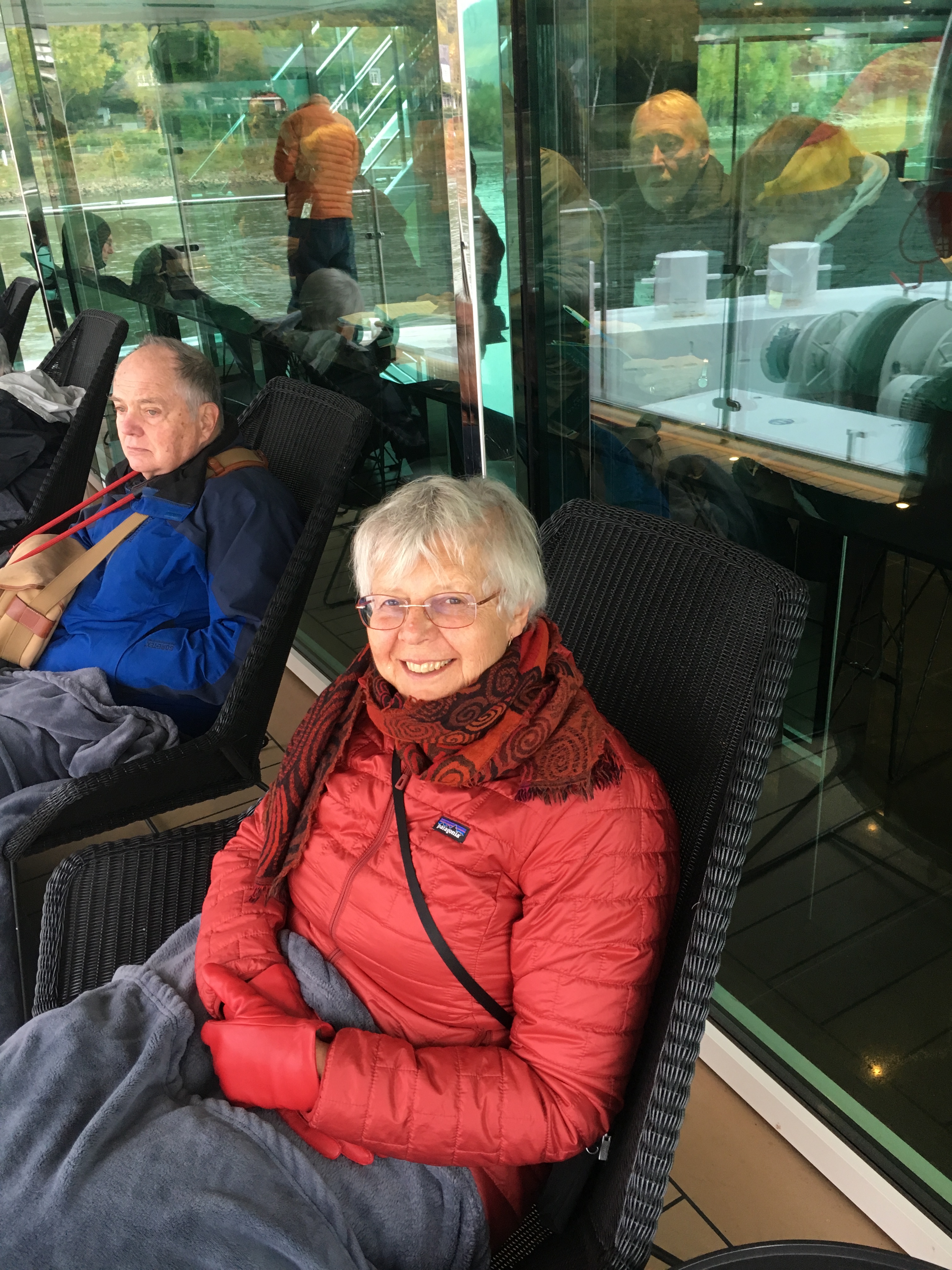
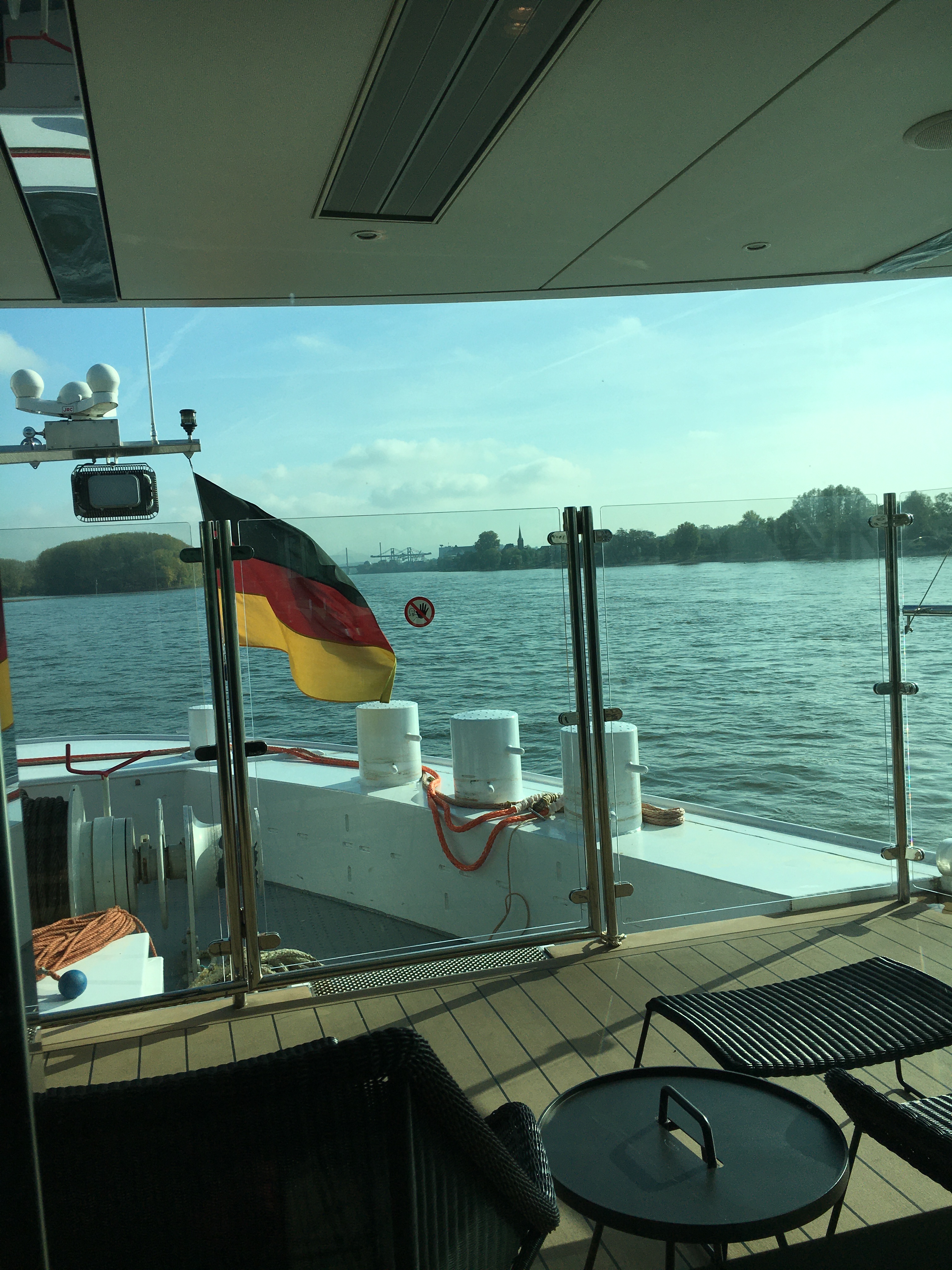
Today was the quintessential river cruise day, that one in the Viking commercials. We got up early for the 7:15 am sailing through the Rhine Valley to see the castles. For the first few hours, I fulfilled a lifelong dream of lounging on a ship outside in a deck chair under a blanket. A crew member did not bring me a bouillon however he did bring me the blanket and he did call me “madam.” I had a constant supply of lattes and a heat lamp (and all my layers) to keep me warm on this chilly morning.

My deck chair on the bow

In the UNESCO World Heritage area, there are so many castles that I stopped counting and taking pictures. I liked this one with the Rapunzel tower.

Just another castle

As we passed the Lorelei statue, we toasted her with apricot and hazelnut schnapps. I recalled my mom telling me the story about this mermaid who mesmerized the sailors at this dangerous bend in the river. Of course, they couldn’t keep their eyes off of her, didn’t see the swift current, and drowned. Now there is a sort of river stoplight across from her, and our Serbian crew led us by in safety. Later, I walked around the track on the upper deck. This gave me some needed exercise plus views of the castles from multiple angles. Lunch included cabbage soup and rhubarb pudding.

For our afternoon field trip, the ship let us off in Rüdesheim, a little town between the river and the vineyards. As we walked up a narrow cobbled lane we saw a couple thousand cranes in circles and vees far overhead. They are migrating along the Rhine from Scandinavia to Spain. We decided to skip the museum and walk around. The sun came out. I followed Mike up the hill on a nicely paved path. Soon we were far above the town in the middle of yellowing rows of grape vines.

Across the river we could see the church dedicated to Hildegard of Bingen, a medieval nun who is given credit as Germany’s first modern scientist. We had read about her in book club last year so I was thrilled.

St. Hildegard’s from the vineyard

We reluctantly walked back to join the tour of Rüdesheim. This town has all the German adorableness you could ever imagine. Our guide Manfred took us to a hotel with sleeping rooms in large wine barrels and pointed out the carillons that ring every half hour. The excursion ended with a wine tasting. A hearty German man gave us little glasses of white wine and seated us at candlelit picnic tables in an old wine cellar. Our host got our attention with loud operatic singing. He sang his way through three types of local Riesling wine, led the toast “Prost!” in song, then sent us on our way,

Third round

Our river cruise unfolds from one wonderful thing to the next. We are busy! I keep thinking it’s like summer camp for seniors. I was so grateful today for a nap at rest period after lunch, and, once again sign off tired but happy after a exceptional day.

October 28 on the Rhine

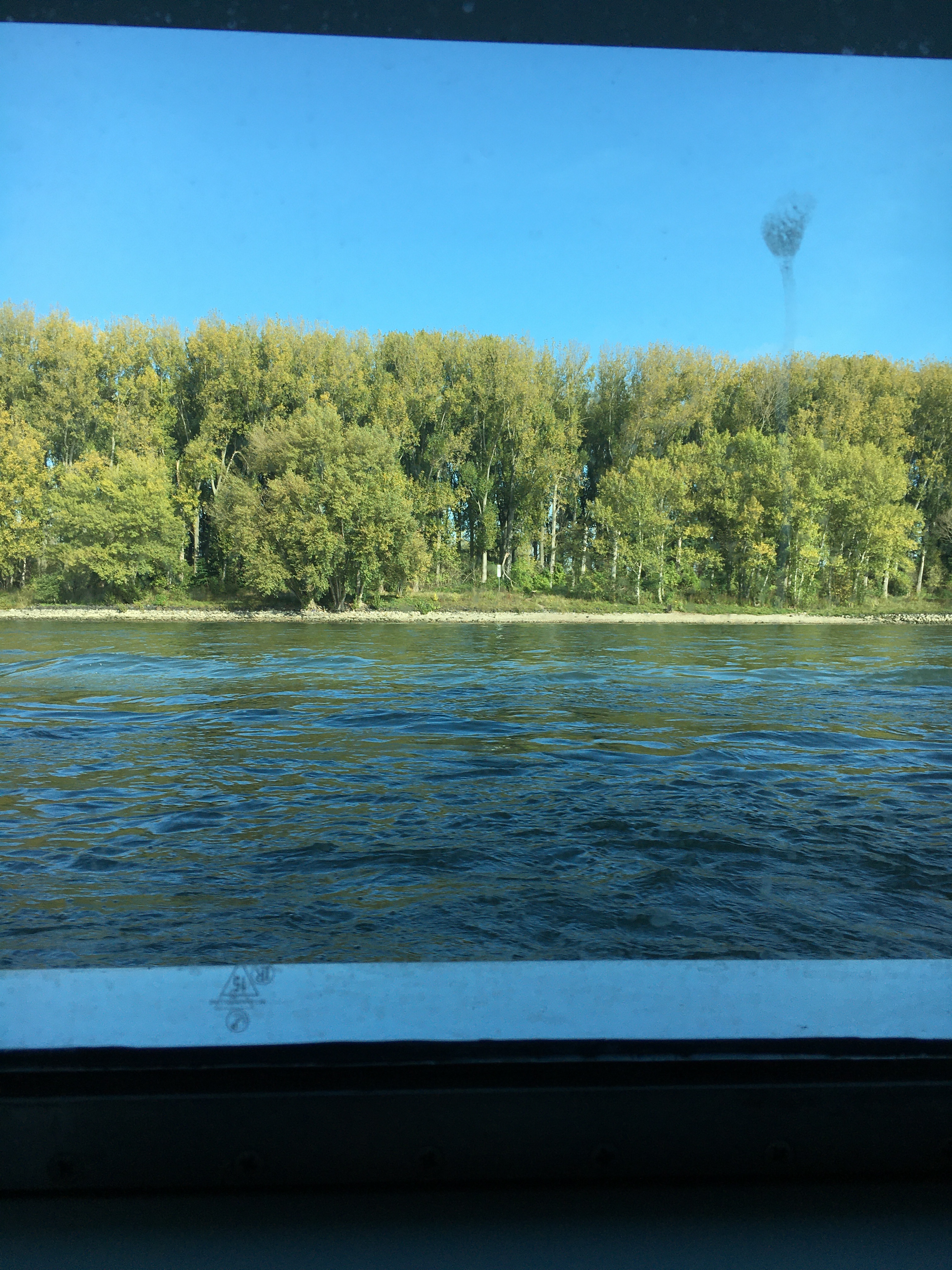
It’s taken me a couple of days to warm up to the Emerald Destiny, our long boat on the Rhine. Although our cabin is austere, it’s well designed and comfortable. We put all our clothes and stuff in drawers, on shelves and in the closet, and hid our suitcases under the bed. The bathroom is efficient and has a shower with reliable hot water and plenty of room to turn around. A neat little desk opens up to reveal multiple plug ins for our phones and iPads. We are on the bottom floor of the ship. I think part of the room is below the water line. Here is the view from the window (which is at eye level when I’m standing up.) I’ve peeked in the upper level staterooms; they are about the same size but they have floor to ceiling windows.

Nature along the Rhine

Today we finally explored the ship and made two excellent discoveries. We found the small indoor pool area at the back of the ship. The enclosure was warm and humid, and there is a self service espresso machine in there. The place was deserted this morning.

Looking backwards

At the very front of the ship, we found seats at a forward facing bar. We discovered that less elaborate meals are served up there, and that the trip organizers and “celebrities” hang out in this area.

Looking forward

The trip leaders are lively and flexible. I’m impressed with Matthew, the owner and organizer of this Earthbound Expeditions cruise. He appears to take a genuine personal interest in us. The passengers are nice and I’ve enjoyed many pleasant conversations, although most are older than we are. The friendly crew bring us whatever we ask for. Someone washed and folded our clothes yesterday. Chocolates appear on the pillows at night.

The food is abundant but not as good as we’ve gotten used to on this trip. Each night the chef provides a regional dinner so we had pork and cabbage tonight. I took a chance with black pudding for appetizer and it was salty but good.

Sleeping in our little stateroom is wonderful. The king bed is perfectly soft, with nice sheets and a big pile of pillows. The quiet rumble of the engines and the nearby lapping water put me right to sleep.

Best of all, the Emerald Destiny dropped us off at two ports of call in Germany! I’m German on my mother’s side, and today was my first time ever to visit the Motherland. We toured the huge cathedral in Cologne this morning, and the house where Beethoven was born in Bonn this afternoon. I felt at home walking around these smaller towns, like I fit in among “my people.” I bought a slice of plum cake in a bakery to compare with my great aunt’s recipe that I bake every fall when the plums are ripe. Aunt Em’s cake stood up.

October 27 Rhine River Germany

Our bus drove through many kilometers of forest in full fall glory to the Kroller Muller Museum. Our guide Tosca Van Diest greeted us and helped us adjust our radio headsets, then led our group of twenty to a quiet “cabinet” in the modern building where she explained the history of this museum. Helene Kroller Muller was the German wife of a Dutch tycoon. Her husband died shortly after their marriage. Starting in 1907, she devoted herself to art education and collection of modern paintings, drawings and sculptures, especially the works of van Gogh. She willed her art collection and land to the Dutch people; creating a stunning museum and the largest national park in the Netherlands.

Tall and slender, with straight blondish hair and no nonsense attire, Tosca immediately captured our attention. “She’s good,” we signaled to each other. Her English was charming and easy to understand. She cut to the chase and brought us right to the heart of the collection, the van Goghs. She pointed out the dark, brownish Dutch tones and the problems Vincent tried to solve in his early paintings. She showed us the unusual light source in one of the three versions of The Potato Eaters, his first masterpiece. She briskly led us through Vincent’s ten years of lesser known drawings and paintings.

“Look at how thick is the paint”

I thought I knew quite a bit about van Gogh, but in one intense hour, Tosca gave me new insight. We are all familiar with van Gogh’s great works, but I loved a chance to look more closely at pieces I didn’t know existed. And in this uncrowded museum, I could get within a few inches to observe the brushstrokes or pastel and pencil marks.

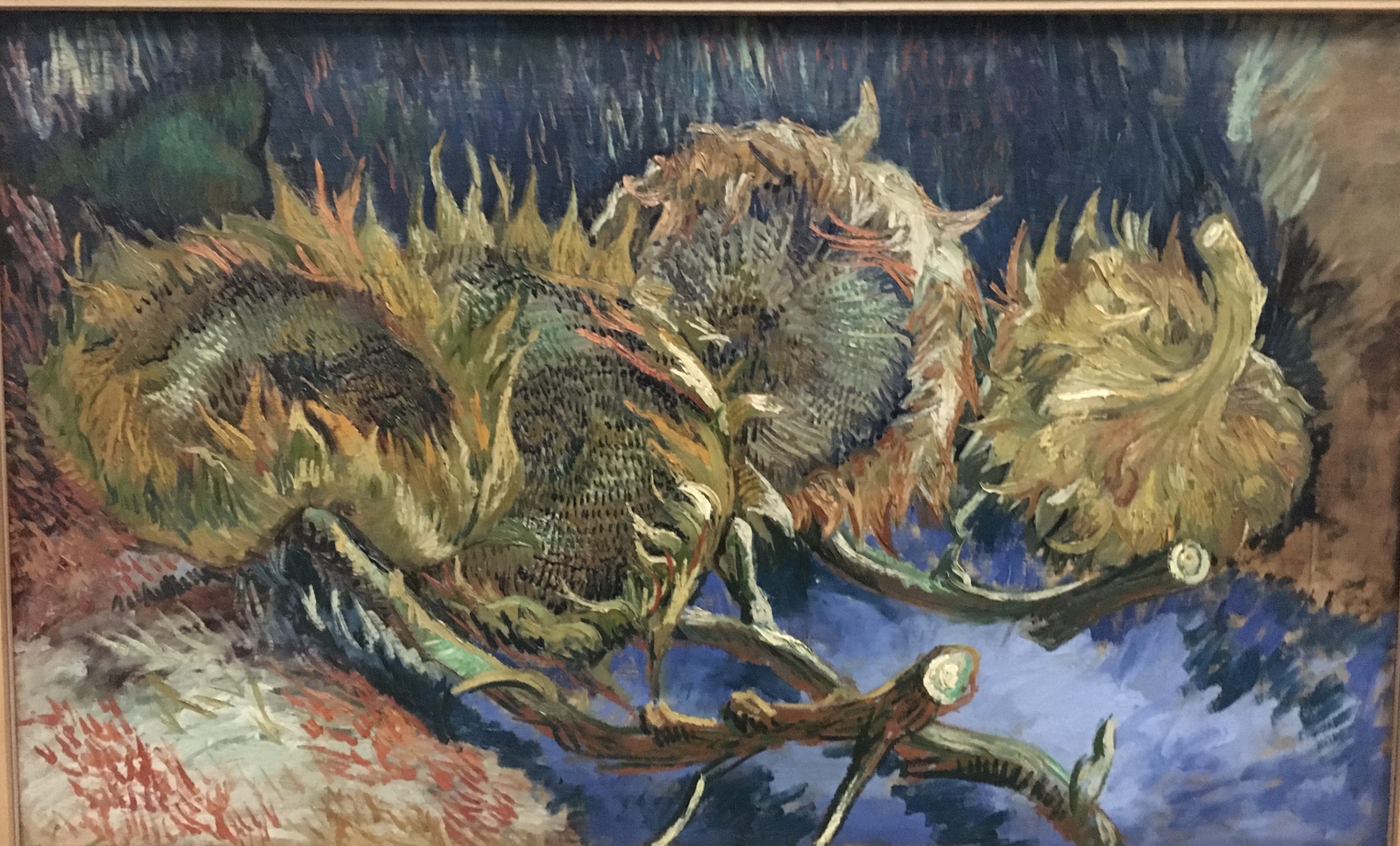
Tosca concluded with this 1887 painting Four Sunflowers Gone to Seed, that was Helene’s favorite.

The light in the foreground is unusual, as are the toned down blues, oranges and golds.

Then Tosca put on her black trench coat and led us out into the sculpture garden, explaining the concept of uniting art, architecture and nature that the museum strives for. I almost had to run to keep up with her; she was late and she had so much more to show us. An unusual day for late October, the sun shone on the green lawns and autumn leaves as she led us through the carefully placed sculptures.

Tosca particularly loved a floating sculpture that moved around its own pond. In the right light the ripples are also reflected on the white surface. Next weekend they will take it out for the winter.

We had perfectly fine docent tours in the Uffizi and Rijksmuseum, but Tosca was a rock star. Her passionate 75 minute tour set us up to continue on our own for another hour. We ran out of time and we had just scratched the surface. We wondered if we could ever come back to this park, ride bikes on the paths and dig deeper into this gem of a museum.

PS. We are underway, cruising up the Rhine. Last night, the gentle rumbling of the ship gave me the best sleep of the whole trip.

October 26 Leaving Amsterdam Harbor

Thank goodness tonight Europe goes back on standard time and we get an extra hour of sleep. The program today was full and I’m tired. So I’m picking just one bon bon out of the box of candy to tell you about.

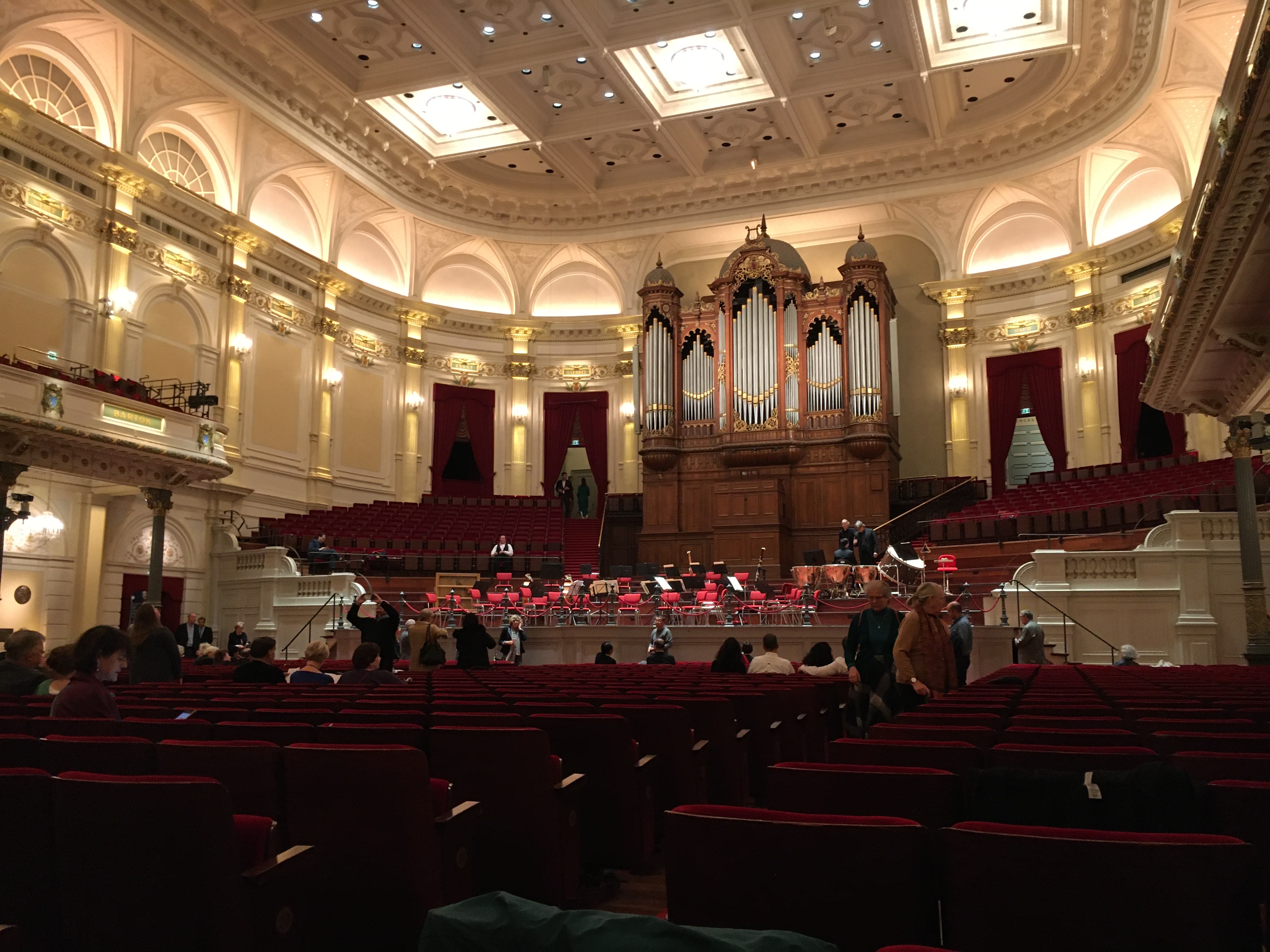
As part of the classical music cruise, tonight we attended a concert at the Amsterdam Concertgebouw. Built in 1886, this is a relatively new hall with among the best acoustics in the world. It’s a modest sized building, easy to enter and to find your way around. The actual hall is stunning.

At intermission

The floor is flat for the main seating area, with tiered seats behind the stage and a ring of seats at balcony level. As you can see, arches decorate the walls. You can’t see the names of great composers engraved in the marble just below the arches. Chandeliers provide some of the lighting, and the pipe organ dominates the stage area.

The Nederlands Kamerorkest started with: “Variations on a Theme by Tchaikovsky” by someone I’d never heard of, Anton Arensky.

This small orchestra didn’t seem to have a conductor, but we had learned at the shipboard preconcert lecture that the concert master was the conductor. He coordinated the young musicians’ playing through eyes, motions and only one wave of his bow. It was a little puzzling to figure out how they could be so tight, and I may have lost some of the flow while trying to figure out logistics. The sound quality was perfect even back in Row 26.

The Cello Concerto No. 1 by Shostakovich was the highlight. The Danish soloist, Torleif Thedeen, dramatically carried his cello down the stairs to the right of the orchestra. The 1959 piece was passionate and difficult to pull off, but the soloist’s playing was flawless. One entire movement of the concerto was a cadenza. He got a long standing ovation and played a lovely encore by Pablo Casals called “Song of the “Birds.”

At intermission we found the bar where a handsome young man served complimentary beverages (and cookies of course). We easily found the bathrooms and cloakroom. We walked around admiring the decor and chandeliers and returned to our comfortable red velvet seats. A beautiful piece “Suite Pelleas and Melisande” by Sibelius completed an unforgettable concert evening.