
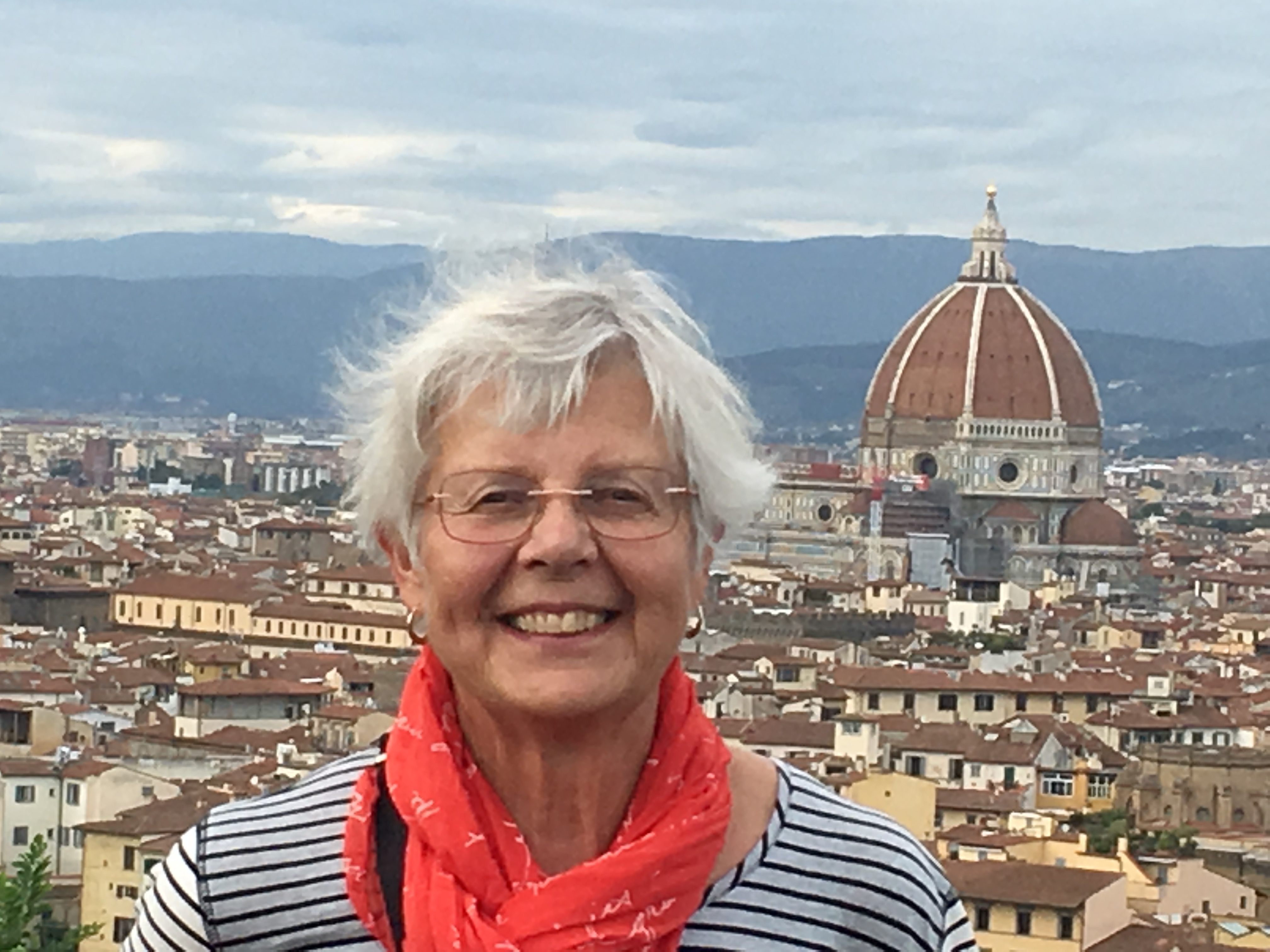
Now I want to live here for at least a month. I’d take Italian lessons, shop at the market and visit a new museum every day. Actually that would take me three months.
Ok, so our day on Florence, in terms of timeline, jumped from 15th to the 20th then way back to 11th century.
Leonardo
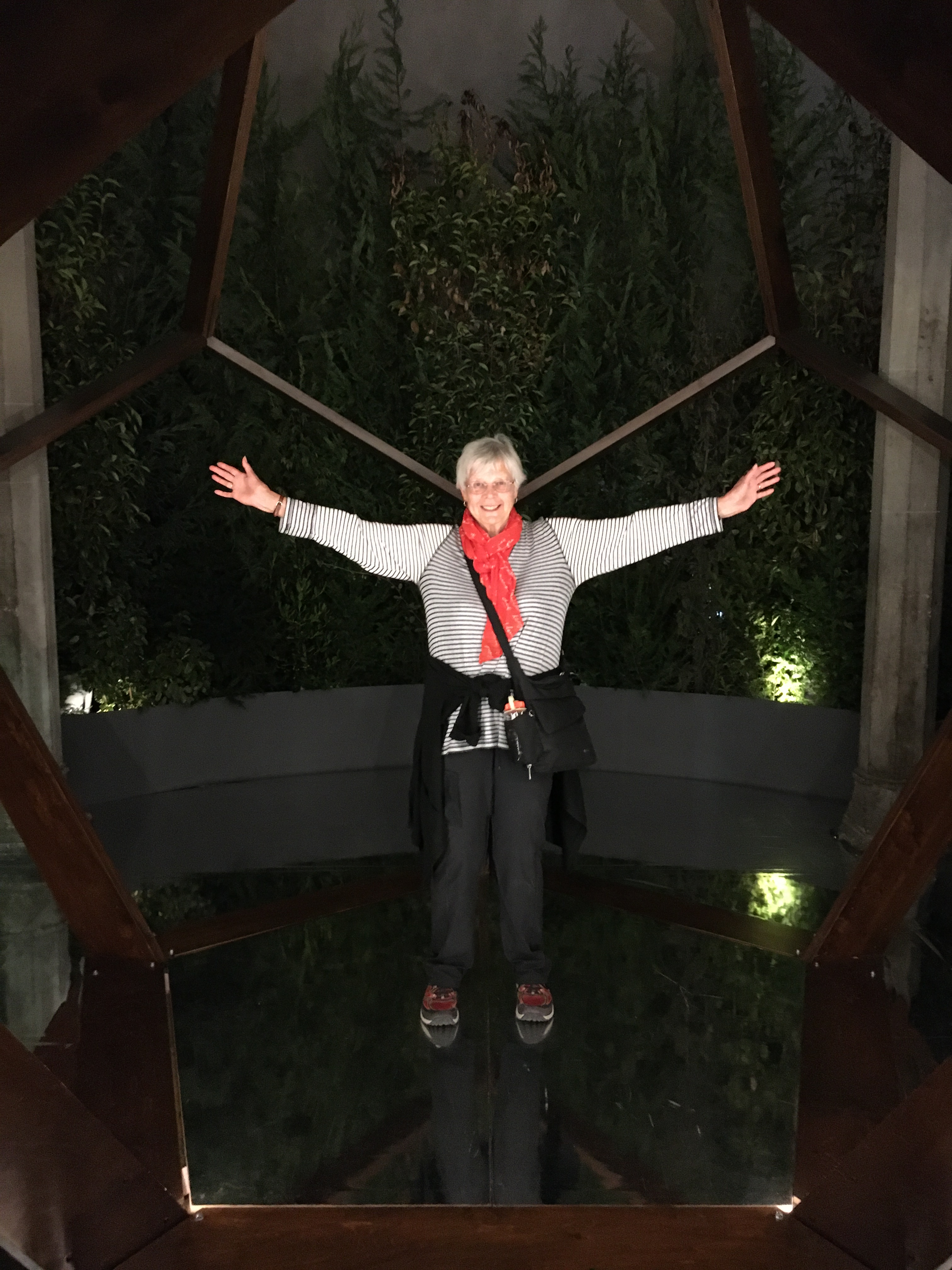
We visited a temporary exhibit in our local basilica that examined Leonardo daVinci’s exploration of the natural world. I can now understand how radical his humanist ideas were of observing nature rather than calling upon divine explanations. For example, he looked at how leaves arrange on branches to maximize exposure to sun and rain. He discovered that the mass of tree branches is equal to the mass of the trunk. He studied rings on trees and made observations chronicling thin rings for dry years and thick for wet. He drew everything, including blackberries. Live trees and plants from his journals lined the exhibit space; juniper, lemon, mulberry. A fun finale was to photograph yourself as his Vitruviun Man.
Gonsharova
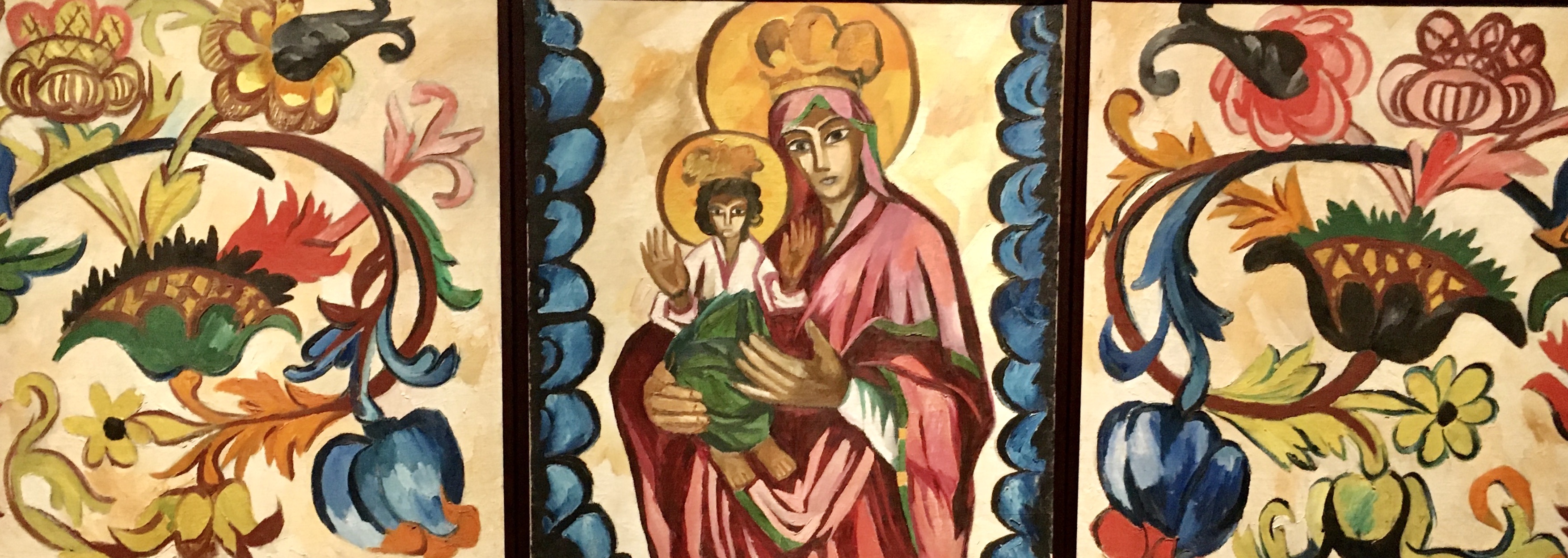
In the Palazzo Strozzi, we jumped to the modern. Natalia Gonsharova was an early 20th century Russian artist. She grew up in the countryside, using peasants and Russian Christianity as early subjects. Influenced by Matisse, Cezanne and a Picasso, she painted in several mediums and did set designs and costumes for the ballet. Her colors were mostly bold and bright; one room featured works in blue and orange!
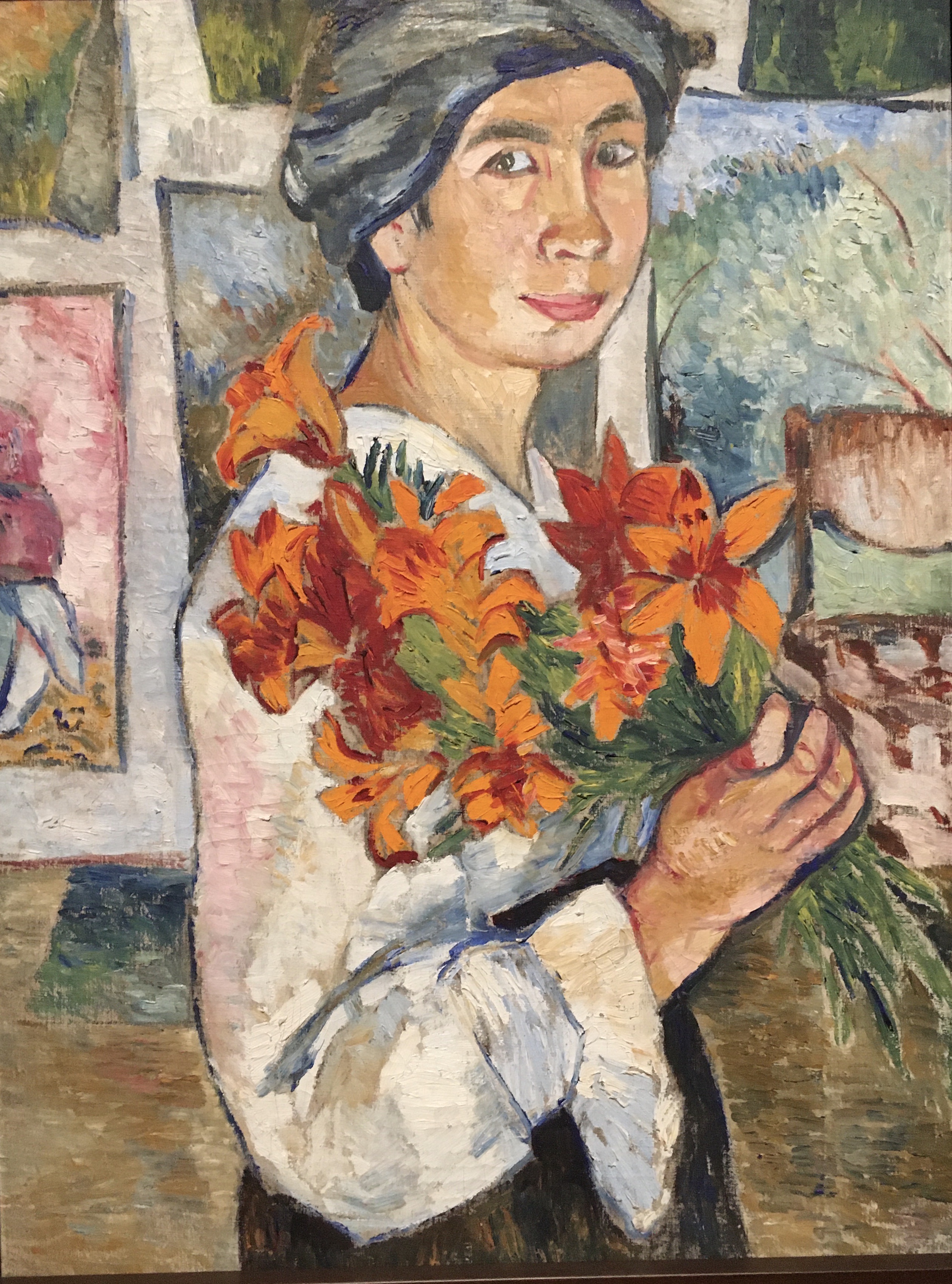
She was eccentric and prolific. Her work was entirely new to us; a refreshing change from the Renaissance, and fun to tie to artists we know. I loved it that Florence embraces modern art.
Mass
We crossed the Arno and climbed up to San Miniato al Monte, one of the highest points in the city. The basilica seemed to be at eye level with the Duomo and provided a fantastic view. The Romanesque church was beautiful inside, with fading frescos and alters in at least three levels.
Candles illuminated a lower chapel we were directed to for the 6 o’clock mass. About forty people filled the widely spaced pews. Some lit candles or kneeled in prayer. A man casually dressed in white shirt, black slacks, vest and sneakers opened grilles, poured the communion wine, set up a podium and brought in two 3 foot lighted candles. At six the bells began to ring and a middle aged, bespectacled priest all in white appeared. He greeted an elderly woman (who was on an oxygen tank) and her family in the front row with cheek kisses and blessings on the head. He went behind the alter and donned a red robe.
A beautifully dressed woman sat, then kneeled, next to Mike. As the service began I noticed she was looking at her cell phone. Mike thought she was following the prayers. The priest sang and the worshippers responded. Mike also reported that while the sermon was in Italian, the mass itself was in the Latin he remembered from his childhood.
The priest came in front of the grille with the wine and wafers. About half the people took the communion. Six monks filed in, took places behind the grille and sang to simple organ notes. The priest again greeted the smiling elderly lady and left. The monks were still singing when we made out exit.
The service was simple yet mysterious. I imagined this was a pilgrimage for some of the people, and a daily routine for locals. I was just a humble, grateful observer of a ritual that has taken place for a thousand years in that beautiful holy cathedral.
PS
 Katy’s Blog Trip to Europe 2019
Your thoughtful commentary and insights make me wish I had been with you on my trips to Europe.
LikeLike
Maybe we should go
Sent from my iPhone
>
LikeLike
I wonder what the mystery woman w/her phone was really doing. . . hiding from Interpol? preparing to enter a cloistered order? checking recipes for Sunday afternoon dinner?
LikeLike
We think she was reading the prayers in her own language.
LikeLike